
In all my years of family history blogging, I see I have somewhat neglected my maternal great-grandfather. This is the story of his life from 1867 to 1917, as told by my grandfather.
By Laurence M. Smith, edited by Eilene Lyon
Charles Edward Smith was my father, as well as the father of four other sons and two daughters. Over the years I have pieced together some rather interesting facts about my father and his life. Although he died believing that his life was something less than a success, the facts seem to prove otherwise.
He was born in Tipton County, Indiana, on November 1, 1867. His father’s name was Martin Smith. The Martin Smith family later moved to a small farm near Denver, Indiana, in Miami County where Charles grew up. This is Indiana farm country. In those times, as soon as possible, the boys were pressed into the work of the farm family. This consisted of taking care of chickens, cows, and pigs; planting of crops and harvesting.
Charles went to school until the sixth grade in a one-room school house. He quit school after the sixth grade, which in those times was not at all unusual. He went to work as a farm hand and eventually wandered to the State of Missouri where he ended up working with a man named Henry Biernback. Henry was his friend for many years.
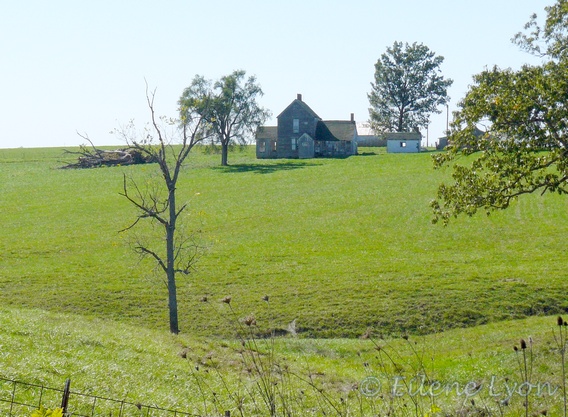
In those days the social activities were held either at the school house or the community church. There was usually one of each in every rural area. It was also a monthly occasion for young people to gather at a church social. One of the popular events was a “box social” where the girls would fix a scrumptious box of food and tie it with their own identifying ribbon. At the social the boys would bid for the boxes and try to get the right girl with the right box of food, their interest being more on the girl than on the food.
With the encouragement of his friend Henry, father went to several of these box socials and before long it was noticed that he was trying and succeeding to purchase the box of goodies brought by the same girl. Mary Lila Reams was the girl, one of a large family of farm girls living in a small community about 60 miles east of Independence, Missouri. Charles and Lila Reams were married September 2, 1888 in the front parlor of the bride’s farmhouse home.
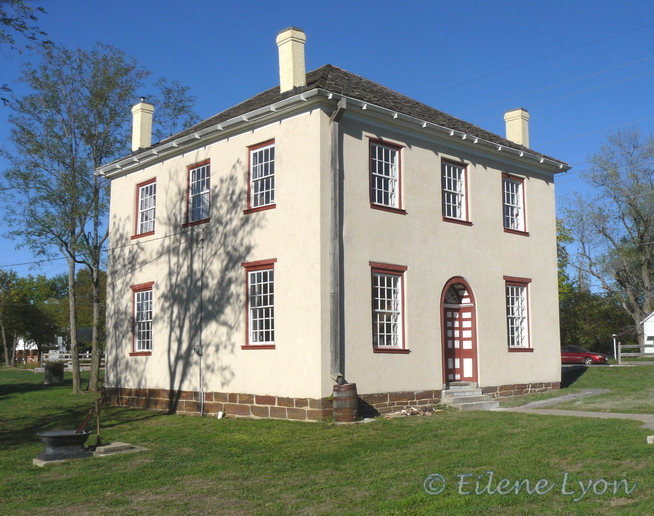
(2012)
They set up housekeeping in a small shack on a 160-acre grain farm which they were able to rent on shares. [Note: this meant a share of the harvest went to the owner as rent.] This was an accepted way of getting started in that day and time. On April 24, 1890 their first child was born, a girl who was named Clara Bell. On October 20, 1892 another child, Harry Edward, was born. A third child, Dora Ada was born December 20, 1894.
The farm life was hard and the family was barely able to make ends meet. Charles’s friend Henry Biernback had moved his family to a farm area “out West.” [Note: Henry married one of Lila Reams’s step-sisters, Harriet Boyer, in 1901. He was her third husband.] The Reams were preparing to move West.
Charles and Lila worked the farm for two more years then they also made plans to move West. In the fall of 1897 their household goods were hauled by wagon to the railroad depot and loaded on a freight car going to Spokane, Washington. By early in 1898, the family was settled in a clapboard house on a farmstead near Cunningham, Washington. Another child, Leon L. Smith, was born on May 21 of that year.
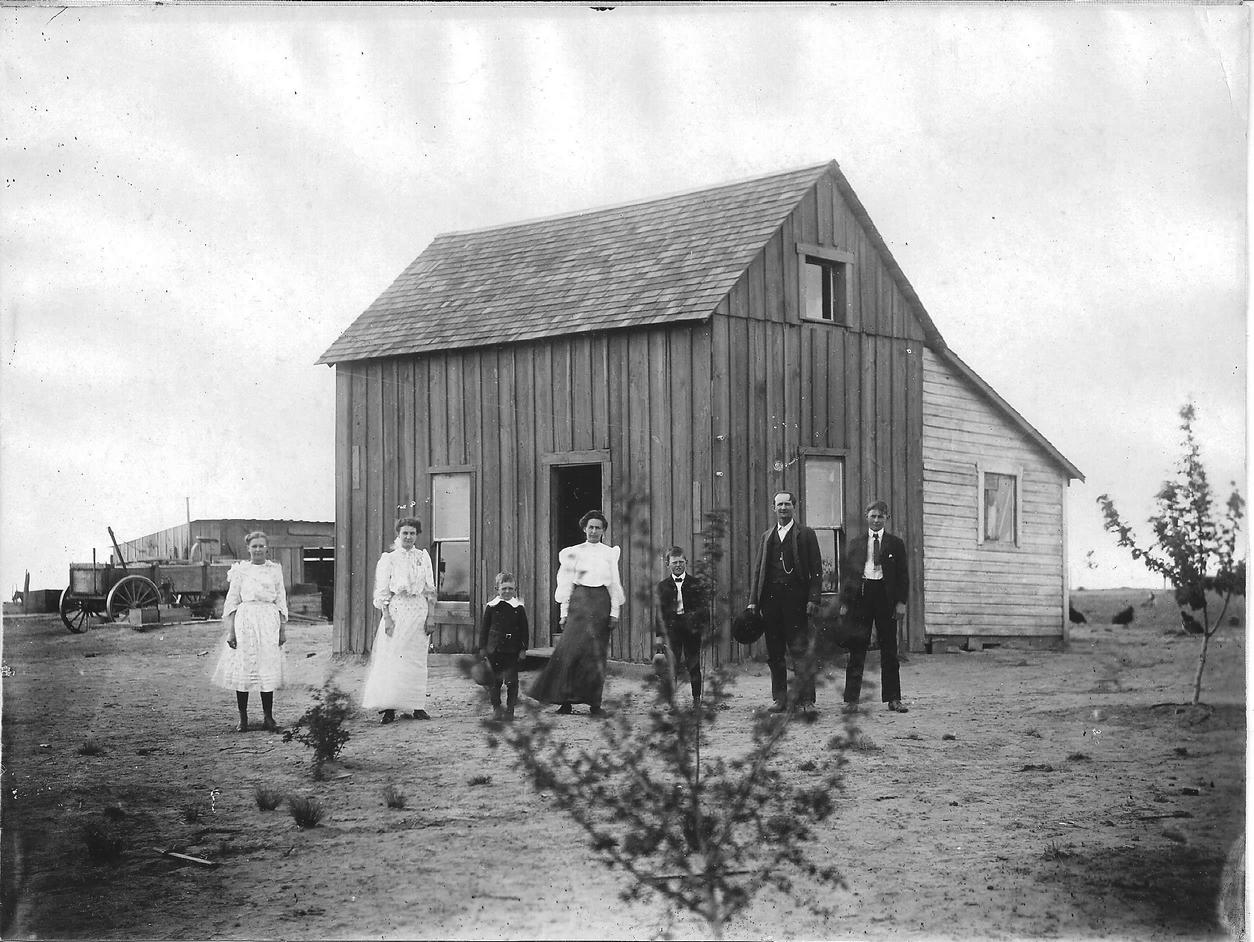
Water was a problem at this farm. It was essential to have a water wagon. The farm families in the area each had a wagon with a large wooden tank used to haul water several miles from a central source.
With much hard work, and luck on the weather, a good crop of wheat was harvested in 1899 and the fortunes of the family started to get better. They farmed several different sections of land in the area. Because of the semi-arid nature of this land, about one crop at each location was all that anyone got. In October of 1901 another son, Clifford L. Smith, was born.
About 1905 the family moved to Colville, Washington, and settled on a valley farm west of town. It was here on May 26, 1908 that I was born. The family was much better off financially here and the older children were helping with the hard work of the farm.
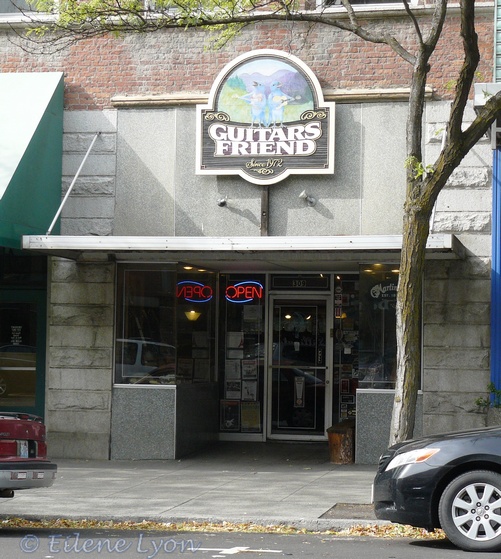
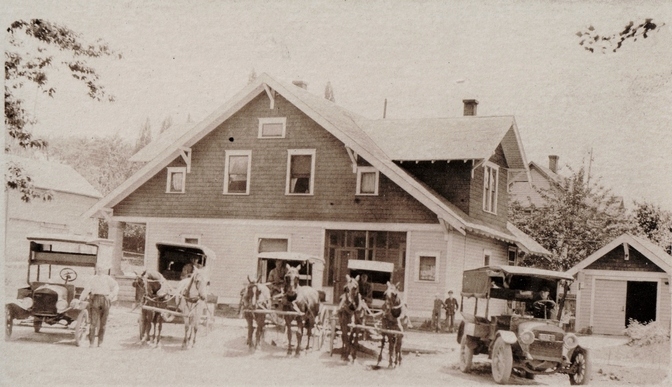
In 1910 the family moved to Moscow, Idaho, where father owned and operated an ice cream parlor called the “Palace of Sweets.” In 1911 the last child, Loren Oscar, was born. About 1912, father started a grocery delivery service in Moscow that was quite a financial success. He had horses and wagons—about six or eight rigs—which picked up groceries at various stores in town for delivery to the householders. Leon and Clifford worked for father in this business, but Harry worked as an auto mechanic for Tim Sullivan who owned the Ford agency in town, an automobile business that was just getting started.
The end to this essay is the October day in 1917 when the mother of this large family of Smiths passed away. When this happened, the family literally broke up, with the older children mostly going their separate ways.
For more about Charles’s later life, see The Stepmother.

 Myricopia
Wow, you’re so lucky to have all that detail. So interesting, so vivid.
LikeLiked by 2 people
Grandpa was so insightful to write some memoirs for the family. I’m very grateful to him.
LikeLiked by 2 people
Wow … how interesting. There is no need to research, just write. Everyone has a story, and probably one that each of us should write. Not one to be published to sell, but one to be written for the younger generation so they know. I think about my neighbor (in his upper 70s) who wrote his story (a book) for his kids and grandkids. Thanks for sharing your grandfather’s words.
LikeLiked by 2 people
He left a short stack of stories, many of which I’ve shared on this blog. My plan is to compile, edit, add research and other family recollections and photos into a book (print a few copies for family, etc via Snapfish or similar).
LikeLiked by 2 people
Good for your grandfather doing that for family! … and cheers to you for taking it to the next level!!!
LikeLiked by 1 person
I only wish more of my ancestors had been so thoughtful!
LikeLiked by 1 person
So many people with such rich lives that we know so little about and I’m thinking of my own family. Some stories here and there but nothing written down. It’s wonderful that you have some of the history recorded. I was intrigued by the Box Socials. It seems to be the historical equivalent of online dating!
LikeLiked by 2 people
I’ve seen those depicted in movies and I think they really were a fun way for young people to signal their intentions. Courting them was such a fraught enterprise, though I suppose it still is. Fewer social strictures now, though.
LikeLiked by 1 person
Long time since I’ve done any “courting” lol, but I imagine every generation finds it tough.
LikeLiked by 1 person
The emotions involved probably haven’t evolved much.
LikeLiked by 1 person
Love this story and the pictures. Very similar to a few I have of my dad’s childhood farmhouse. This story happens a few years prior to the birth of my dad and his twin (1920) but they were in SE Washington, likely near Colfax somewhere on what was always referred to as “The Palouse”. It took me years and stories from my DIL family recently to realize that there is a town called Palouse, and the entire region holds that moniker of The Palouse. I suspect my history comes from the surrounding prairies, not the town.
LikeLiked by 1 person
I think there is also a river by that name. But the entire area is Palouse. It’s an interesting landscape. The first time I drove from Moscow down to Lewiston was breathtaking! The drop down to the Clearwater and Snake Rivers is amazing. My mother was born in Moscow and grew up partly in Spokane and partly in Portland.
LikeLiked by 1 person
I have never been to that specific part of WA, and I’ve lived here all my life! Spokane and north yes,
Wenatchee and Yakima yes, over toward the Hanford site and surrounds but never farther east. I really need to plan a road trip 🙂
LikeLiked by 1 person
My grandparents got married in Colfax, rather than Moscow. I think Colfax served as a “gretna green” for people in northern Idaho. There must not have been any waiting period after you got your license.
LikeLiked by 1 person
Hurrah for ancestors who write family stories!
LikeLiked by 1 person
Hear, hear!
LikeLiked by 1 person
You are so fortunate that your grandfather recorded the story of his father’s life with plenty of detail. I remember reading somewhere about those box lunch events!
LikeLiked by 1 person
Yes, I am fortunate, indeed! The box social was like a precursor to 20th century bachelor auctions.
LikeLiked by 1 person
You’re welcome, Eilene.
LikeLiked by 1 person
He wrote everything very clearly. Good source to have!
LikeLiked by 1 person
Very good!
LikeLiked by 1 person
How wonderful to have your grandfather’s story of his life written by him. I only wish more of our ancestors were so inclined. (My father’s name was Laurence, by the way 🙂 )
LikeLiked by 1 person
An unusual spelling, too. It is a real boon for me to have his memoirs.
LikeLiked by 1 person
Yes. Especially as here in Quebec, Laurence is a girl’s name (for the French) 🙂 It truly is. Couldn’t have landed in a better pair of hands.
LikeLiked by 1 person
I’m certainly the only one to make anything from them. I want to combine everything, edit, and add new material and the photos into a family book.
LikeLiked by 1 person
Only needs one person to do 🙂 And what a lovely gift!
LikeLiked by 1 person
It’s interesting how when the elders of the family pass the rest of the family disperse in some families. I always have these stores. Thanks, Eilene, and especially to your grandfather, where you inherited his skill of storytelling.
LikeLiked by 1 person
I think Grandpa possibly overstated the dissolution of the family a bit. He was very young at the time and felt abandoned by his older siblings, some of whom were married already. But I do think that families can lose their center when a parent dies or leaves. My family fell apart when our parents divorced, but all us children were adults then.
LikeLiked by 1 person
Love your stories, is what I should’ve written. Auto correction is so annoying, especially when using a phone and not a computer 🙄
LikeLiked by 1 person
😊
LikeLiked by 1 person
I bet you were wishing that more of your ancestors had been this thorough as per their lives! The guy would’ve been a blogger today.
LikeLiked by 1 person
You got that right! All of it. He would have been very entertaining as a blogger. He’d probably write about basketball and tell bad jokes.
LikeLiked by 1 person
Sounds good to me!
LikeLiked by 1 person
How fortunate that your grandfather life behind these memories. This is a much more vivid and inspiring story than I expected.
LikeLiked by 1 person
He had an eye for detail in his storytelling.
LikeLiked by 1 person
He certainly did. I can see where you got it!
LikeLiked by 1 person
How wonderful to have had your father tell the story of his father. Very interesting!
LikeLiked by 1 person
Mostly I never met any of my great-grandparents, with only one brief exception. So it is special to have Grandpa’s stories.
LikeLike
It’s wonderful how you have stories like this, detailed and inspiring. While I realize who this story is about I gotta say that Loren Oscar steals focus in that family portrait. A bit ornery, he was?
LikeLiked by 1 person
I suspect so! You know, the baby brat of the family, especially after losing his mother.
LikeLiked by 1 person
What a wonderful slice of American history this is. It reminded me of the Laura Ingalls Wilder books. Your family’s story is so different from mine, and I love hearing these different versions of the American dream.
LikeLiked by 1 person
Yes, a lot of small towns and rural areas in my family’s past. Homesteading was prominent, too.
LikeLiked by 1 person
Wow – that’s quite a life so far. I can’t believe how many times they moved and the distances covered!! And those photos – they’re so clear. What wonderful mementos.
LikeLiked by 1 person
I’m very fortunate to have these, for sure!
LikeLike
What a shame they endured the hassle of moving only to endure hardship with water at the new homestead/farm in Washington. That must have been frustrating. Life was so difficult back in those days – it is hard for us to imagine. I like the simple way of guys and gals meeting one another with the monthly “box social” events.
LikeLiked by 1 person
There’s a little contradiction for you. Life is hard one way and simple in another. I expect they might view our society in similar terms.
LikeLiked by 1 person
That makes perfect sense Eilene. I like a simpler lifestyle – our ancestors from that era would be shocked at modern times if they were immersed herein.
LikeLike
As someone who values hard work and determination, reading about the protagonist’s journey from rural roots to entrepreneurial success is incredibly inspiring.
LikeLiked by 1 person