By Eilene Lyon
I come from a line of college-educated women, going back to my great-grandmother, Clara Ransom Davis, who was a graduate in the third class of the University of Idaho (UI, Moscow) in 1898. She ensured her niece, nephew, and two daughters all went to the University.
Niece Clara Hockett, and daughters June and Clare Davis, all received their degrees and married at age 20, in traditional fashion.
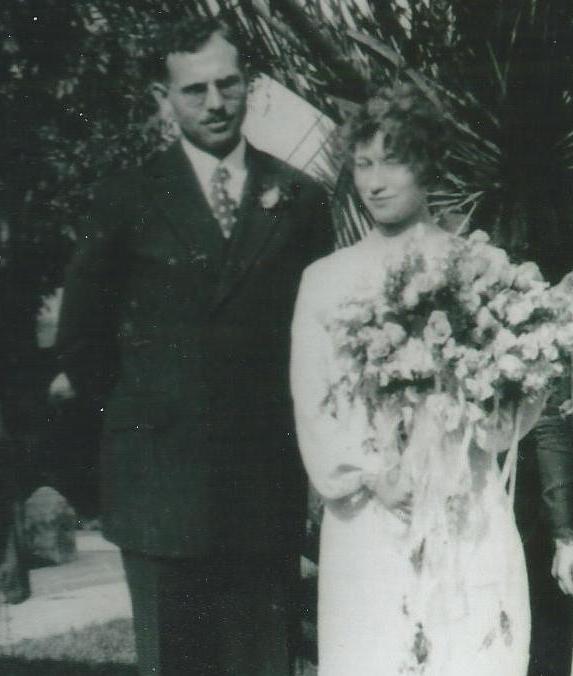
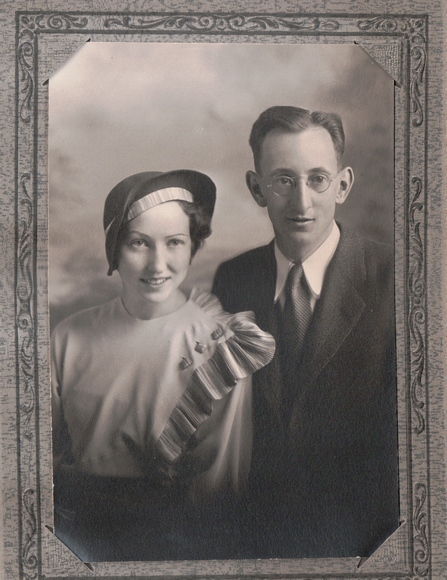
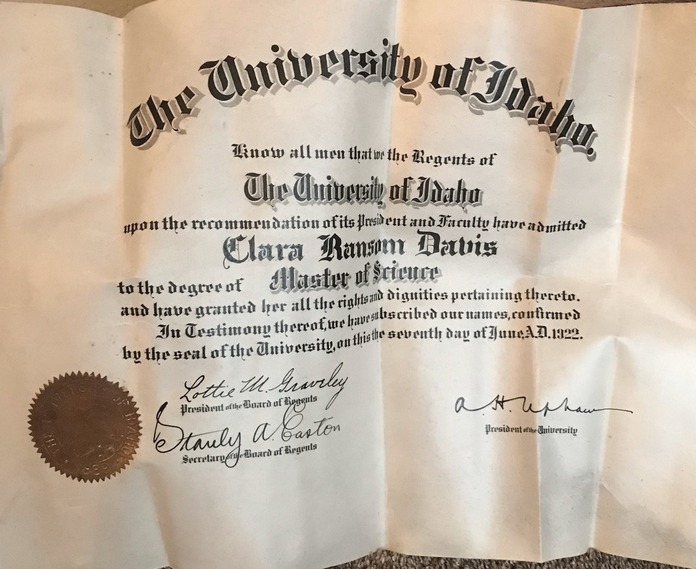
Clara, who was stripped of her career as an educator and County Superintendent of Schools upon marrying in 1905 (at age 28), later went back to UI. In 1922, at age 45, she received her Master of Science in botany, setting a new family tradition of being a non-traditional student. She kept her hand in education by tutoring students who rented from her (including prospective husbands for her daughters and niece), and serving on the county school board.
My mother, Sylvia Halse, also went to college right out of high school. She received her Bachelor of Science in home economics in 1958, and married my dad at the end of her junior year. She was also a traditional homemaker. She had three children and once we were grown, she and my dad divorced.
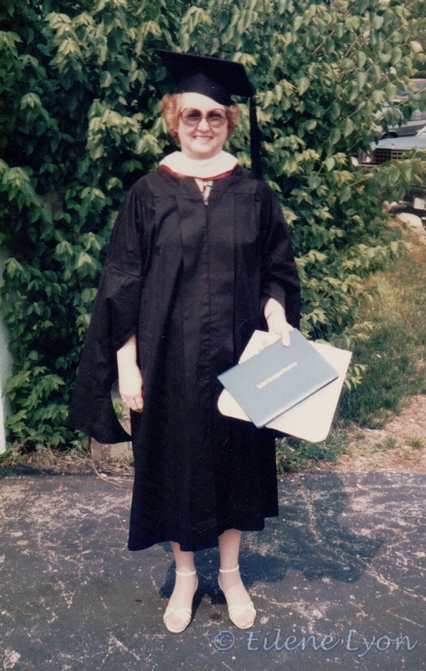
Mom took the opportunity then to go back to school. She took some classes with a focus on Spanish at Wright State University. She also attended the United Theological Seminary in Dayton, Ohio, receiving her Master of Theology in May 1986—a year after I finished my traditional post-high-school college degree programs.
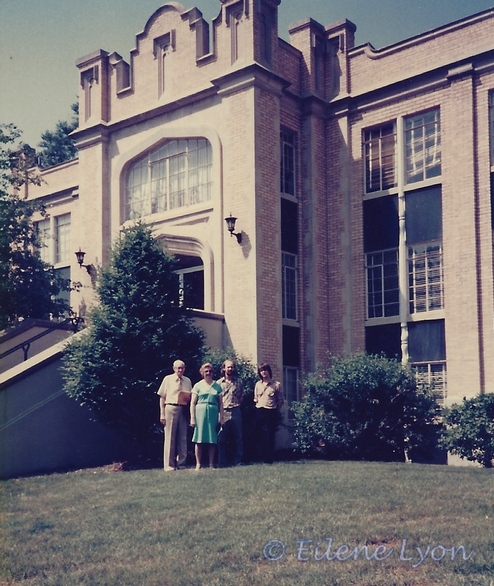
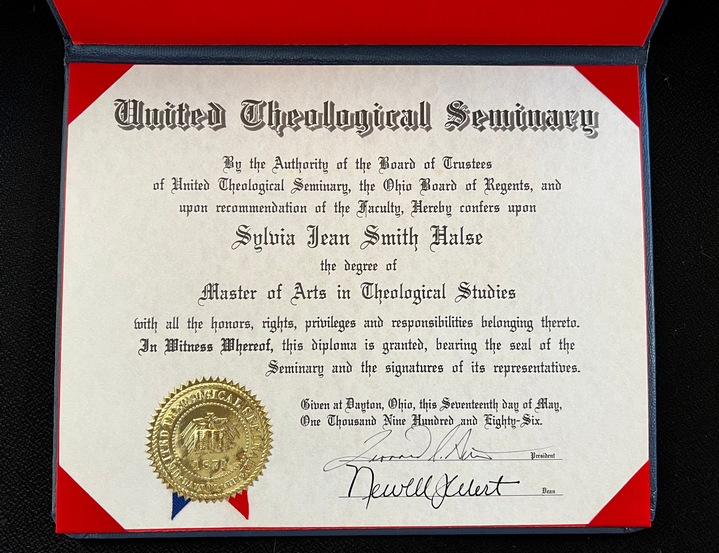
The first opportunity for Mom to use her degree took her to Mesa Verde National Park that summer. While earning money working in food service at the Far View facility, she volunteered with Ministry in the Parks to conduct Sunday services. Following that stint, she traveled on to Oregon to be near her parents and sister.
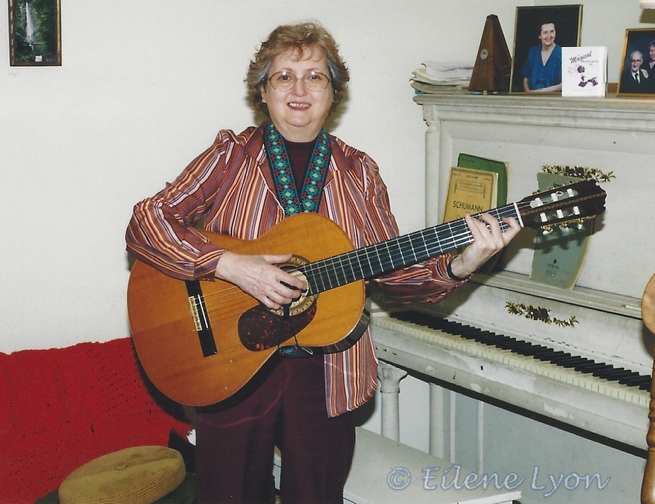
Despite all her efforts, Mom was never hired to be a minister. Like her grandmother, she was thwarted in her career choice. She eventually channeled her spiritual efforts into working with incarcerated women in the Portland area. She enjoyed sharing the Bible and her music (she played guitar) with the women and remained friendly with some upon their release.
After I graduated from high school in 1980, I obtained an Associate Degree in law enforcement from the University of Cincinnati. I was never cut out for being a regular cop, though I did spend some time working in security at King’s Island amusement park. I do think I would have made a decent detective, though, particularly in white-collar crime.
For a time, after obtaining my bachelor’s degree in accounting from Ohio State University, I toyed with the idea of seeking a career in the FBI. I’m very glad I did not pursue that path! I’m a difficult employee in the private sector. Government bureaucracy would have driven me nuts.
When I transferred to Ohio State, I spent a year in the wildlife management program, hoping to work in the U.S. Forest Service (see “government bureaucracy,” above), but being in a second enormous university was difficult for me (both schools had over 50k students). I was soon flunking chemistry and in frustration switched to getting a business degree. Given my parents’ divorce and the Reagan presidency, a career in wildlife management seemed farfetched and impractical.
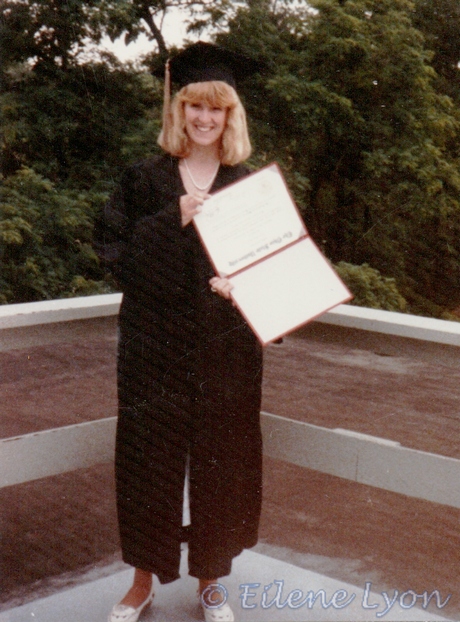
Fast forward a couple decades: After doing a variety of work, but mostly bookkeeping, I finally decided I was bored to tears. I registered to attend the local college, Fort Lewis College, majoring in environmental biology. Being in a small school with roughly 4,000 students, and being a non-traditional student, made all the difference.
My first class, on my first day? Chemistry. Ugh. Would I fail again?
Not only did I not fail, I was awarded the Freshman Chemistry Prize at the end of the school year—and I wasn’t even a chemistry major! I went on to minor in chemistry and geographic information systems. I received my second bachelor’s degree in December 2007.
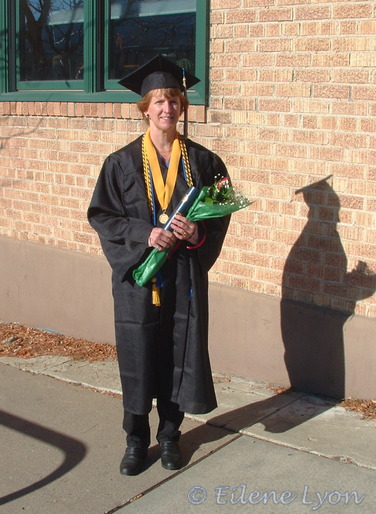
Unlike my great-grandmother and mother, the environmental biology field welcomed me, even in my mid-40s. The world had changed a bit since great-grandma’s day! I enjoyed 11 years of field work and don’t regret either the three and a half years of additional schooling or the work I did.
Though I don’t plan on pursuing any advanced degrees, I am still a life-long learner. I’m currently working on the National Genealogical Society’s Advanced Skills in Genealogy course (18 months of self-paced work). Aside from formal coursework, I am always seeking ways to learn more about myself and about the world around me.
Feature image: My mother, Sylvia Halse, received her Master’s degree in 1986.
 Myricopia
What a wonderful legacy! I’m pondering my motherline, where I’m the first one to go to college. Mom was the first with a high school diploma because her mother’s father wouldn’t let his older children attend high school!
LikeLiked by 1 person
It is interesting that all this education is on my mother line. My dad and his brothers were the first generation in those lines to go to college.
LikeLiked by 1 person
That’s quite a legacy that your great-grandmother and mother passed along to you!
LikeLiked by 2 people
And Grandma, too! I think there may be two more generations after me now.
LikeLike
Grandma even had a job for some years with the IRS.
LikeLiked by 2 people
This post fills me with joy Eilene! It is never too late to learn more. One of the best experiences of my life was returning to get my AA degree then jumping right into a BA program. If I was financially able I would never stop. Every so often I still check on what options might be available and say to myself…maybe someday 🙂
LikeLiked by 2 people
It seems there are many low-cost ways to learn, depending on the subject matter. Getting a degree is the pricey part! I ponder getting a Ph.D for the history research and biography I’m working on, but then realize I just don’t have the energy to jump through the hoops.
LikeLiked by 2 people
There are many ways, you’re correct. I have done many free online courses but I do love the challenge that comes with being a part of full college courses–all of the reading, research and writing.
LikeLiked by 1 person
I get that. I loved the time I spent getting my second degree. I had to maintain focus, which is not my strong suit!
LikeLiked by 1 person
What a remarkable, and rare, record of educational achievement of the women in your family from so long ago. Bravo to all of them, and to you as well. My grandmothers both went to teachers college in the early 1900s, but certainly not university, which the next generation was encouraged to do. Great post.
LikeLiked by 2 people
I wonder if women are more motivated to seek out education because there have been so many roadblocks to it?
LikeLiked by 2 people
That may very well have been the case, especially back in the day. Women’s options were very limited, and once they married they were supposed to stop working (outside the house) unless they were very poor. We’ve come a long way, but the march continues!
LikeLiked by 2 people
Even now, college attendees in the U.S. are majority female.
LikeLiked by 1 person
What an incredible legacy – and I think it’s wonderful to always want to learn! 🙂
LikeLiked by 1 person
I’m grateful that both my parents were proponents of education.
LikeLiked by 1 person
The women in your family – including you, of course – are an inspiration!
LikeLiked by 2 people
Aw, thank you, Dale.
LikeLiked by 1 person
I mean it! And my pleasure!
LikeLiked by 1 person
😊
LikeLiked by 1 person
I love your family history with educated women. Also, they are very beautiful. My mom reminds me of some of the women in your family. Her first bachelor’s degree was home ec. She was a traditional homemaker, but went back to school for a degree in music. She was a coloratura soprano, was a soloist at Presbyterian churches throughout Washington. She also starred as Little Red Riding Hood in the Seattle Playhouse and appeared with the Seattle Opera. My dad didn’t like her career and it abruptly ended. They divorced when I was in college.
LikeLiked by 1 person
That’s a shame about your dad’s attitude. My mom did some volunteer work, but getting a job with us kids and moving around with the Army, just wasn’t possible.
LikeLiked by 1 person
Women had it harder back then.
LikeLiked by 1 person
No doubt about that, is there?!!
LikeLiked by 1 person
👍🏼
LikeLiked by 1 person
Thanks for sharing this. It’s easy to overlook the fact that women who earned college degrees often spurred their daughters/nieces to do the same. My mother and her sisters graduated from 4-year institutions, but the generation before them didn’t go to, or in one case finish, college.
Also I’m grooving on Clare Davis‘s outfit. I adore the look.
LikeLiked by 1 person
My grandmother was a very accomplished seamstress. She often made identical outfits for her two daughters. I asked my mom if it bothered her to wear homemade clothes and she said she loved the clothes her mom made her.
LikeLiked by 1 person
You have a very impressive lineage. I was the first on either side of my family to get a degree, though not to have done the work for one. My parents both left school at 14, for different reasons, but were both very intelligent. When my father decided to be a minister he went to theological college, but although he did the same work as everyone else, because he had no school qualifications they got degrees and he didn’t. A great injustice!
LikeLiked by 1 person
Boy, that really does sound unfair! My grandmother says though her father didn’t go to college, he was intelligent and read a lot. He may have even taught school for a bit before marrying my great-grandmother. He sold horses and provided hay to the University.
LikeLiked by 1 person
All the women in your family and their education is inspiring. So awful that women were expected to give up working when they married. I can’t believe no-one would hire your mum, but am impressed she found a way to contribute using her education.
There was no money for my mum to attend university, but she learned computer programming in the 1960s, rose up through the Canadian public service, and taught at the local community college. Her knowledge of English literature and Western classical music is also impressive. After she retired, she completed the Master Gardener through the University of Guelph.
My sister and I were expected to go to university – I have two degrees in History (BA-Honours, Masters) and a diploma in Library and Information Technology (after going back to school in my 40s). My sister has four degrees – three in Science and a JD – she’s now a lawyer.
How times have changed!
LikeLiked by 1 person
You also come from an impressive female lineage, Teresa! (Actually, women in general are amazing😁.) I’m also impressed with you and your sister. It does seem so unfair to us that married women were expected to stay home. Different times. The women who really wanted careers often avoided marriage for that reason.
LikeLike
What an interesting family history! We’ve come so far; I think women now outnumber men getting college degrees. Your education path underlines how important both our personal attitudes we carry into the classroom and our teachers’ skill in inspiring our minds can be in affecting outcomes.
LikeLiked by 1 person
I’ve also read that women earn more degrees than men now. Class size also plays a role, as does having professors who speak my language. At Ohio State I struggled to understand my Pakistani prof and Ethiopian TA.
LikeLike
I, too, was a nontraditional student for both my bachelor’s and my master’s. My professional career was in nontraditional higher education trying to pay it forward.
LikeLiked by 1 person
Good for you, Liz!!
LikeLiked by 1 person
Thanks, Eilene!
LikeLiked by 1 person
Applause to all the strong willed women in your family. As far as I know, I was the first woman in my Mom’s family to earn a four-year degree. I attended a business school after high school and worked in administrative positions for several years. During those years, I attended several classes at different junior colleges and returned later to use those credits and finish a BA in Human Resources. I put my education to use directing human resources efforts for several years after. I love learning even if it is a new hobby project.
LikeLiked by 1 person
It’s clear that you use your love of learning in many ways, Judy. I also applaud your road to academic success!
LikeLiked by 1 person
What an accomplished lot you gals are.
LikeLiked by 1 person
😊
LikeLiked by 1 person
An amazing feat to have generations of women accomplish in higher education. There were many women and men who had more than enough intelligence to do higher education just not the self confidence or a learning disability made it too hard. Though I believe that all people are suited for university and many do very well without learning in an institutional environment. Bill Gates comes to mind.
LikeLiked by 1 person
Yes, that is all true, Suzanne. Sometimes the students are even smarter than the teachers! There are many ways to learn and styles of learning.
LikeLiked by 1 person
Strong, educated women encourage their offspring to similarly become as learned as they are. You come from an amazing group of learners Eilene!
LikeLiked by 1 person
I do. I’m grateful both my parents believed women should be educated.
LikeLiked by 1 person
They were smart women for that mindset.
LikeLiked by 1 person
It seems to me you ought to be teaching that National Geographic course! What a fascinating project!
This emphasis on education is an incredible legacy for your family. Your story and your mother’s should encourage us all to consider how happy we are in our current circumstances and to pursue learning that will better our lives.
LikeLiked by 1 person
Well, I do give genealogy presentations regularly. Even did one at the national conference one year. But it’s a huge field and I still have much to learn.
I do very much appreciate this legacy.
LikeLiked by 1 person
It sounds like a wonderful opportunity.
LikeLiked by 1 person
😊
LikeLike