
By Eilene Lyon
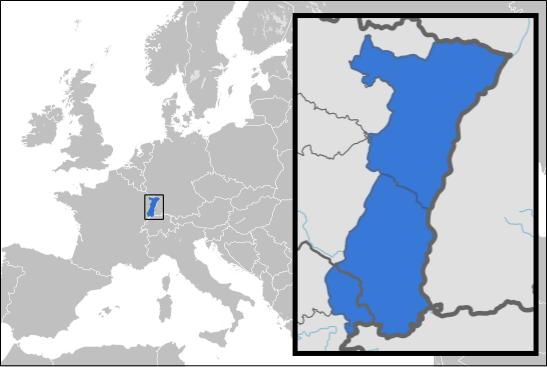
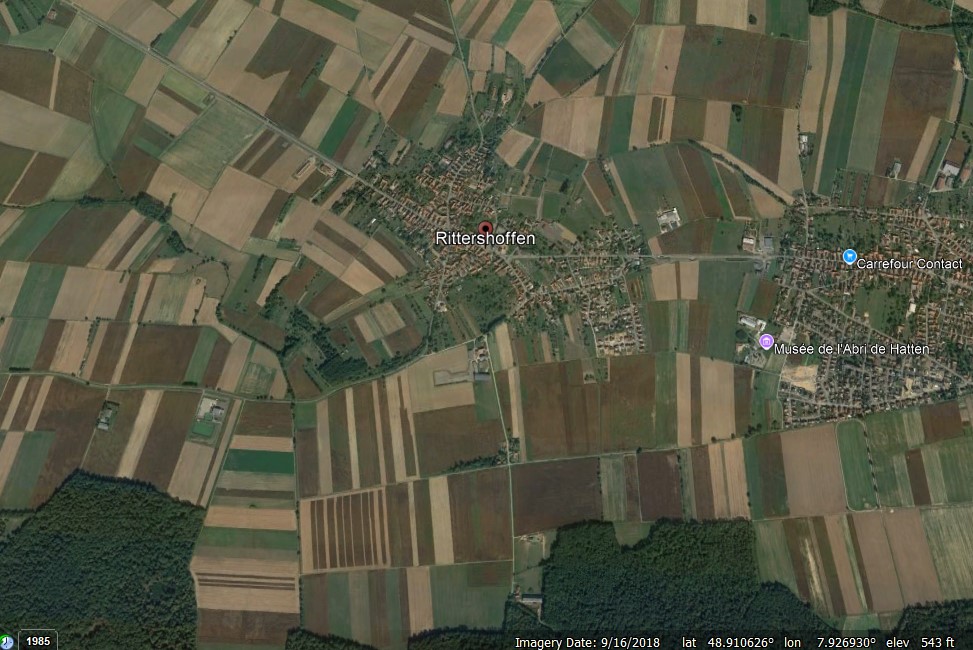
It’s time I shared a bit about a neglected line on my family tree, the Arbogasts of Alsace. They immigrated from a tiny village or commune in the Bas-Rhin department of France called Rittershoffen. The prefecture (capital) of Bas-Rhin is Strasbourg, a major city on the Upper Rhine River. Rittershoffen is about 25 miles (39 km) north of Strasbourg.
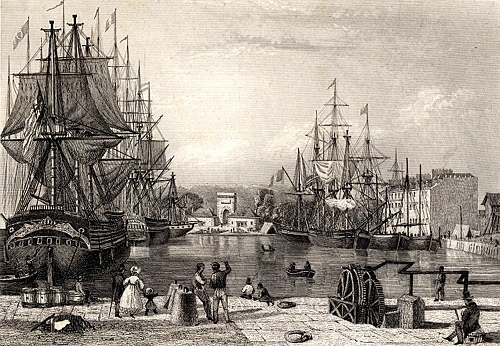
Jean and Magdalaine (Wagner) Arbogast (my 4th great-grandparents), with all their surviving children, left the little village in the summer of 1840. They traveled to Le Havre to board the ship Nile taking them to New York City.1 What prompted them to leave?
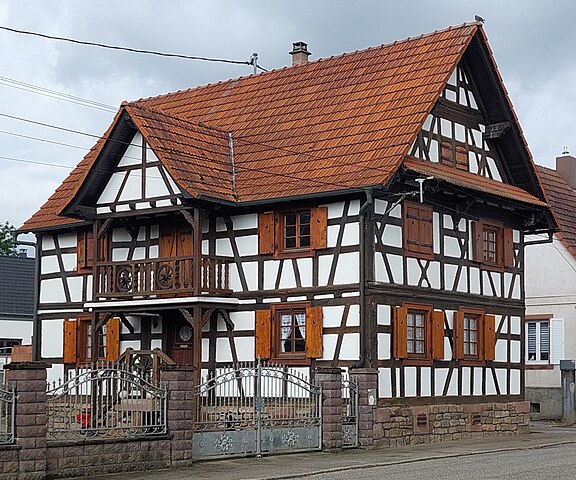
The Alsace region has sometimes been part of Germany, but was always French during the residence of these two generations of Arbogasts. However, they did identify with Germany on some U.S. census records and they probably spoke German, as was traditional among Alsatians. All their births were recorded in France. The family line goes back in Rittershoffen at least to the mid-1600s, and Arbogasts still live there today.
The surname is endemic to Alsace and southern Germany and may date from the arrival of a missionary by that name in the seventh century. He is now known as Saint Arbogast. St. Arbogast is credited with bringing Christianity to the Alsace and he was appointed Bishop of Strasbourg.2 The name could also have derived from the earlier Germanic common name of Arbegast.
(Johann) Jean Arbogast and Magdalaine Wagner were both born in 1794, shortly after the French Revolution.3 Alsatians generally supported the revolution, turning on the feudal lords in Strasbourg. But some Protestants favored the monarchy. Jean married Magdalaine in 1815, the same year as the defeat of Napoleon I. Alsace was then put under military rule for several years. The massive influx of soldiers and horses had a detrimental impact on the economy.4
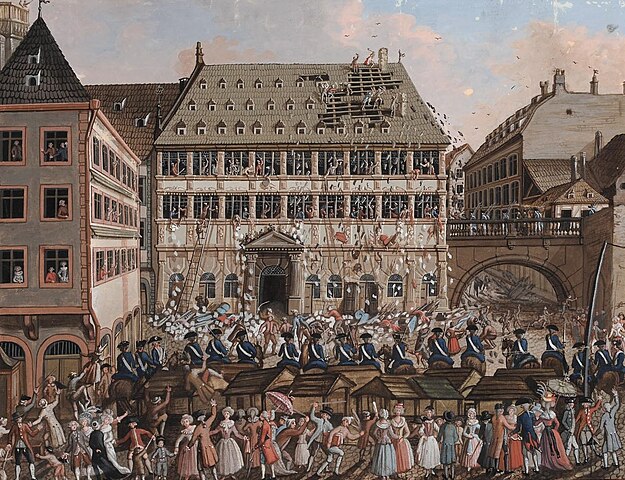
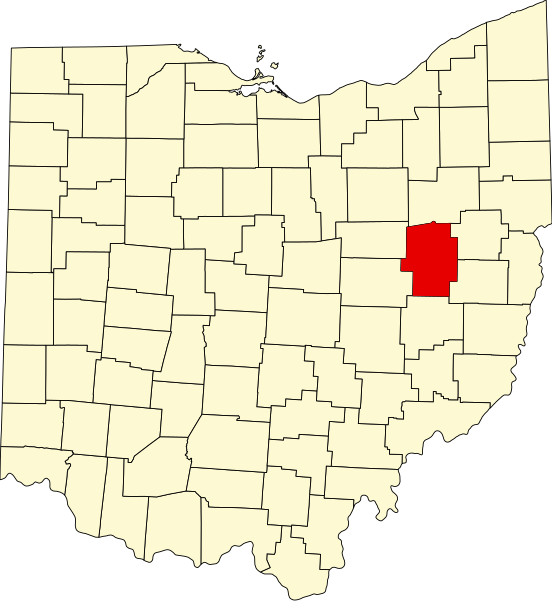
As the population of the region swelled, economic opportunity dwindled. Between 1820 and 1850, many Alsatians left, some for Austria or Russia, others for America.5 Once the Arbogasts arrived in America, they migrated to Tuscarawas County, Ohio, a county largely settled by German immigrants and German descendants from Pennsylvania and western Virginia.
The Arbogasts made their home in Jefferson Township in an area that was alternately known as Stone Creek and Phillipsburg (now Stone Creek).6 It is not far from Ohio’s oldest settlement, Gnadenhütten, founded by German Americans of the Moravian Church in 1772.
Two families in Tuscarawas County, the Oswaldts and Drehers, were also from Alsace, and Jean and Magdalaine’s oldest son and daughter married into those families. Though they did not travel on the same ship, it seems these other families arrived around the same time as the Arbogasts.
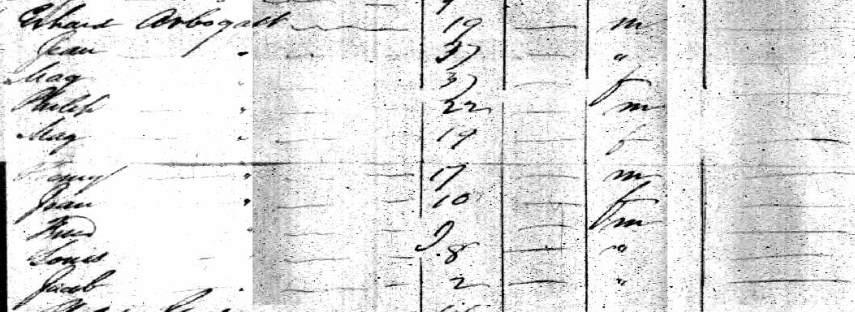
At the time of their migration, there were seven surviving children in the Arbogast family (though there are errors or misrepresentations on the ship manifest):
Philippe, age 23; Magdalaine, age 21; Henry, age 17; John, age 12 (appears on the manifest as “Joan” age 10, f); Fred, age 10; Louis (aka Lewis), age 7; and Jacob, age 2. The manifest also has a 19-year-old Erhard Arbogast directly above Jean, and another Philip Arbogast further down the page. I have not connected them to Jean’s family.
Based on an 1836 census, it appears that Jean was a weaver in Rittershoffen, but I have not been able to learn more about his work there.7 In Ohio he took up farming and anglicized his name to John.8
Magdalaine (Wagner) Arbogast passed away in her new American home in 1859.9 John (Jean) died intestate in January 1868. His estate consisted of some cash and loans he made, primarily to his children.10 The Arbogasts are buried in Stone Creek Cemetery. Clearly they had a long-lasting connection with this tiny community, as the most recent Arbogast burial occurred in 2013 per Find A Grave.
Feature image: Traditional costumes of Alsace by P. Kauffmann (Wikimedia Commons)
- Passenger manifest for Ship Nile, Port of New York, 4 June 1840; The National Archives in Washington, DC, Passenger Lists of Vessels Arriving at New York, New York, 1820–1897, Microfilm M237; image, Ancestry.com (https://www.ancestry.com/imageviewer/collections/7488/images/NYM237_42-0223 : accessed 13 March 2025). ↩
- https://en.wikipedia.org/wiki/Saint_Arbogast ↩
- “France, Births and Baptisms, 1546–1896, database, FamilySearch (https://familysearch.org/ark:/61903/1:1:FM6K-MMN : accessed 13 March 2025), Johann Arbogast, 28 Sep 1794; citing Birth, Rittershoffen, Bas-Rhin, Alsace, France, Archives départementales du Jura (Departmental Archives of Jura), France; FHL microfilm 767,899. “France, Births and Baptisms, 1546–1896, database, FamilySearch (https://familysearch.org/ark:/61903/1:1:FM6V-GYF : accessed 13 March 2025), Magdalena Wagner, 26 Jan 1794; citing Birth, Rittershoffen, Bas-Rhin, Alsace, France, Archives départementales du Jura (Departmental Archives of Jura), France; FHL microfilm 767,899. ↩
- https://en.wikipedia.org/wiki/History_of_Alsace ↩
- Ibid. ↩
- https://en.wikipedia.org/wiki/Stone_Creek,_Ohio . “1840 United States Federal Census” database, Ancestry.com (https://www.ancestry.com/imageviewer/collections/8057/images/4093845_00652 : accessed 13 March 2025), entry for “John Albagort,” Jefferson Township, Tuscarawas County, Ohio; citing National Archives microfilm M704, roll 430, p. 311. ↩
- Département du Bas-Rhin, 1836 Rittershoffen census, record for Jean Arbogast, Tisserand [weaver], unpaginated; image shared by Jennifer Perry on Ancestry.com, accessed 27 December 2020. ↩
- “1850 United States Federal Census,” database, Ancestry.com (https://www.ancestry.com/imageviewer/collections/8054/images/4093961_00114 : accessed 13 March 2025), entry for “John Arbogost,” Jefferson Township, Tuscarawas County, Ohio; citing National Archives microfilm M432, roll 734, p. 54b. ↩
- https://www.findagrave.com/memorial/104940302/magdalena-arbogast ↩
- Probate Court, Tuscarawas County, Ohio, Probate Administration Book 13, pp. 280–1, Estate of John Arbogast Sr.; images, FamilySearch (https://www.familysearch.org/ark:/61903/3:1:3QS7-89Q2-X2D5 : accessed 13 March 2025), microfilm 5,870,728. ↩
 Myricopia
I think it’s so interesting that people seemed to immigrate in groups from their hometowns. Practically my husband’s whole family and relatives from Ireland immigrated to the same town in Connecticut and worked at the same factory. But I suppose there’s safety and support in numbers.
LikeLiked by 1 person
I’m sure it’s good to travel in groups for a number of reasons. And if you move to a place with people somewhat like you, they can help you when you don’t speak the language or know the customs.
LikeLiked by 1 person
Interesting! I haven’t read much about Alsace.
LikeLiked by 1 person
I’ve only had vague notions about it. I have been to Strasbourg, though, on one of our European trips. Beautiful city!
LikeLiked by 1 person
Thank you for sharing this chapter of your family history. I knew almost nothing of Alsace and I love the way you are able to bring to life these stories from so long ago. It’s incredible to me that they came all the way to Ohio and what is now part of Ohio’s Amish country. They wouldn’t recognize the place if they could see it today.
LikeLiked by 1 person
This is the first time I’ve found such deep roots in just one little village in Europe. Some of the others I’ve researched may also go back that far, but I haven’t seen the documentation. I drove through Tuscarawas County in 2017, but did not know my connection then. Did not stop to look around. That has happened to me too often. But I don’t always have the time.
LikeLiked by 1 person
There are never enough hours when traveling. Never.
LikeLiked by 1 person
This is true!
LikeLike
What an interesting look inside this part of your family history. You are prolific, you know that?
LikeLiked by 1 person
This family line appeared due to DNA research, which is one reason I have t written about the earlier, but they are turning out to be a fascinating subject for me.
LikeLiked by 1 person
I guess Jean/John found farming would be a better way of life to provide for his family than weaving – maybe he still did weaving as a hobby though. It is interesting from the Google map, just how much of the area in France was dedicated to farming. That ship’s passenger manifest, albeit short, was interesting to see, all these years later and the artifacts that you are able to discover through your pursuit of learning about your ancestors amazes me Eilene.
LikeLiked by 1 person
More and more is available online, but still scratching the surface. The little bit of forest you see at the bottom of the Google Earth image is actually quite extensive. The Rittershoffen boundary extends down into the woods a ways. But yes, the agricultural fields are quite extensive. This are is quite close to the Rhine, so alluvial sediment has enriched the soil. (But that is long in the past, unless the area floods regularly.)
LikeLiked by 1 person
You’re lucky for what you can find online these days Eilene or even using Google Earth. I know you have written in the past about having to go through microfiche to learn info. I can remember needing to do that while in college, perhaps needing newspaper articles to cite for my journalism classes. That was laborious, requiring many hours and visits to the librarian as the info was not where it was supposed to be.
LikeLiked by 1 person
Going through microfilm reels is the total pits! My neck is always killing me afterwards.
LikeLiked by 1 person
Yes, those machines cause you to look up to view the film.
LikeLiked by 1 person
Wow, I love all these stories of your family, Eilene. I see you happened upon this line through DNA research. I haven’t even gotten around to doing 23 and me yet–who knows what skeletons will pop out!?
LikeLiked by 1 person
I’d recommend Ancestry.com for DNA if you want to study relationships. 23 & Me is better for medical results. FamilyTreeDNA has more targeted testing in maternal and paternal lines. Anyway, glad you enjoyed the story!
LikeLike
My ancestor was a weaver too – but from further east. Instead of America, they emigrated to Australia. As a descendant I think we often wonder why? What prompted them to leave their village when so many stayed, despite hardship. Did you ancestors ever return to Alsace?
LikeLiked by 1 person
I don’t have any records to indicate the ever went back. Since the entire family migrated together, there was less reason to go. It does make you wonder what convinced them to go when others did not. I think they must have received some encouragement from an earlier migrant.
LikeLike
They were incentives offered via emigration agents. The new world was painted as a land of milk and honey. Our family never went back until I came into being. Landing in Denmark felt like coming home!! Corny but true.
LikeLiked by 1 person
I feel much the same about Germany—except I have had little luck with learning the language. But my niece is pretty fluent. I have to rope her into being my interpreter!
LikeLike
I am also learning German – beginner level. I have a leg up as some Danish words are the same in German or very similar – however, the Old German or Prussian in the birth registers seems quite different to that practiced today.
LikeLiked by 1 person
As a teen I did pretty well with Spanish and French, but the German…just doesn’t stick to these old brain cells.😂
LikeLike
It is so much harder when you’re older to retain things, I used to absorb a language like a some holds water, but now I forget lots of German words, even from my language lesson at U3A just a week ago.
LikeLiked by 1 person
It’s funny how I can retain tons of personal details about my myriad ancestors, but I can’t remember the names of my friends’ kids! Some stuff just really doesn’t stick.
LikeLike
Yes indeed!
LikeLiked by 1 person
How cool the family established such deep roots in the community! I can’t imagine what it was like to take such a chance – crossing the ocean to an unknown land with 7 children.
LikeLiked by 2 people
I think a willingness to take bold action is a trait bequeathed to Americans by our immigrant ancestors. Tough folks.
LikeLike