By Eilene Lyon
During the days when dirt and manure still muddied Durango streets, commercial construction boomed. In the early twentieth century, Durango had admirable aspirations. Though she would never achieve her dream of becoming “the flourishing metropolis of the southwest” or “a second Denver,” her prospects in 1902 looked promising.
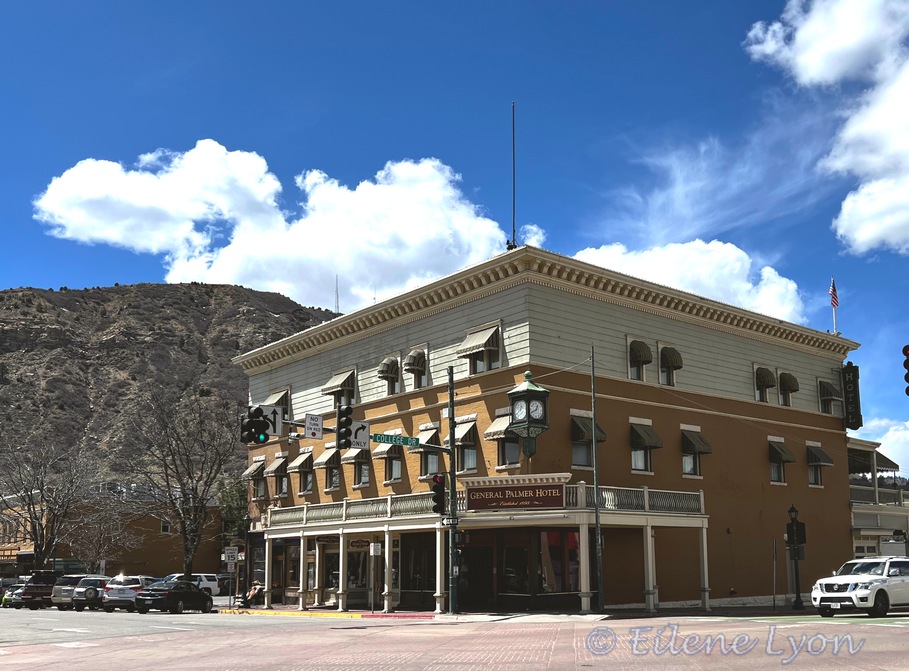
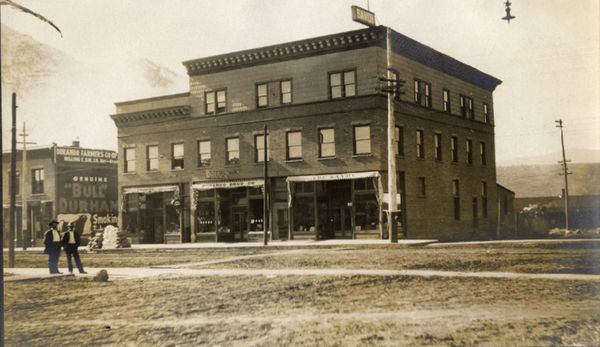
A trio of men—Michael Alexius “Alex” Wahler, William A. Perry, and Robert “Bob” Roberts—sensing a good investment, designed and constructed adjoining brick buildings, two-stories high, on the southwest corner of Main Avenue and Sixth Street (now Main and College Drive).
Today the combined and modified buildings are known as the General Palmer Hotel. The hotel is named for William Jackson Palmer, a Civil War veteran who founded Colorado Springs, Manitou Springs and several institutions, including Colorado College and the Denver & Rio Grande Railroad.
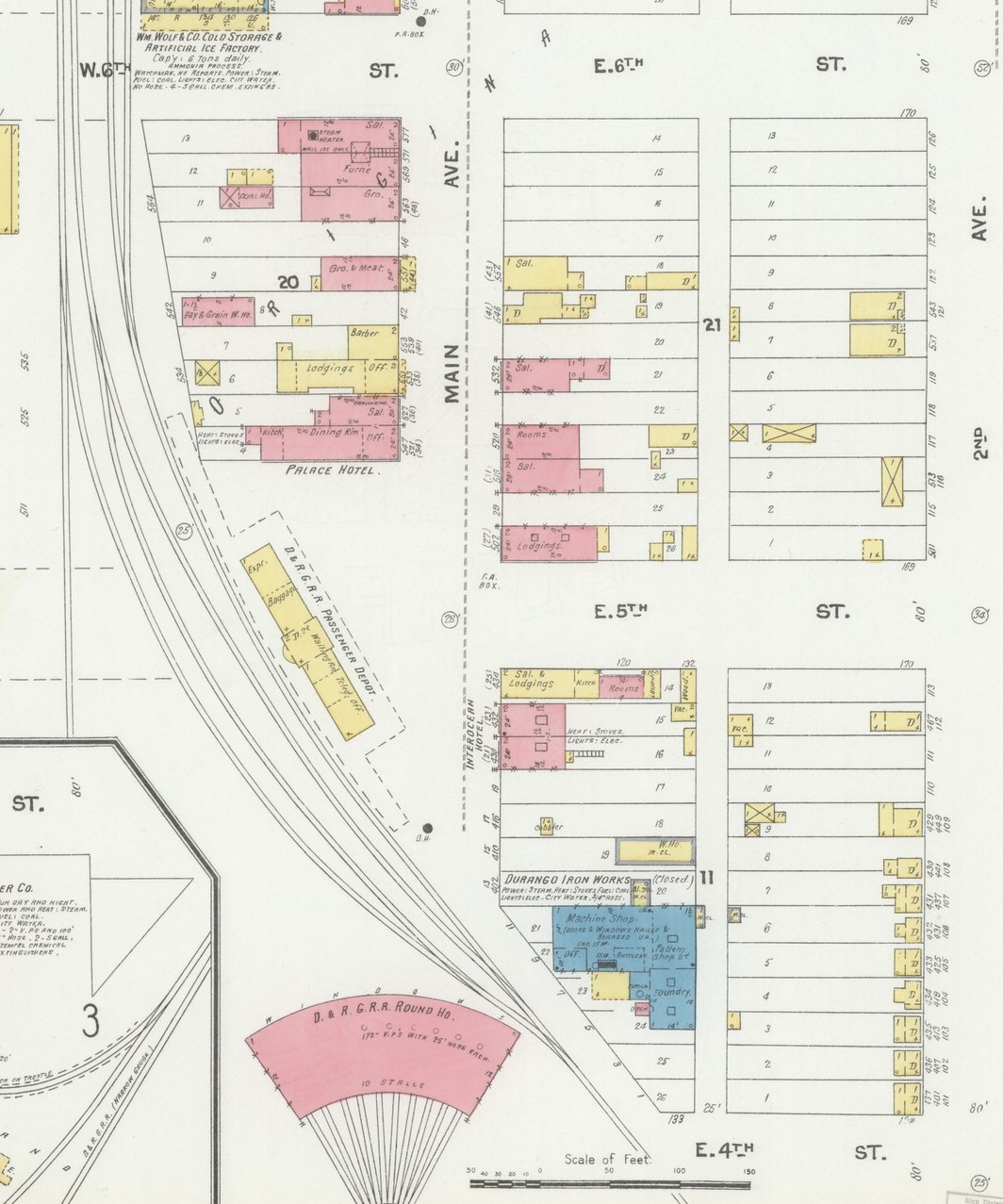
What was first called the Perry-Roberts block covered three city lots (563, 569, and 577 Main). The southernmost belonged to German immigrant Alex Wahler. Wahler ran the Inter-Ocean Hotel beginning in 1892, across the street from the train station, and sold meat on the side.
Partners William A. Perry and Bob Roberts, two southwest Colorado pioneers, made their fortune in the cattle industry which funded their extensive Durango real estate purchases. Perry and Roberts acquired the north two lots on July 21, 1902 for $2,500. The Durango Semi-Weekly Herald announced their building plans on August 7.
The Perry-Roberts partnership and Wahler hired 45-year-old contractor Daniel McGillis to erect the buildings. They ordered brick from the Boston Coal & Fuel Co. Together, the buildings—Wahler’s at 25 ft. x 75 ft. and Perry-Roberts’s at 50 ft. x 75 ft.—shared the joint wall between and appeared to be one large edifice. McGillis broke ground on September 12, and the tenants had all moved in by Christmas 1902, a mere three-and-a-half months later. (Try that today!)
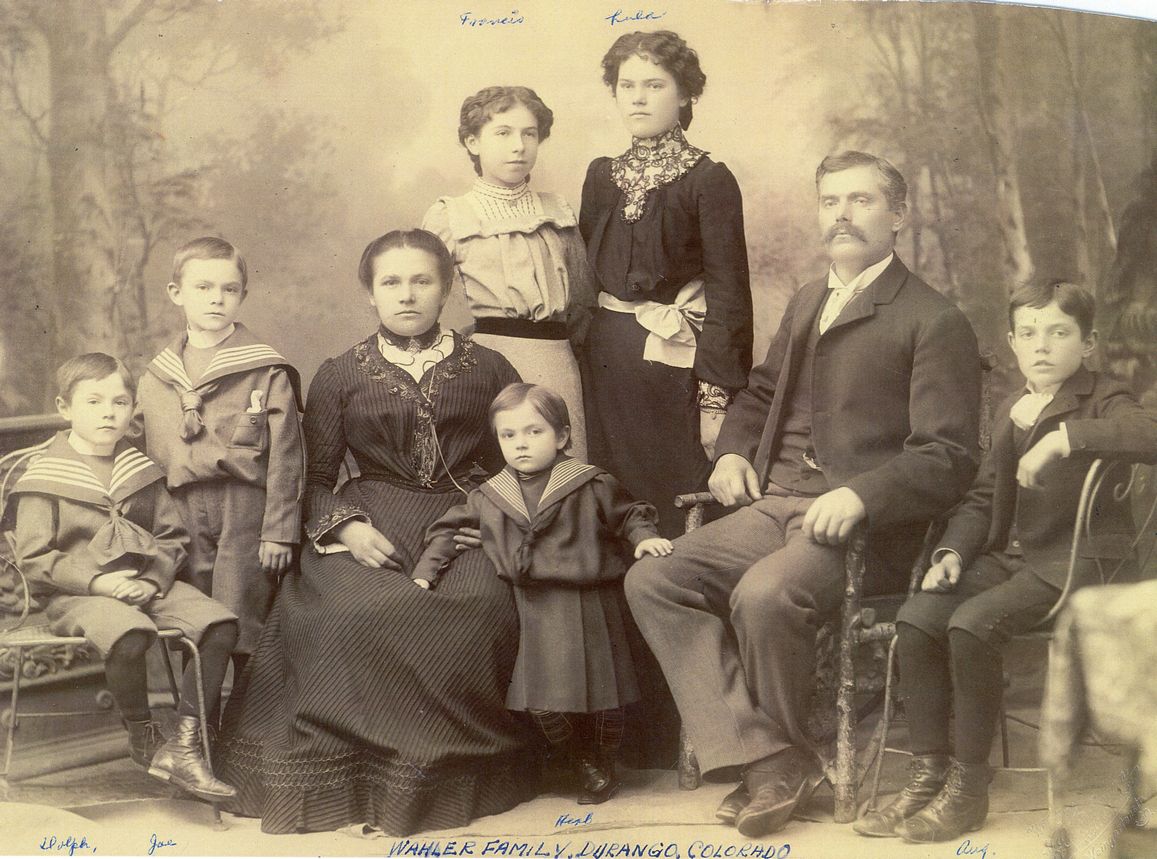
Wahler, the meat man, occupied his own building and expanded his offerings to include other groceries. The middle unit on the first floor housed Thompsen’s second-hand furnishings store. Perry and Roberts leased the corner space, at Main & Sixth, and their second story to partners Hugh Allen and George C. Draper.
Allen and Draper opened the Capitol saloon on the ground floor and furnished fifteen “large and airy rooms” upstairs for residents and transient guests. The pair had previously run an establishment in Hesperus, west of Durango, and briefly ran the bar at the Palace Hotel, closer to the railroad depot. Their Christmas Day opening featured a feast of “o’possum and sweet potatoes.”
Perry sold his share of the building to Roberts in 1904. Two years later, Roberts’s building underwent big changes. Thompsen relocated his furniture business across the street and the Durango Drug Co., run by “Doc” Willard Libby, later moved into the middle ground-floor retail space. Charles Fleck leased the corner section and upper floor.
Fleck had succeeded Wahler as the Inter-Ocean Hotel manager. He decided to open his own establishment in the Perry-Roberts block, giving it the high-flying name of “Hotel Savoy,” presumably to suggest a connection to the posh Savoys in Denver and London.
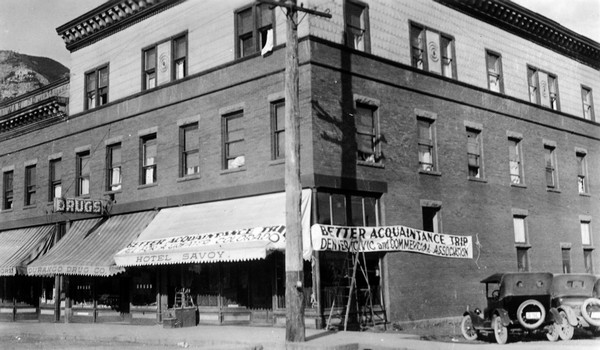
According to the Herald: “Mr. Fleck has given care to every detail with the purpose of making the Savoy first class. In the kitchen he has placed one of the largest and latest approved ranges in the West. The dining room, with its morning light and afternoon shadows will be ideal.”
He had plenty of competition in the lodging business. The Palace, the Inter-Ocean, and several boarding establishments all occupied the 400 and 500 blocks of Main. Being near the train depot conferred an advantage, as most visitors arrived by rail. The Strater Hotel operated a block north, and the Rochester Hotel on Second Ave.
Fleck soon needed additional rooms and convinced Roberts to add a third story to the building in June 1906. (Wahler’s building remained just two stories at least into the 1960s.) The frame-built addition went up quickly. Hotel Savoy thrived. Fleck had George Goodman redecorate his offices in 1910 with the “most expensive linoleum floors” covered with Navajo rugs.
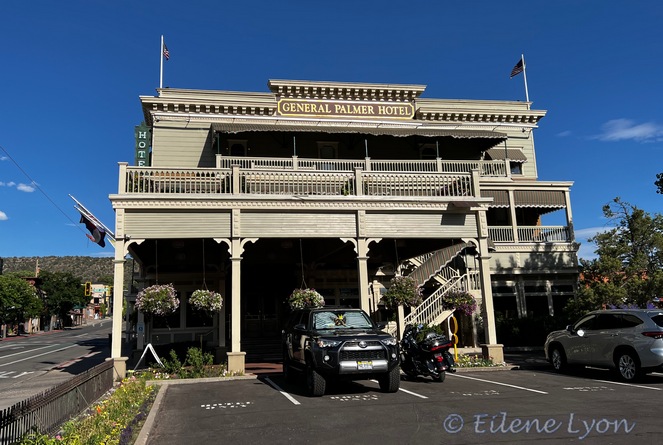
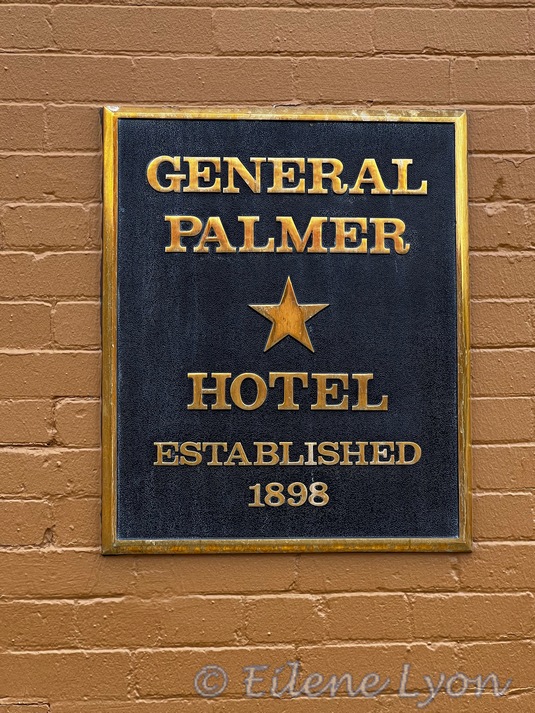
A large electric sign built by Western Colorado Power Co. graced the corner of the building in 1925. The Savoy operated at least until the 1940s.
The biggest threat to the Perry-Roberts-Wahler buildings came via two Phoenix businessmen, Tom Toberman and Dan Romanoff. They purchased the entire Rio Grandeland area (i.e. the 400 and 500 blocks of Main) in 1973 with the intention of demolishing all the old buildings. They planned a multi-million-dollar mall-like commercial district. The fate of the railroad was still up in the air at the time.
Fortunately, a stay of execution for some historic structures came about in 1975 when Jim Jackson purchased Rio Grandeland. His was a gentler vision for restorations and improvements, which endure to this day.
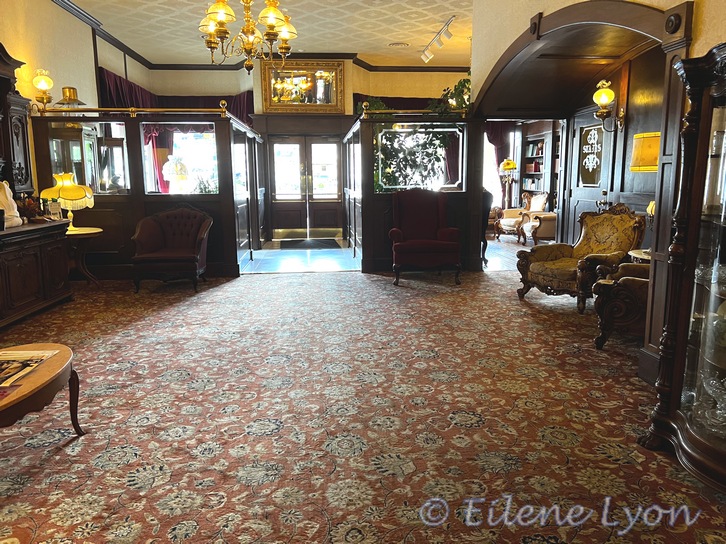
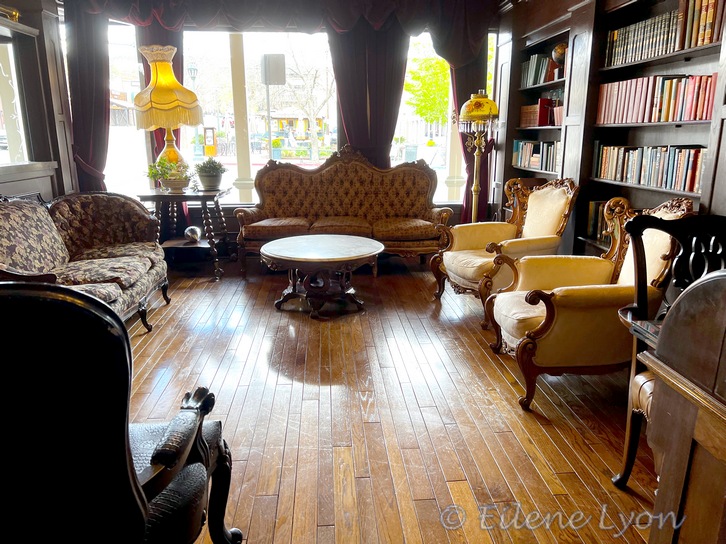
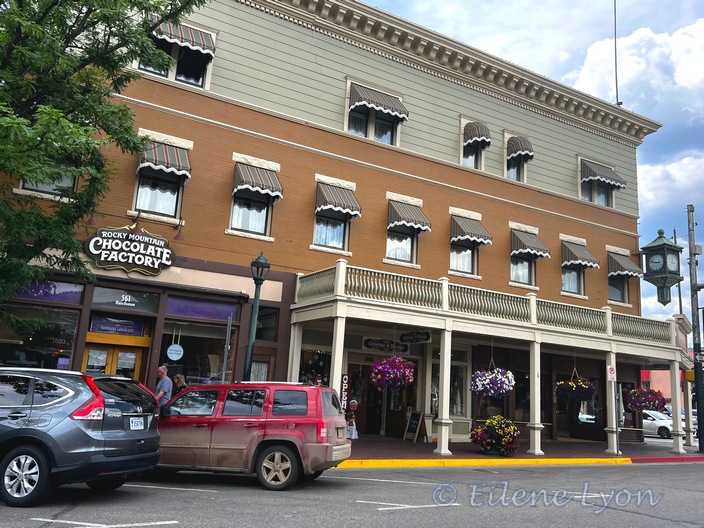
Feature image: Street view of the General Palmer Hotel today (Perry-Roberts block) at Main and College Dr. The two-story brick portion is the original structure.
Sources:
La Plata County Clerk and Recorder
Colorado Historic Newspaper Collection (www.coloradohistoricnewspapers.org)
Newspapers.com
Durango Herald digital archive, Durango Public Library.
Ancestry.com
 Myricopia
Great to have this history Eilene as I learn more about my new home state! This is gorgeous inside. Had the “mall” come to fruition Durango might be looking a bit more like the Castle Rock area right now 🙂
LikeLiked by 2 people
I don’t think I’ve ever driven through Castle Rock except on I25. Durango is a gem!
LikeLiked by 1 person
It’s interesting for sure. You can see what it once was before someone decided that industry, big box stores and massive housing developments needed to take over this lovely open land. But I suspect that’s not unique at all given your post 🙂
LikeLiked by 1 person
Sometimes those visions get realized, but often people choose to preserve and enhance the older look. We have some of both, of course. It’s a popular place and housing and commerce have exploded in the past 25 years.
LikeLiked by 1 person
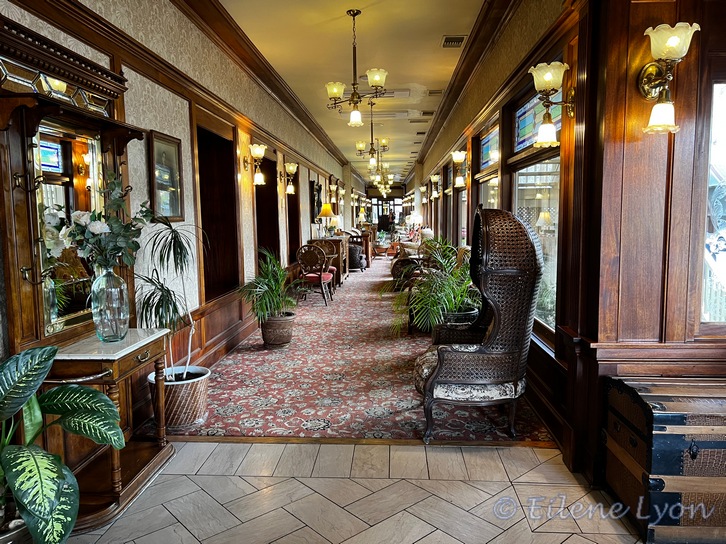
Interesting history, though very cheeky of them to claim existence since 1898! Is that you reflected at the end of the corridor taking the photo?
LikeLiked by 2 people
It is indeed me reflected while taking the photo. You have to zoom in to see that!
LikeLike
I wouldn’t have noticed if you hadn’t mentioned the mirror – it looked like a long corridor to me at first.
LikeLiked by 1 person
It’s a powerful illusion!
LikeLiked by 1 person
A fascinating history indeed. Very relieved those buildings weren’t torn down, but instead, restored. I hate losing physical history.
LOL re the building being completed in 3 months! It would take at least triple that these days just to get the permits etc!
LikeLiked by 2 people
Isn’t it just amazing how complicated things are these days?
LikeLike
A wonderful capturing of Durango’s history, Eilene. It makes me consider doing something similar for our historic town. More and more of the original buildings are losing ground to new builds.
LikeLiked by 2 people
About the only time we see a radical change downtown is after a fire, or if a building from the 50s or 60s gets torn down to build something larger. A lot has been preserved and remodeled or returned to its original appearance.
LikeLiked by 1 person
Very commendable! We have an active heritage society and lots of historical plaques on old homes (including one where Benedict Arnold hid out for a while!). But between the reality of the longevity of wooden buildings after 150-240 years of snow and ice in winters, and the need for more “urban densification” so our public transit can be sustainable, not everything is safe from the chopping block anymore. More’s the pity.
LikeLiked by 1 person
After researching this building, I think I must take historic plaques with a big grain of salt. But it’s good to have historic preservation groups and Durango’s has really done a great job. The older part of town gets more beautiful every year, I think.
LikeLiked by 1 person
What wonderful history and so nice it’s been preserved.
LikeLiked by 2 people
It is a beautiful hotel inside. Not fancy outside. Comfy rooms, too.
LikeLiked by 1 person
👍🏼
LikeLiked by 1 person
I always find the history of these old blocks fascinating. Driving by, you have no idea what they once were, what stories they could tell.
LikeLiked by 2 people
I wish there were more old photos of this one. I found one that showed part of the Hotel Savoy sign, but that’s about it.
LikeLiked by 1 person
These hotels really are time capsules, from the exterior to the interior, you really feel as if you’ve been transported back to that time. It’s very cool.
LikeLiked by 2 people
The Strater and Rochester are also nice, though the latter is smaller and more casual.
LikeLiked by 1 person
That was a fun backstory on the building and especially the hotel Eilene. True, that erecting a building in just three-and-a-half months’ time would not happen today – it would take that long to pull permits and get the contractors lined up. But we call that progress. : ) I like the look of the hotel, especially the library, where it would be nice to while an afternoon away on the sofa or a chair near the old-fashioned lamp reading one of those books.
LikeLiked by 2 people
There’s a lot of charm in Durango’s old hotels, for sure! I was amazed at the timeline for the land purchase and construction of this landmark building. It has undergone many upgrades over the years, I’m sure. But it hasn’t fallen down or anything. Sometimes I do think we have gone a tad overboard with what it takes today to build.
LikeLiked by 1 person
I liked the photos you shared with us. Yes, we do go overboard and you see how those older buildings hold up, solid and well built in little time.
LikeLiked by 1 person
I’m all for streamlining to the essentials.
LikeLiked by 1 person
Talk about a snapshot in time! It’s beautiful, nothing like modern hotels.
LikeLiked by 1 person
True—it’s no Holiday Inn!
LikeLiked by 1 person
So many old buildings were torn down in the name of modernization. It’s such a shame they weren’t restored like this one.
LikeLiked by 2 people
Europeans have a much better sense for historic preservation , but we’re beginning to see more value in it here.
LikeLiked by 1 person
Interesting writing 👏
LikeLiked by 1 person
Thank you!
LikeLike
What a beautiful old building and a relief that it was saved!
LikeLiked by 2 people
I would have cringed at a modern mall in n those blocks, I think. I doubt there was a strong city historic preservation committee at that time.
LikeLiked by 1 person
It certainly would have changed the look of your downtown!
LikeLiked by 1 person
Probably not for the better!
LikeLiked by 1 person
Not at all!
LikeLiked by 1 person
We’ll just be happy for how it all worked out.😊
LikeLiked by 1 person
Yes! Agreed! Sometimes we just have to be thankful that things didn’t end up worse than they are. Perfection is the enemy of good enough.
LikeLiked by 1 person
Well said.
LikeLiked by 1 person