By Eilene Lyon
Veteran’s Day 2025
The two youngest sons in the Henry Zane Jenkins and Abigail G. Bedford family served in—and survived—the US Civil War. Their home state of Indiana held vast numbers of Southern sympathizers, immigrants from Kentucky, Tennessee, Virginia, and the Carolinas. It was often called “the Dixie of the North.”
But the Quaker strongholds in east-central Indiana, such as Jay County where the Jenkins family lived, supported the Union. The Jenkins family did as well.
Thomas Bedford Jenkins (1833—1880)
Thomas Bedford Jenkins, known as Bedford, was 28 years old when the war began. He and his wife, Patience Randall, had three young children when Bedford enlisted for a three-year term in Hartford City, Blackford County.1 Company K of the 84th Indiana Regiment mustered in at Richmond, Indiana, on September 3, 1862 and departed for Covington, Kentucky, five days later.2 Records indicate Bedford’s enlistment date was a bit later, on September 28.
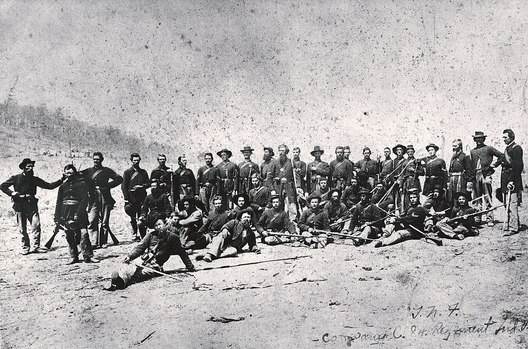
The regiment boarded a train to West Virginia on October 1 and remained there until mid-November. Bedford was far from his home that October while Patience nursed their three sick children. Many diseases spread quickly in the community and some were fatal. William, Emma, and Mary Jenkins all perished by the end of the month, leaving their mother bereft and childless.3
The 84th Regiment moved back to Kentucky in late November where it remained until February 1863. Their first taste of battle came the following month in Tennessee. They fought at Chickamauga in Georgia in September and Missionary Ridge in Tennessee in November 1863. Their longest fight—eight days—occurred at the Battle of Dallas in Paulding County, Georgia, in May 1864.4
The Army promoted Bedford to Corporal on August 1, 1864. The regiment mustered out at Nashville on June 14, 1865.5 He returned home to his grieving wife, who must have felt immense relief he had survived.

They had two more children, Frank and Abbie. Patience died in November 1873 at age 39, probably of tuberculosis, a disease that Bedford may have also suffered.6 Son Frank was tragically killed by a runaway horse at age 10, leaving just Bedford and Abbie to carry on.
Barton Bradbury Jenkins (1843–1918)
The youngest member of the Jenkins family was the first to go to war. Barton served in three different units over the course of the war and rose from Private to Second Lieutenant. He first enlisted for a three-year term in Indianapolis on August 11, 1861 at the age of 17, joining Company C of the 39th Indiana Volunteers.7 The regiment was later reconfigured as the 8th Indiana Cavalry.
The regiment was ordered to Muldraugh’s Hill in Kentucky and moved to several other locations. The men saw action on October 12, 1861 at Upton’s Hill. They fought at the battle of Shiloh in April 1862 and other battles in Alabama and Mississippi.8
Barton received a discharge for disability in March 1863 at Camp Sills, Tennessee, and returned home. He suffered from a hernia and an enlarged prostate.9 While his older brother was engaged at the Battle of Chickamauga, Barton was preparing to wed Eliza Jane Baird in Jay County on October 13, 1863.10
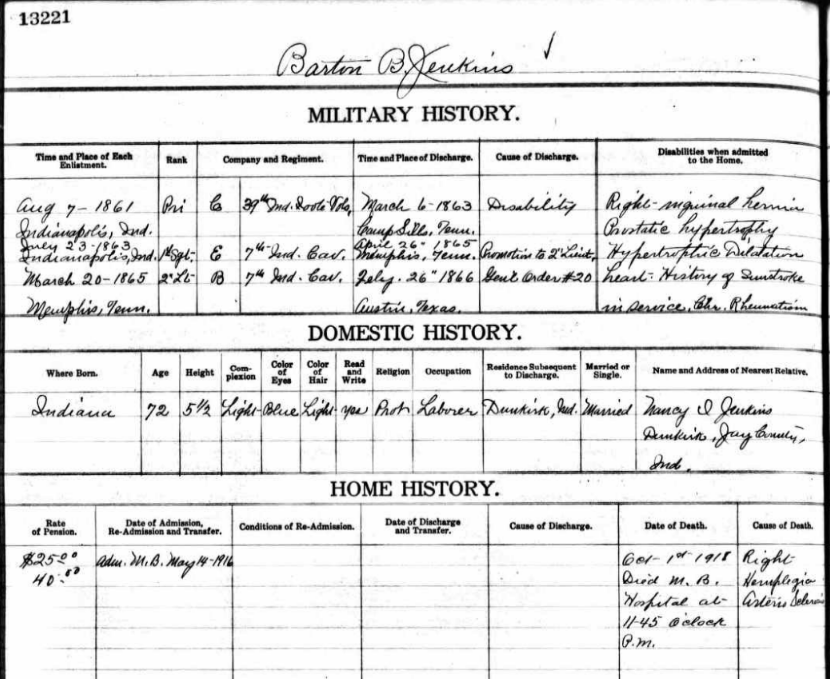
Prior to his marriage, Barton reenlisted in Co. E of the 7th Indiana Cavalry. His service record states he enlisted in July 1863, again at Indianapolis, this time as a Sergeant.11 The regiment mustered in October 1, 1863 (presumably he was a bit tardy). He transferred to Co. B of the same cavalry regiment on March 20, 1865, with a promotion to Second Lieutenant.12 A listing of the movements of Barton’s units would get too lengthy for this blog.
Barton was discharged from the 7th Cavalry on February 18, 1866.13 He had additional health issues noted in his record for an enlarged heart and history of sunstroke. In addition, he suffered from chronic rheumatism.14
He returned home to Eliza, who gave birth to their daughter, Jennie, on March 9, 1867.15 Eliza disappears from records at that point. I do not know if she died or they divorced. The following year, Barton remarried to Nancy Isabel “Belle” Arnold and they had nine children together.16 All of Barton’s children survived to adulthood, though a daughter died at age 21 from tuberculosis.
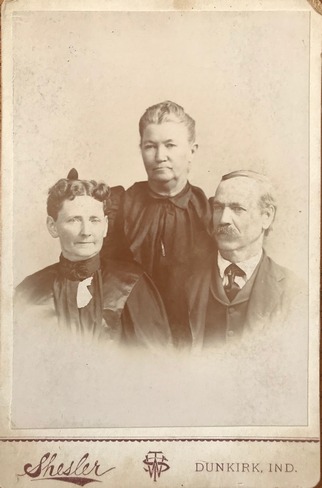
As a consequence of his service and disabilities, Barton received a military pension. In his final two years of life, he resided at the National Military Home in Marion, Indiana.
Neither Bedford nor Barton received military headstones for their graves, but their service is remembered and honored by descendants and other family. They are both buried in Jay County.
Thomas Bedford Jenkins at Find a Grave
Barton Bradbury Jenkins at Find a Grave
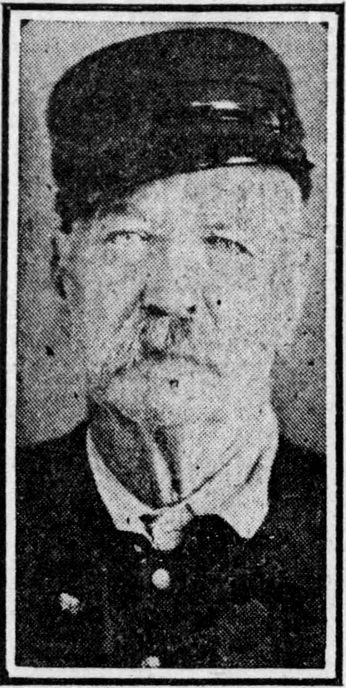
Feature image: Barton B. Jenkins as an old soldier. Photo from his obituary, The Star Press (Muncie, Ind.) October 6, 1918.
- Thomas B. Jenkins in “U.S., Civil War Soldier Records and Profiles, 1861-1865” database, Ancestry (https://www.ancestry.com/search/collections/1555/records/4243352 : accessed 10 November 2025). ↩
- “84th Indiana Infantry Regiment,” Wikipedia (https://en.wikipedia.org/wiki/84th_Indiana_Infantry_Regiment : accessed 10 November 2025). ↩
- Willie Jenkins [William H. Jenkins], FindaGrave (https://www.findagrave.com/memorial/19930537/willie-jenkins : accessed 10 November 2025). Links to the other two children can be found here. All three share a single headstone. Bedford’s sister, Emma, also lost three children that year. They died of scarlet fever, and likely these children did as well. ↩
- “84th Indiana Infantry Regiment,” Wikipedia. ↩
- Thomas B. Jenkins in “Web: Indiana, U.S., Civil War Soldier Database Index, 1861-1865” database, Ancestry (https://www.ancestry.com/search/collections/9762/records/154422 : accessed 10 November 2025). ↩
- Patience Randall Jenkins, FindaGrave (https://www.findagrave.com/memorial/7395400/patience-jenkins : accessed 10 November 2025). ↩
- Bardin B. Jenkins, “Web: Indiana, Civil War Soldier Database Index, 1861-1865,” database, Ancestry (www.ancestry.com/search/collections/9762/records/154300 : accessed 10 November 2025). ↩
- “39th Indiana Infantry Regiment,” Wikipedia (https://en.wikipedia.org/wiki/39th_Indiana_Infantry_Regiment : accessed 10 November 2025). ↩
- Barton B. Jenkins, “US, National Homes for Disabled Volunteer Soldier, 1866–1938” database, Fold3; image, Fold3 (https://www.fold3.com/sub-image/685234018/jenkins-barton-b-us-national-homes-for-disabled-volunteer-soldiers-1866-1938 : accessed 10 November 2025). ↩
- Bardon B. Jenkins and Eliza Jane Beard [sic], “Indiana, Marriages, 1810–2001” database, Ancestry, citing FHL Film Number 001749840 page 497, FamilySearch. ↩
- Barton B. Jenkins, “U.S., Civil War Soldier Records and Profiles, 1861-1865,” database, Ancestry (https://www.ancestry.com/search/collections/1555/records/279212 : accessed 10 November 2025). ↩
- Ibid. ↩
- Barton B. Jenkins, “Web: Indiana, U.S., Civil War Soldier Database Index, 1861-1865,” database, Ancestry (https://www.ancestry.com/search/collections/9762/records/154302 : accessed 10 November 2025). ↩
- See Note 9. ↩
- Michigan Department of Heath, Certificate of Death for Jennie Shinn; image, Ancestry (https://www.ancestry.com/imageviewer/collections/60872/images/44471_355234-00150 : accessed 10 November 2025). ↩
- Bradberry Jenkins and Belle Arnold, “Indiana, Marriage Collection, 1800-1941,” database, Ancestry (https://www.ancestry.com/search/collections/5059/records/1488637 : accessed 10 November 2025). ↩


The mortality rate is unreal, I can’t imagine this poor woman having lost all three children inside of a month! Her name was tested, that is for sure.
LikeLiked by 1 person
I have several cases of that just in this family line. It was incredibly common back then. There’s a case in Jay County where a family lost all six or seven children. It’s heartbreaking to see things moving back that direction with the anti-vaxxing movement.
LikeLiked by 1 person
It’s frightening is what it is.
LikeLiked by 1 person
We all need to be scared.
LikeLiked by 1 person
How terribly sad to have lost all three children, and then another son at age 10. Human spirit’s ability to carry on never ceases to amaze me.
LikeLiked by 1 person
It was all too common then. They learned to be stoic about it, but I doubt it lessened the pain of loss.
LikeLiked by 1 person
Most likely not.
LikeLiked by 1 person
So many tragic losses. I can’t begin to imagine how painful it must have been to nurse your three sick children and watching them all die.
LikeLiked by 1 person
Reading my family letters from that period I noted a litany of early deaths. It was an unhealthy time and place.
LikeLiked by 1 person
I am always amazed at the amount of research you do and this is fascinating, Eilene.
LikeLiked by 2 people
Thanks, Dale. I have to do all that to keep things straight and get them right.
LikeLiked by 1 person
You do it well!
LikeLiked by 1 person
😊
LikeLiked by 1 person
Well researched and well told. I enjoyed reading this very much.
LikeLiked by 1 person
Thank you! I was quite impressed with Barton’s dedication to the Union fight—serving practically the entire war and then some.
LikeLike
My goodness, the human tragedies here! And war is almost the least of it. Totally agree about the anti-vax movement and consequent spread of things like measles. Definitely going backwards.
LikeLiked by 2 people
That era is rife with tragedy. Hard to avoid writing about it, I’m afraid.
LikeLiked by 1 person
We are having a measles outbreak here in NZ. Notably in areas where vaccines aren’t popular. I truly don’t understand the anti-vax movement. Perhaps stirred the movement further towards stupidity when covid arrived.
LikeLiked by 1 person
Such a shame that measles is resurging even where you are. It seems critical thinking skills are on the decline.
LikeLiked by 1 person
That last sentence made me laugh and could account for many things happening in our world 😄
LikeLiked by 1 person
But they’ve done their research! (Google 🙄).
LikeLiked by 2 people
AI and Fox News are like an anti-intelligence vaccine.😉
LikeLike
GB News serves the same function here.
LikeLiked by 1 person
Well we wouldn’t want the UK to be left out.😆
LikeLike
Thanks so much 😕.
LikeLiked by 1 person
😂
LikeLiked by 1 person
Losing all her children and having her husband away at war—it is hard to conceive of her grief. Life was so much harder then—and it’s hard enough now!
LikeLiked by 1 person
It was an incredibly difficult era. One so full of tragedy it’s difficult to absorb and comprehend. I know you probably feel that way with your research, too.
LikeLiked by 1 person
Absolutely. I am so glad I live today and not 200 or even 100 years ago.
LikeLiked by 1 person
Hear, hear!!
LikeLike
It seems to me that the newspapers must have been filled with obituary notices, not just from war dead, but also women and children. Were the women weak from living conditions at that time, illness ran rampant, or in some cases giving birth to and helping raise so many children? Barton and Belle had nine healthy children, with the exception of the one that passed away at 21 years old – they seemed luckier than most.
LikeLiked by 1 person
Unfortunately there don’t seem to be any extant newspapers for Jay County or Blackford County that far back, though some did exist at the time. That was one of the bummers when researching the book.
LikeLiked by 1 person
That’s too bad as it had to stop your research in its tracks, or send you on a different fact-finding journey.
LikeLiked by 1 person
Newspapers are great resources and often have information unavailable elsewhere, but we make do with what is available.
LikeLiked by 1 person
Fascinating, Eilene. My brother has been compiling a family history. War and tuberculosis feature prominently!
LikeLiked by 1 person
Poor Patience…I can only imagine the depth of her grief.
Hopefully one day you’ll learn what happened to Barton’s first wife!
LikeLiked by 1 person
That may be tricky. It’s easy to assume she died of complications from childbirth, but that assumption has been proven wrong before, so I need evidence. Otherwise it’s an open case.
LikeLike
Modern Americans don’t understand how far science has brought us so that families aren’t burying all of their children for reasons that today can be prevented. And I don’t even want to talk about the realities of warfare in those days. Those poor people.
LikeLiked by 1 person
The Civil War really was a gruesome affair, but war always is. The extent was phenomenal, though, especially given the intranational nature of it. So many died of diseases during the war years, too. It’s hard to imagine the generational trauma of that time.
LikeLiked by 1 person
As hard as I try, it’s hard to fathom.
LikeLiked by 1 person
What is it that makes humanity so ugly to each other?
LikeLiked by 1 person
I will never understand it.
LikeLiked by 1 person
Nope. Me, neither.
LikeLiked by 1 person
That is tragic to have lost three kids. I have a similar episode in my family graveyard – 3 barely legible stones all with around the same dates. 4, 5, and 16. I’ve often wondered what they died of? It was March so influenza or pneumonia or possibly scarlet fever, diphtheria or cholera? That branch of the family moved to the US shortly afterwards, according to the census, with their one remaining child, a teenage boy and I lost tract of them.
LikeLiked by 1 person
It was scarily very common to see episodes like this before vaccines and antibiotics. Let’s hope it never reverts to that. I think heartbreak of that order can shut down emotions in some people. I believe that happened with my gr-gr-grandmother who lost three children in March 1862 and 7 altogether.
LikeLiked by 1 person
This string of tragedy feels like too much for any one family. Imagine losing all of your children! How would you ever recover?
LikeLiked by 2 people
The scourge of childhood diseases hit so many families hard like that. Glad I was born in the mid-20th century! I don’t recall much about childhood illnesses then, but I know I did get chickenpox.
LikeLiked by 1 person
I had chickenpox too! Otherwise it was an occasional ear infection or strep throat. Childhood was much easier in my day.
LikeLiked by 1 person