By Eilene Lyon
1855–1856
Ann and William Ransom, with their two daughters and Billy Jenkins, took a boat north across the San Francisco Bay to the city, where they could catch the steamer going up the San Joaquin River to Stockton. The steamer wound its way through the head-high tule reeds in the estuary to reach the jump-off point to the southern mines.
They were following the route taken by Ann’s father, Henry Jenkins, four years earlier. Henry and his companions had done all their gold prospecting and mining in Calaveras County, in the Sierra foothills.
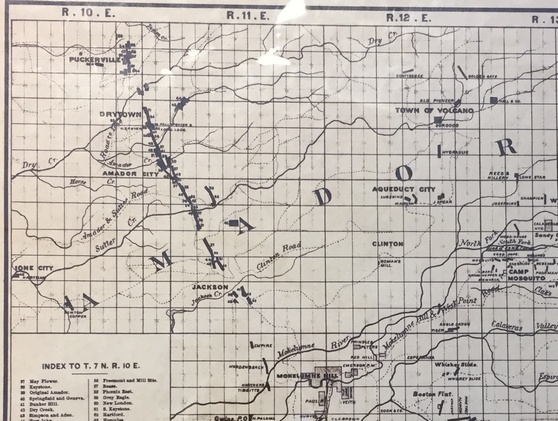
The county had recently been divided along the Mokelumne River. North of the river was now Amador County. Jackson was the largest community, but many mining camps were scattered throughout. No record indicates precisely where this little family group wound up, but it may have been Sutter Creek, just north of Jackson along the gold-seam route.
Though live oaks spread their long evergreen branches over the first hills the Ransoms came to, once they entered the mining region, the landscape was littered with the stumps of pines. Many of the trees had been cut down to build cabins, sluices, flumes and other wooden structures and tools. Holes and piles of rock and dirt added another layer of ugly to the scene. Ann would have to keep a close eye on five-year-old Cordelia to keep from losing her to the gaping earth.
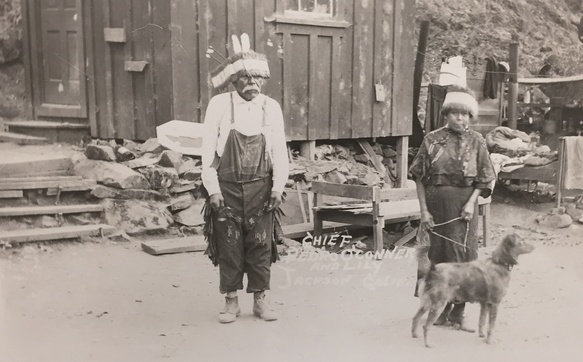
Though the Bay area was rich with colors and cultures, the mines had a different flavor and vibe. There were more women now than five years earlier, but they were still relatively scarce—young children even more so. Clean-shaven, well-groomed men were an exception to the general appearance of the hirsute gold-seekers, clad in their red wool or calico shirts and blue dungarees. Miwok Indians still lived in the area, and the curious settlers sometimes visited their lodges to observe them. The Miwoks fascinated Cordelia, who suffered a dearth of playmates.
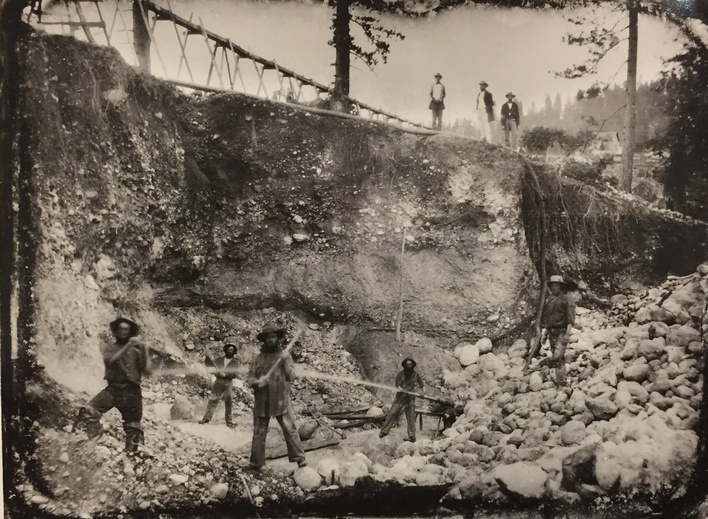
The placer gold in the area had dwindled over time. Hard rock mining was on the rise, requiring capital and a labor pool, so corporations now invested in ever-deeper, more dangerous territory. Hydraulic mining had begun, using high-pressure hoses to tear down entire hillsides, polluting the streams with tailings and more rock.
In April, after the winter rains had abated, Ann received a slew of letters from family and friends back in Indiana. She cheered at the news that perhaps her entire clan would come out to join her, though she had concerns about her mother, Abby, making the rough trip overland rather than by sea. But there was an upside: “And there is another thing to be taken into consideration and that is that wagons never blow up which steamships do sometimes.”
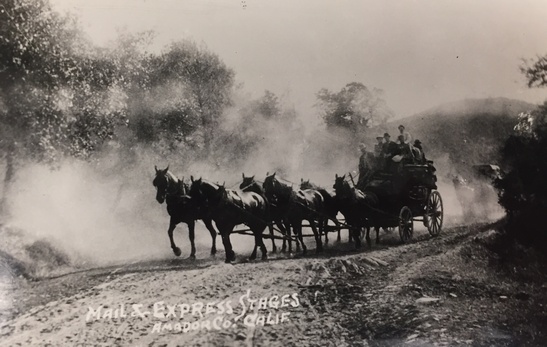
She spent an evening working on a letter to Abby, telling her of their plans to go down to the Mokelumne River for the summer while the water was low, allowing for access to any remaining gold on the bedrock. Baby Marietta’s crying forced Ann to abandon the letter for the night. When she resumed, she acknowledged that for the first time since arriving in the state, she had fallen ill.
Her husband had never been much of a scholar, but William had borrowed some medical texts and aspired to be a doctor someday. Ann wrote, “I have taken a heavy cold and it seems to affect me all over especially in my heart and shoulders. Pa [William] is going to get me some medicine to cleanse my liver and I have taken a large dose of pills.” William once played the role of nursemaid to a friend back in Indiana, and now could practice his “skills” on his family.
Back in Indiana, Ann’s sister, Emma, had married William’s brother, Robert Ransom. No doubt Ann was sad to have missed the festivities. As she rushed to finish her letter so her brother could take it to Jackson, she concluded: Billy “is anxious that you all should come…I suppose Emma will come anyhow. I shall be glad to see her…I spose she is quite an old woman by this time. I am glad to hear that you had a pleasant time at the wedding.” William asked her to append another incentive to take the land route: “Cows are worth from $75 to 100 here and good American horses 150 to 500 according to quality, but Bob knows all about that.”
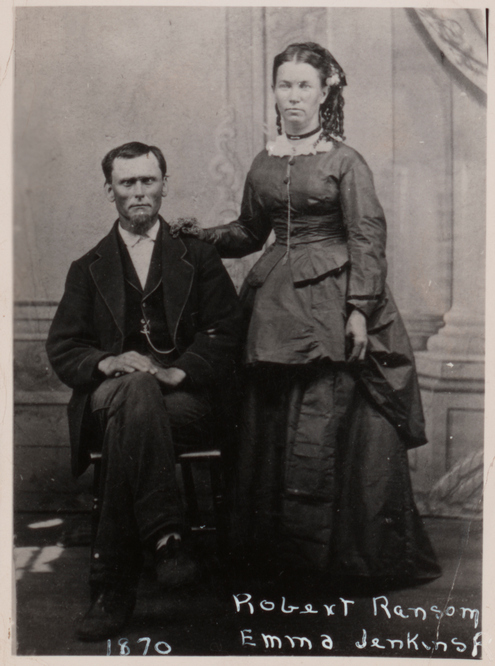
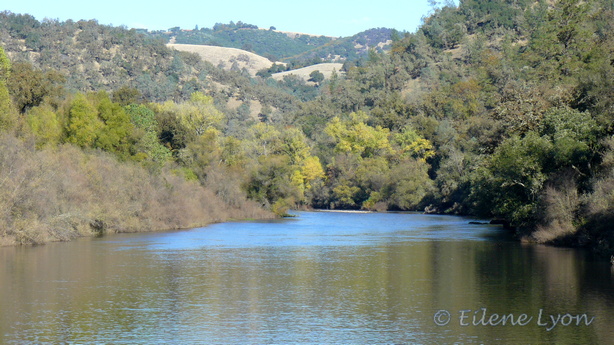
The Ransoms sweltered through the dry summer, probably living in a tent near the river. In addition to her numerous domestic duties, Ann found time to teach Cordelia her letters. By the end of the work season, Ann realized she was pregnant.
The mining camps had been abuzz about a rampage known as the Rancheria murders in August. One of the victims had been the wife of the hotelkeeper. Though two men had been lynched, it’s likely that the dozen men who’d committed the crimes had gotten away.
Though the Ransoms decided to return to Sutter Creek for the winter, Ann was probably itching to move down to the Sacramento Valley where life was not quite so rough. In March 1856, she gave birth to her son, Sherman Day Ransom, named after a man who had served as a state Senator the previous term. They may have been acquainted with him during their time in Santa Clara.
Certainly by the end of another summer in the mines, Ann had two more reasons for wanting to leave them behind. Billy had been badly injured in a hard-rock mining accident and had been taken to San Francisco to recover. And, she was pregnant yet again.
To Be Continued…
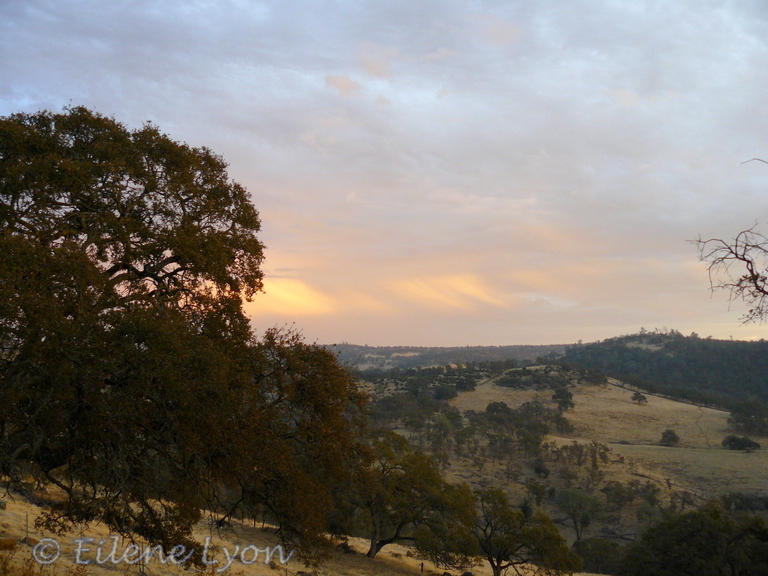
Feature image: The live oaks at sunset in Calaveras County.
Note: Ann’s brother, William Z. Jenkins, was called Billy later in life. During this period he was called Will by the family. I decided to use Billy to help distinguish him from William Ransom. I’ve done some light editing on Ann’s letter to add punctuation and capitalization.
 Myricopia
Loving this series Eilene!
LikeLiked by 1 person
Thanks, Deb!😊
LikeLike
A challenging life…
LikeLiked by 1 person
I can’t even imagine the challenge of getting clean water to drink, let alone dealing with baby diapers!
LikeLiked by 1 person
Right???!
LikeLiked by 1 person
Don’t ever offer me a chance to time travel to the past!🤣
LikeLiked by 2 people
We’d never survive!!
LikeLiked by 1 person
😂
LikeLiked by 1 person
It’s hard to imagine living this way AND being pregnant! You definitely have material here for a novel or screenplay.
LikeLiked by 2 people
There’s a wonderful memoir well known in SW Colorado called “Tomboy Bride” set in the late 19th century. The author was the wife of the assayer who worked at the Tomboy mine above Telluride. I imagine her life was not far removed from what Ann went through, except Ann enjoyed much nicer weather, never 11’ of snow!
LikeLike
The hardships these people went through are unimaginable. I’m sending this piece to my sister, who was complaining about Target not having any more of the Kitchen-Aid copper stand mixer.
LikeLiked by 1 person
Yeah, can you believe Ann had to do without a microwave, a vacuum cleaner, and a washing machine?!
LikeLiked by 1 person
Nope!
LikeLiked by 1 person
Women who managed under such conditions are such an inspiration…I can’t even begin to imagine how difficult her life would have been.
Also, I hadn’t thought about the fact steam ships sometimes blew up, though it makes sense. Still not sure which method of travel I would have preferred.
LikeLiked by 1 person
Believe me, you would have taken the steamship! Riverboats could experience boiler explosions, but fires on steamships were cause by other things.
LikeLike
I really feel for Ann. (She was probably lucky to have survived the ministrations of her husband when she fell ill.)
LikeLiked by 1 person
I only have two letters she wrote (just transcripts), but I get the sense she was a stoic woman who took things in stride.
LikeLiked by 1 person
She would have to have been.
LikeLiked by 1 person
👍
LikeLiked by 1 person
I continue to not only marvel about, but also admire, these women that were able to travel and live in these conditions. Yes, if they had a male in the family it was easier, but even raising a child, fearing that they would hurt themselves going outside their cabin and the seemingly never-ending pregnancies taking their toll on their health (not to mention mental well being).
LikeLiked by 1 person
It does leave the modern woman wondering how she would cope in those circumstances, doesn’t it? I think I have a tough constitution, but am glad I did not have children. I have never felt maternal. Put child-rearing on top of domestic duties and I’d have gone mad!
LikeLiked by 1 person
Eilene, I figure that because I do not have a single maternal bone in my body, I cannot understand how those women coped in such primitive circumstances plus dealing with children. I am no fan of domestic duties either … we are two of a kind!
LikeLiked by 1 person
It does leave me nearly speechless to contemplate it!
LikeLiked by 1 person
Ha ha – me as well Eilene!
LikeLiked by 1 person
I was worried that Ann wouldn’t recover from her “heavy cold.” But I’m glad she did, despite (or maybe because of) that liver cleansing!
LikeLiked by 1 person
The mild climate probably helped her some, too. She seemed to be sturdier than she gave herself credit for.
LikeLiked by 1 person
I’m really enjoying the details of Ann and her family. What a hard life they had. I’ve been to Sutter Creek with my son’s 7th grade class. I was a chaperone. It’s a beautiful area.
LikeLiked by 1 person
I have been through the area, too, while researching the book. One of the members of my critique group has a home and winery in Mokelumne Hill—and they make darn good wine!
LikeLiked by 1 person
That sounds ideal!
LikeLiked by 1 person
A lot of work, too. I’ll go to the store.😉
LikeLiked by 1 person
Very interesting Eileen. I have a similar picture from the 1870 one, same kind of dress and ringlet hairstyle – it must have been the fashion then.
LikeLiked by 1 person
It’s not a fashion wrong know a lot about. It wouldn’t be surprising if she was a bit out of style given where she lived. A crossroads in eastern Indiana was hardly cosmopolitan!
LikeLiked by 1 person
It might have been the fashion for the average woman who lived out in the sticks!
LikeLiked by 1 person
I expect at the time she was the envy of the town, actually!🙂
LikeLiked by 1 person
I would not do well in these circumstances. What a tough lady she must have been!
LikeLiked by 2 people
She grew up in tough circumstances, but she wasn’t physically strong.
LikeLike