By Eilene Lyon
Though my great-grandmother, Clara Ransom Davis (1877-1953), passed down a lot of family history, she made a glaring omission: her own birth family. She wrote a brief story about her father, Robert Ransom, who died when she was six. But she left no tales about her mother or siblings. Everything I know about them has come about through my normal, painstaking research.
Her next oldest sibling—born in 1874 in Hartford City, Indiana—was Albert Frederick Ransom, who went by the name Fred Ransom. Between the 1880 census and 1914, I have not had much luck finding records for Fred. There are a couple news mentions of him as a student in Independence, Kansas, in the early 1880s. By 1890, Fred had moved to Moscow, Idaho, with his mother and siblings.
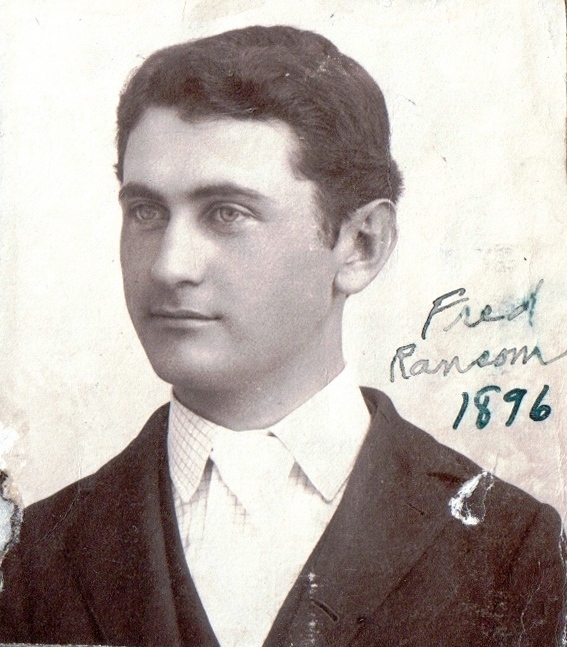
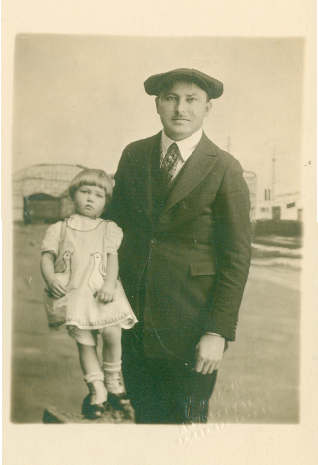
Clara saved a couple photographs of Fred, one dated 1896 and another dated the following year, both likely taken in Moscow. I think her label on the latter image may be incorrect.
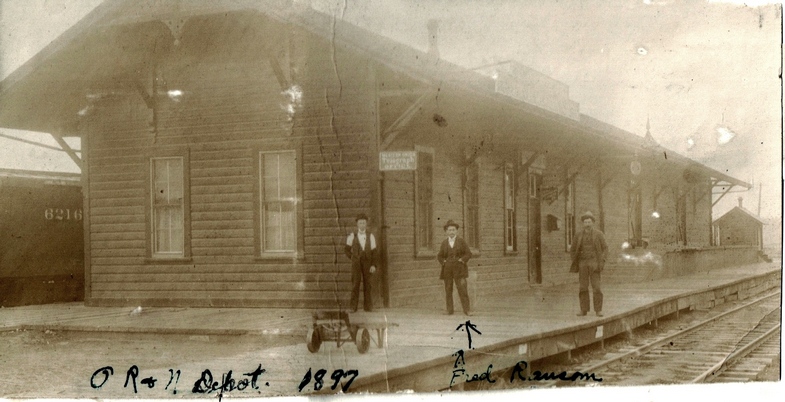
Fred doesn’t appear to be enumerated in the 1900 or 1910 censuses. According to a letter written by his oldest brother, Jim, Fred spent some time mining near Baker City, Oregon, around 1901.1 In 1914 and 1916, he is listed in the Moscow city directory, working as a clerk in his brother Arthur’s pool hall, The Pastime.2
For unknown reasons, Fred then decided to leave the northwest to settle for the remainder of his life in Los Angeles. He worked at a variety of jobs, including as an accountant. However, one occupation proved to be quite dangerous.
I’ve come across a number of gruesome work-related accidents in my years of family history research, much of it occurring in the late-19th and early-20th centuries. It wasn’t until 1970 that President Nixon signed the bill that authorized the creation of the Occupational Safety and Health Administration (OSHA).3 Since 1971, this government agency has significantly reduced the incidence of fatalities, injuries, and illnesses in the workplace.4
In early 1918, 44-year-old Fred had a job at the Woolwine Metal Products Co. at 2421 E. 8th St.5 His residence at the time was a rooming house at 1259 E. 6th St. (neither of these buildings exist today).6 I haven’t learned much about the company and its products, but one thing they produced was canteens for the military. They also made boxed fuel and water cans for the running boards of early model cars.
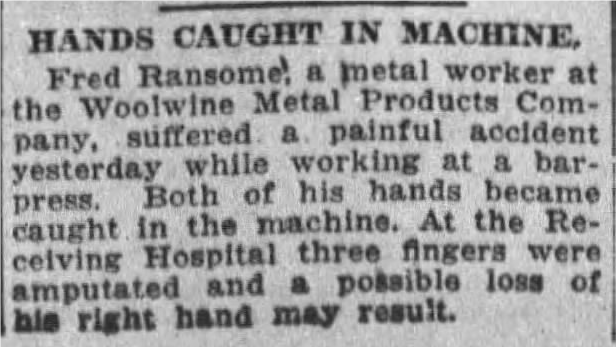
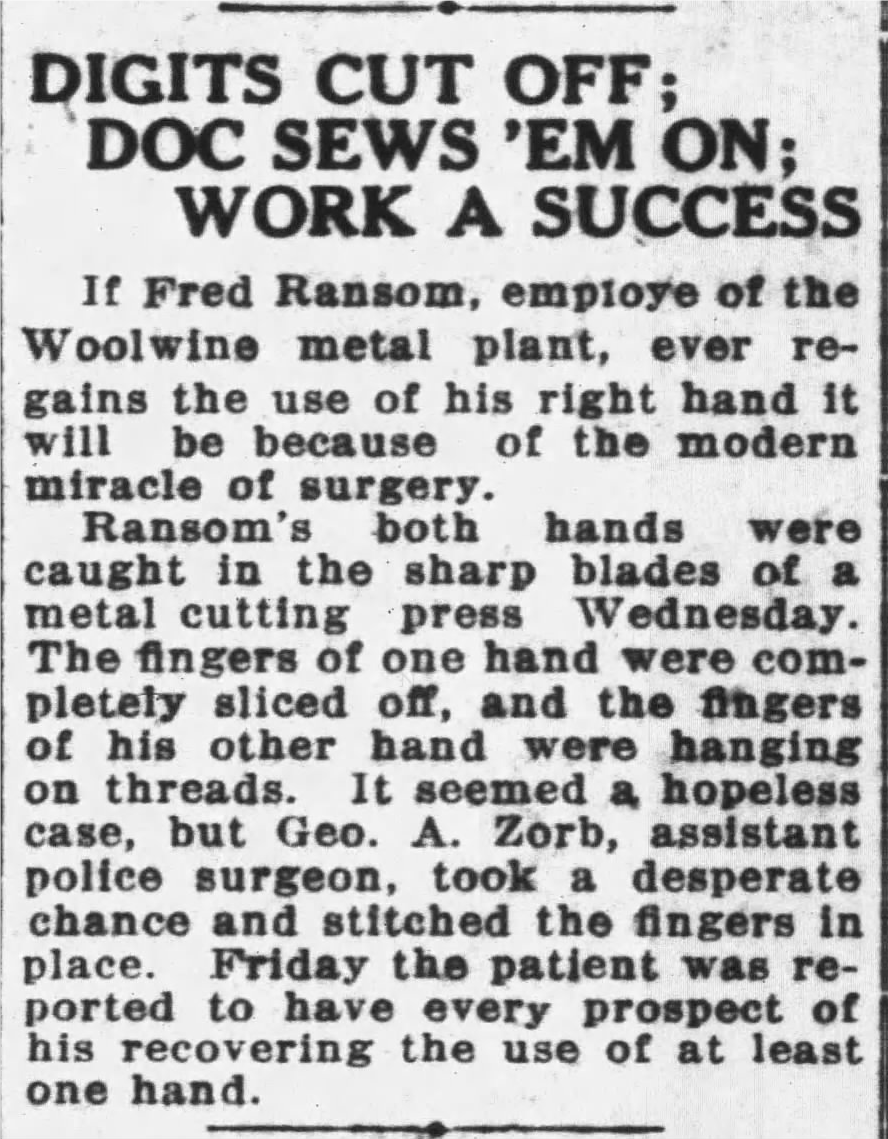
On April 24, Fred was working at a bar-press metal cutter and both hands got caught in the machine.7 It severed the fingers on his right hand completely and nearly severed them on his left. Rushed to hospital, Fred came under the care of a daring 29-year-old physician working for the city as a deputy police surgeon. Dr. George A. Zorb sewed Fred’s fingers back on, endeavoring to restore the use of his right hand.8
In September 1918, Fred filled out his World War I registration form. The interviewer noted that Fred’s third and fourth fingers on his right hand were amputated at the outer knuckle. This suggests that for the most part, Dr. Zorb succeeded in repairing Fred’s hands. At that time he worked as an inspecting clerk at West Disinfecting Co. at 174 S. Central Ave., still in the same general neighborhood.9
Fred Ransom never married or had any known children. He continued his peripatetic work life around the east-central city area. In the early 1930s he was washing windows. 10 He took another accounting position in 1932. By 1937, Fred was living with his brother Jim at the home of Jim’s daughter and son-in-law, Bertha and Lee Royer. Another work injury led to Fred’s death. The nature of the accident isn’t clear, but it resulted in an injury to his left arm. This led to fatal septicemia.11
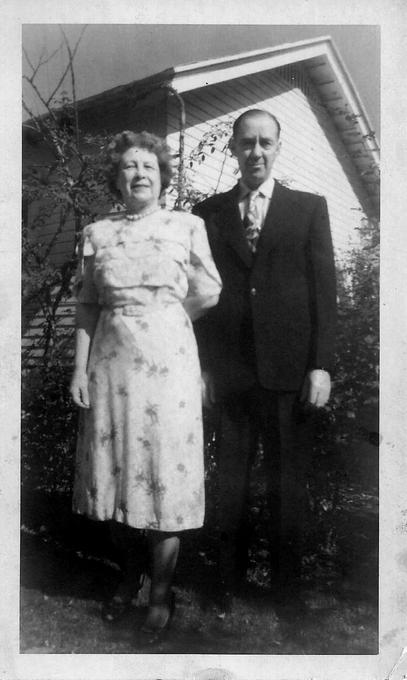
I can relate to you what Fred did and where, but unfortunately, these facts reveal little of the man’s personality, his likes and dislikes. I did find one other news item, a letter written to the editor. He was not the only Fred Ransom in Los Angeles, but the other known Fred used a middle initial.
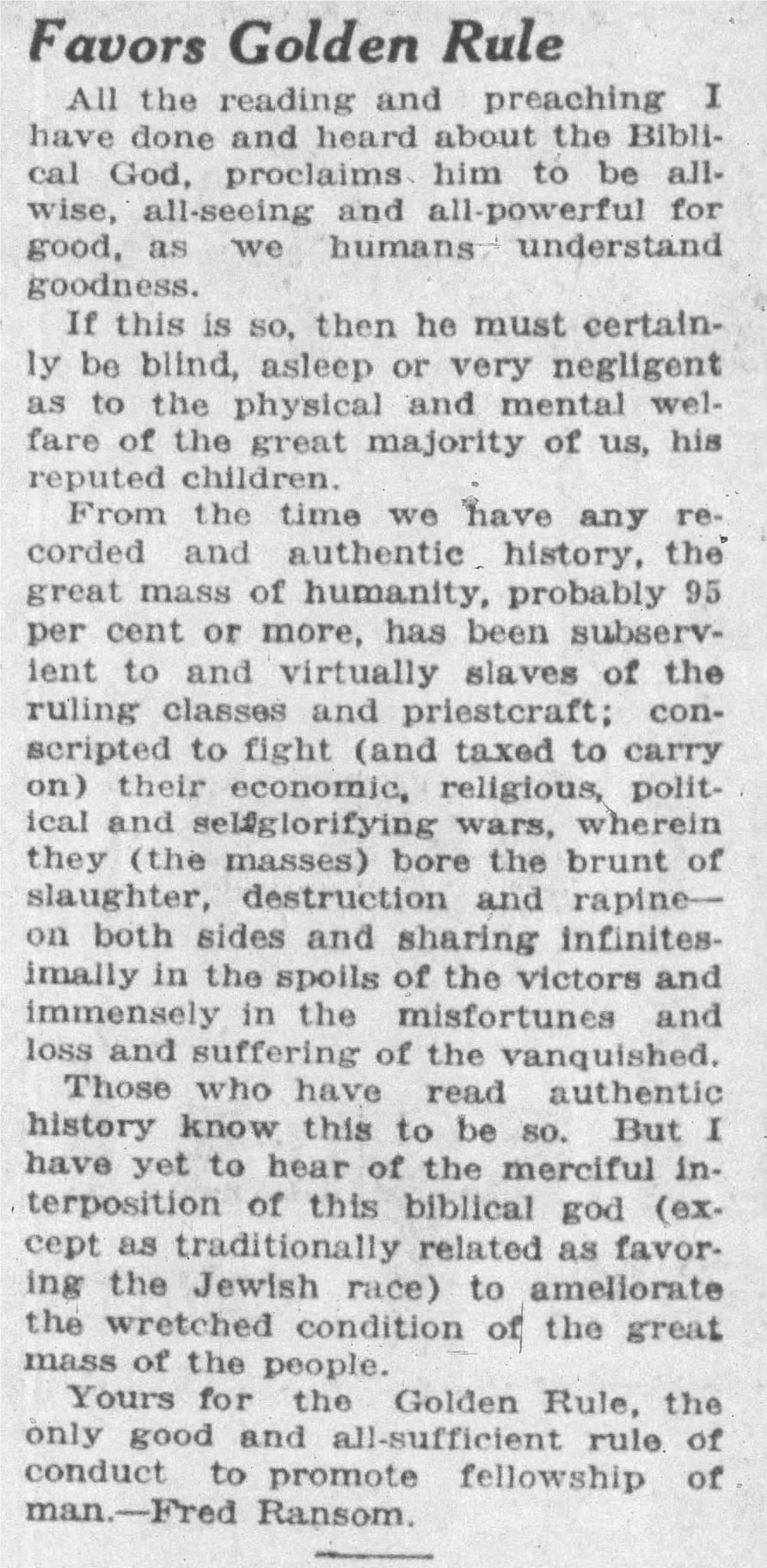
Fred was a registered Republican, as his father and grandfather had been before him. The sentiments expressed in this letter lead me to think that in today’s political climate he’d more likely be a Democrat.12
Feature image: Fred Ransom in 1896 (University of Idaho Special Collections)
- James H. Ransom, “Recollections of Years Ago,” South Kansas Tribune (Independence, Kan.), 24 July 1901, p. 38; image, Newspapers.com : accessed 12 April 2024. ↩
- R.L. Polk & Co.’s Nez Perce, Latah, Lewis and Clearwater Counties, Idaho and Asotin County, Wash. Directory 1916–17, p. 239; image, Ancestry (https://www.ancestry.com/imageviewer/collections/2469/images/16050164 : accessed 2 August 2024), image 155. R.L. Polk & Co.’s Nez Perce, Latah, Lewis and Clearwater Counties, Idaho and Asotin County, Wash. Directory 1914–15, p. 294; image, Ancestry (https://www.ancestry.com/imageviewer/collections/2469/images/16065576 : accessed 2 August 2024), image 124. ↩
- https://www.dol.gov/general/aboutdol/history/osha ↩
- https://www.osha.gov/osha50/ ↩
- Los Angeles, California, city directory, 1918 p. 2427; image, Ancestry (https://www.ancestry.com/imageviewer/collections/2469/images/3329427 : accessed 2 August 2024), image 1273. ↩
- Ibid. p. 1623; image, Ancestry (https://www.ancestry.com/imageviewer/collections/2469/images/3329005 : accessed 2 August 2024), image 851. ↩
- “Hands Caught in Machine,” The Los Angeles Times, 25 April 1918, p. 18 col. 5; image, Newspapers.com (https://www.newspapers.com/image/380477927/ : accessed 2 August 2024). ↩
- “Digits Cut Off; Doc Sews ’Em On; Work a Success,” Los Angeles Evening Post-Record, 26 April 1918, p. 11, col. 4; image, Newspapers.com (https://www.newspapers.com/image/678137641/ : accessed 2 August 2024). ↩
- “U.S., World War I Draft Registration Cards, 1917-1918” database, Ancestry, for Albert Frederick Ransom, Los Angeles City, California (https://www.ancestry.com/imageviewer/collections/6482/images/005240930_02646 : accessed 2 August 2024. ↩
- “California, U.S., Voter Registrations, 1900-1968” database, Ancestry, for Fred Ransom, Los Angeles County, California, 1930 (https://www.ancestry.com/imageviewer/collections/61066/images/losangelescounty_26-0254 : accessed 2 August 2024). ↩
- Los Angeles County (California), County Clerk, death certificate 3143 for Fred Ransom, 9 February 1937; “Norwalk, Los Angeles, California, United States records,” images, FamilySearch (https://www.familysearch.org/ark:/61903/3:1:3QSQ-G9SV-6BXJ : accessed 2 August 2024), image 1970 of 2567. ↩
- “Favors Golden Rule,” Los Angeles Evening Post-Record, 12 February 1924, p. 10; image, Newspapers.com (https://www.newspapers.com/image/678113814/ : accessed 2 August 2024). ↩
 Myricopia
Wonderful research, Eilene. It’s interesting to stop and remember how many rooming houses there used to be, and how many people took in boarders. Having that still in effect would undoubtedly help the housing crisis. I loved Fred’s letter. You’re right, that doesn’t sound like a 2024 Republican!
LikeLiked by 1 person
It must have been a rather large place, much like a hotel. The list of lodgers in the 1920 census was long! I agree that these kinds of places filled a need. There have always been some hotels/motels here in Durango in use this way, even today. While I can’t be 100% sure “my” Fred wrote the letter, it’s highly probable.
LikeLiked by 1 person
What startling eyes he had! Hard life back then.
LikeLiked by 1 person
Those pale blue eyes ran in the Ransom family, along with the “black” hair.
LikeLiked by 1 person
Nice!
LikeLiked by 1 person
An unfortunate accident, but lucky to have a skilled doctor nearby. Too bad his luck didn’t stay with him. If he did write the letter, then you do get a bit of a glimpse into who he was.
LikeLiked by 1 person
This is very interesting research, Eileen. After thinking through the briefings here, I had to giggle 🤭 with you on your observation of your last two sentences!
What one does and what one believes are sometimes contradictory opposites, even in our political era.
LikeLiked by 1 person
Thank you, Teri. I agree about our personal contradictions. We can be complicated and even illogical beings.
LikeLike
Fascinating scoop … and mainly through research. Cheers to your tenacity. Ouch to his injury … and I can’t imagine the conditions in factories at that time. Horrible! … and the Republicans of that era would definitely be Democrats today.
LikeLiked by 1 person
And this is just some of what I can find online. I know there is more out there, but will have to wait. Yes, there have been many changes to party platforms over the decades. Hardly recognizable from a century ago.
LikeLiked by 1 person
I applaud your drive!
LikeLiked by 1 person
It’s an absorbing hobby!
LikeLike
Terrific research, Eilene!
LikeLiked by 1 person
Thank you, Joy!
LikeLiked by 1 person
I too like his letter and applaud its sentiments.
LikeLiked by 1 person
The voice of experience, for sure.
LikeLiked by 1 person
I didn’t realize that OSHA is relatively recent. Workers definitely need the protection of an oversight agency.
LikeLiked by 1 person
I don’t doubt that for a minute! Next Thursday I’m going to relate my own experience.
LikeLiked by 1 person
Eilene, I liked the headline: “Digits cut off, Doc sews ’em on.” I’ve known two people who have lost fingers in machinery. One was an attorney who was our tenant and he thought his snow blower was turned off, which it was, but it activated the blades and gave a little shudder when he flipped it over slicing off his fingers. He had surgery to attach the fingers which was done successfully, however he has no feeling in them. He did all his own typing as he was in business for himself – this was a problem, but he was close to retirement and has since retired. A friend of mine’s nephew was trying to repair a farm machine and lost all the fingers on one hand. He was more upset about not being able to help his father bring in the crops than the missing fingers. He has learned to adapt according to my friend.
My father was a tool and die maker and worked with heavy dies. It was recommended the men not wear wedding rings as too many industrial accidents occurred around large machinery.
LikeLiked by 1 person
Home table saws have been the culprits in a couple cases I know. Though I worked with them extensively when building some furniture, I developed a (healthy?) fear of them and leave the sawing to hubby nowadays. I’m rather “attached” to having all my digits! Farm equipment is a biggie for work injuries and deaths, too. We’ll never put an end to such accidents. We like our tools and we have a knack for careless behavior around them.
LikeLiked by 1 person
My neighbor used to make furniture and was quite a craftsman. Sometimes I’d go over to chat with him at his shed where he had his table saw. He’d be chatting away and I’m sure I paid more attention to what he was running through the blade than he did sometimes, but his fingers/hands remained unscathed. Digits are nice to have, especially in this day and age to use a keyboard. The hunt-and-peck method wouldn’t work too well without digits.
LikeLiked by 1 person
Thank goodness for voice-to-text technology! I’m sure it means a lot to some people.
LikeLiked by 1 person
Yes indeed. A fellow blogger is blind and, although she does not post frequently, she has said she uses this technology to post and also uses a machine to “read” other’s posts. She has also authored a book.
LikeLiked by 1 person
Technology really can be a life changer for some people!
LikeLiked by 1 person
Yes it can.
LikeLiked by 1 person
What a gruesome injury, and how relatively fortunate he was that that young surgeon could partially restore his fingers.
Yes, the party of Lincoln is no longer what it once was.
LikeLiked by 1 person
He was indeed fortunate to regain much of his function (at least as it seems from this remove). And your second remark is delightfully understated.🙂
LikeLiked by 1 person
LOL—I was trying to avoid attracting trolls! And also I didn’t want to start any political arguments. We have enough of that!
LikeLiked by 1 person
Fortunately, I rarely find one of those on my blog. But I also avoid politics as much as possible (though it sometimes comes up in a historical context).
LikeLiked by 1 person
It interesting that your mother didn’t give you more information about her family. That injury was awful and reminded me of my brother whose hand got caught during his summer job in high school on a farm. He lost part of a finger in harvesting equipment in the pea factory.
LikeLiked by 1 person
Farming is about the most dangerous profession of all. I have my own story to share—check back on Thursday!
LikeLiked by 1 person
Oh boy! I will be back to read your post Thursday.
LikeLiked by 1 person
See you then!
LikeLike
😊
LikeLiked by 1 person
I can’t believe they were able to save a few of his fingers! My goodness, I know you put so much into finding more information on the man, but when I read that, it was my takeaway immediately.
LikeLiked by 1 person
I suspect that surgical techniques advanced by leaps and bounds during the Civil War and even in WWI. Fred was very fortunate.
LikeLiked by 1 person
Incredible.
LikeLiked by 1 person
Your meticulous research never fails to impress me. I have no idea how you do it but you once again drew me into a fascinating story.
LikeLiked by 1 person
I don’t know how I do it either! It mystifies me sometimes that these stories resonate with readers.
LikeLiked by 1 person
I always look forward to your genealogy posts and I can’t put my finger on why. I guess I just really love stories.
LikeLiked by 1 person
Personal interest stories seem to resonate with many people, even if they are set far in the past.
LikeLiked by 1 person
Especially if they’re set in the far past!
LikeLiked by 1 person