By Eilene Lyon
My new book, What Lies Beneath Colorado Pioneer Cemeteries and Graveyards, officially publishes on Tuesday, but it is available now! See link at bottom of the post.
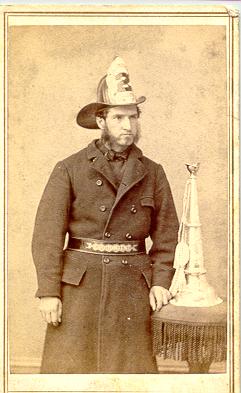
In the course of finalizing the manuscript for publication, I had to omit some material to meet my word count goal. The book contains 24 “sidebars” on various topics. This one did not make the cut. It was to come after a story about Caleb Charman (feature image), who was killed by lightning. I collected some additional biographical material about other people in Colorado who were killed by lightning in the 19th century. Strikingly (pun intended), two of the victims were judges. Hmmm.
Judge Robert F. Long (d. July 27, 1882), of Ouray, went on a fishing and prospecting trip with a friend, but had trouble finding his way. He stopped to speak with a rancher when it began sprinkling. His friend got out of the wagon to cover the mess box with a rubber tarp when lightning struck. Judge Long, holding the reins, was thrown fifteen feet by the strike and killed. The other two men had burn injuries and a horse died. His wife, Mariah, and gravely ill son, Tom, survived him, but not for very long. Burial: Louisiana, Missouri.
Antonio Madrile (d. July 28, 1885), a Ute Indian, was killed at Spruce Springs, twenty-five miles west of Saguache. He was about forty-four years old and worked as a herder. A mid-afternoon thunderstorm overtook him, along with a sixteen-year old companion. The younger man was knocked senseless and found Madrile’s terribly damaged body when he woke. Madrile’s headstone is engraved with “Killed by Lightning.” Burial: Hillside Cemetery, Saguache County.

William McCreedy (d. July 14, 1890), a sixty-five-year-old miner, died while seated in his mining cabin on Mt. Lenawee (present day: Arapaho Basin Ski Area). His son, Frank, was knocked unconscious. William had a wife, Emma, and three grown children, Frank, Ella and Addie. None of the children ever married. Burial: Alvarado Cemetery, Clear Creek County.

Joseph Miller (d. Aug. 11, 1891), another miner, was prospecting with a partner on Pearl Pass near Aspen when “a most remarkable thunder storm passed over that section.” When the partner recovered consciousness, he was able to summon help from others in the area. Miller was single, and had worked previously as a contractor in Wooster, Ohio. Burial: Aspen Grove Cemetery, Pitkin County.
Melvin Crosby, age twenty-eight (d. May 24, 1892), and a companion were riding a load of hay on the Valley Road a couple miles east of Boulder when lightning stuck in front of the horses, to the side of the road. He moaned, “Oh Bill, my God,” before collapsing. His body had no marks indicating electrocution. The shock of the strike apparently caused his death. Survived by his parents and two siblings. Burial: Columbia Cemetery, Boulder County.
Gottlieb Meyer (d. Aug. 22, 1892) was working in a brick yard at the corner of 38th and Clayton Streets in Denver during a rainstorm. Lightning killed him instantly. Burial: Riverside Cemetery, Denver, Adams County.
Dennis E. O’Connor (d. June 28, 1895) was wiring electric lights when lightning struck and killed him in Pueblo. His companion took five hours to regain consciousness. Dennis left a wife and newborn son. He shares a large granite headstone with his father, Frank,who died in 1899. Burial: Roselawn Cemetery, Pueblo County.

John Henry Shackley (d. Aug. 8, 1895), a farmer in his 60s, was harvesting in his field near Burdett, Colorado, when lightning killed him and one of his two horses. His wife witnessed the strike from the door of their house. Shackley came to America from England in 1868 and brought his family over the following year. Burial: Riverside Cemetery, Sterling, Logan County.
Judge W. A. Greenstreet (d. July 2, 1895), of Rio Blanco County, was killed instantly at his ranch near Buford. He was survived by his wife and young daughter. Burial: Fairmount Cemetery, Denver.
John Aubrey Pring and Leonard B. Lee (d. June 13, 1899). The people of Monument, Colorado, suffered a double tragedy when the two boys were killed while working in a hay field eight miles east of town. John, age sixteen, was the son of English immigrants and part of a large family. Leonard, age thirteen, was an immigrant from Brisbane, Australia, and the only son of his widowed mother. They sang together in the choir at Grace Episcopal Church and had been close friends. The double funeral service at the church, with twin white caskets, was held before a standing-room-only crowd of mourners. Mr. Seymour and Mr. A.H. White sang a duet, “Asleep in Jesus.” Burial: Evergreen Cemetery, El Paso County.

Charles H. Abbott (d. June 20, 1899). A storm producing tornadoes as well as lightning killed Charles Abbot while he was milking. He was born in New Hampshire and had migrated across the country over the decades, marrying in Nebraska in 1891. He and Leanah had three sons. Leanah lived another fifty-two years before being reunited in burial with her first husband. Burial: Akron Cemetery, Washington County.
Charles G. Wright (d. May 1, 1900). While camped in Twenty-mile Park to clear sagebrush, Wright and his helpers headed for the tents as a storm moved in. He was about fifty feet from the others when struck and killed. He left a widow, six dependents, and two grown children. The Craig Courier promoted a fund for the destitute family. Burial: Hayden Cemetery, Routt County.
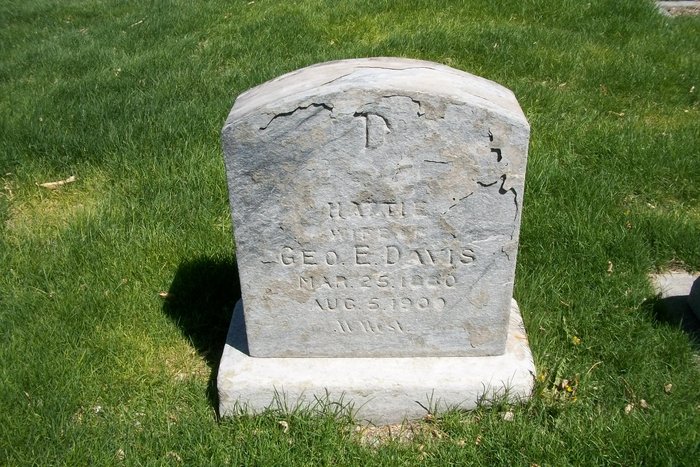
Hattie Davis (d. Aug. 5, 1900). A rash of deadly storms ravaged Logan County in the summer of 1900. Hattie (Landfried) Davis, age twenty, married for just over a year to George E. Davis, was returning to her home in Sterling from her friend’s house nearby. Sheet lightning struck near the railroad tracks and stunned people several blocks away. Mrs. Davis’s body was horribly burned. Her husband was inconsolable. Burial: Riverside Cemetery, Sterling, Logan County.
Feature image: Caleb Charman, born in England 1829, killed by lightning in Elbert County 1874. (Ancestry.com)
Click on the book cover to purchase

 Myricopia
Congratulations on your publication! Interesting that in your list of people there was only one woman killed by lightning. I’m always amazed here how baseball games keep going on when there is thunder. There is a reason we say when thunder roars go indoors!
LikeLiked by 1 person
Yep. You’re still more likely to be struck by lightning than win the lottery.🤣
LikeLiked by 1 person
My book is ordered, I’m looking forward to the read!
LikeLiked by 1 person
Thank you so much, Heather! I hope you enjoy the tales and learning about some western history.
LikeLiked by 1 person
I’m sure I will.
LikeLiked by 1 person
Amazingly, only one woman in the lot! Goes to show, you can be doing just about anything when it can strike.
LikeLiked by 1 person
In the case of Caleb Charman, his daughter was also impacted. Not killed, but she lost her sight in one eye.
LikeLiked by 1 person
Not to be taken lightly!! (sorry… pun not intented!)
LikeLiked by 1 person
Definitely not!
LikeLiked by 1 person
Congratulations Eilene! We barely hear of lightning strikes these days – how interesting that it was such a danger then.
LikeLiked by 1 person
We do take more precautions and people tend to spend more time indoors now than they did when everyone was farming and ranching.
LikeLiked by 1 person
I guess.
LikeLiked by 1 person
Congrats again on the book Eilene! I’m sure it’s happened here in WA but I wonder where CO falls on the total lightening death stats? Maybe I can use this post as another reason why I would have to think hard before moving closer to my girls!! I did notice though that you didn’t list any Jefferson County deaths. Both girls are JeffCo residents right now so that may lessen the death threat a bit- who knows 😉
LikeLiked by 1 person
I expect that lightning deaths have diminished for a variety of reasons. I think golfers are particularly susceptible, as farmers and ranchers once were. I came very close to getting fried myself once, though.
LikeLiked by 1 person
Yes, I think many things contribute to safer outcomes during raging storms now than in the 1800’s! The girls have sent some dramatic videos of a few of the storms that have rolled through since moving there. We so rarely have those up here. Willing to share about your near death experience?
LikeLiked by 1 person
I was managing a condo complex when the storm came rolling in. I went out to the pool deck to take down the umbrellas so they wouldn’t blow the tables over. Was holding one of the umbrella poles when lightning struck the building. Fried our phone system and traveled through the ground up into some condo units destroying televisions and such.
LikeLiked by 1 person
Wow! You absolutely got lucky Eilene and now you have one of “those stories”. Not many can say that.
LikeLiked by 1 person
I’m glad I can say that I wasn’t actually struck by the lightning. But it was sure a close call!
LikeLiked by 1 person
Fascinating about the lightning strikes. It sounds like none of those victims stood a chance. Congratulations on your book publishing.
LikeLiked by 1 person
Thank you, Jane. I’d say in many of those instances there were few trees around and the people were quite exposed.
LikeLiked by 1 person
How fascinating! Congratulations on your new book!
LikeLiked by 1 person
Thank you, Joy! I’ll bet Iowa is one of those places that has tended to have more lightning deaths. Note that most of these took place on the eastern plains of Colorado.
LikeLiked by 1 person
Congratulations on the book! Such horrible luck these people had, to be in exactly the wrong place at the wrong time.
LikeLiked by 1 person
Thanks, Anabel! Bad luck, indeed.
LikeLiked by 1 person
Congratulations on your book! How exciting. The most recent lightning deaths I’ve heard of in northern MN involved people tent camping in the Boundary Waters. Lightning struck the tree they were next to and it travelled through the roots and into their tent. Ugh.
LikeLiked by 1 person
It’s just such a freaky way to die. So unexpected, unplanned, sudden. Hard for their survivors to comprehend.
LikeLiked by 1 person
That’s a whole lot of lightning strikes! Congrats on your new book. I’ll be ordering it!
LikeLiked by 1 person
Thank you, E.A.!
LikeLiked by 1 person
I couldn’t read these stories…I’ve always been afraid of lightning and don’t need any more stories to add to that fear!
Congrats on the new book, and best of luck with it!
LikeLiked by 1 person
On my! I’d hate to cause you nightmares.😕 And thank you!
LikeLike
What a way to go!
LikeLiked by 1 person
Quick, painful, senseless.
LikeLiked by 1 person
This was interesting and “enlightning” (pun intended) Eilene. I’d wonder about the two judges – gives you something to ponder, but who’s to say it was anything but Mother Nature’s wily ways? Does seem suspect though. This was also interesting to me because my post next Sunday will be about volatile weather and my grandmother’s fear of storms. I write a post for Grandparents’ Day every year, usually about my grandmother. My grandmother grew up on a farm and it was Summertime and she was taking her father’s mid-day meal out to him in the fields and it started to rain a little. She left the food and was hurrying back home to avoid getting soaking wet and she saw a neighboring farmer out in the field near a tree. He was struck by lightning, fell to the ground and was killed instantly. Her father was unscathed and similarly in the field, not near a tree. From that time on, until the day she died, she was deathly afraid of storms and would sprinkle holy water around the house every time she heard rumbles of thunder and knew a storm was imminent.
LikeLiked by 1 person
That had to be a horrifying experience for your grandmother. I can understand her lifelong fear after that.
LikeLiked by 1 person
Yes, she had a lifelong fear after that episode Eilene. Usually my grandmother did that chore, but her foot was recently crushed while saddling up the horse to the buggy for church. So, since it was Summer vacation, she sent my grandmother in her stead.
LikeLiked by 1 person
I have a story of my grandfather taking a meal out to the fields to her father. No lightning storms, fortunately!
LikeLike
The men didn’t want to waste valuable daylight working hours to return to the house to eat. My grandmother said it was usually the same meal as for breakfast, only cold. That would be what we call a “farmer’s breakfast” – my great-grandfather didn’t die from high cholesterol. It was TB that took him.
LikeLiked by 1 person
Yeah, TB was a real scourge. Most of us actually carry the bacillus in our bodies, but healthier living conditions keep it in check.
LikeLiked by 1 person
That’s interesting Eilene – I didn’t know that. He was in a sanitarium when he died. My great-grandmother had already died in 1953, not from TB.
LikeLiked by 1 person
Congrats!!
LikeLiked by 1 person
Thank you!
LikeLiked by 1 person
Wonderful news! Congratulations on your new book!! Also, what an interesting collection of stories. Two judges? That is odd.
LikeLiked by 1 person
Thank you! It will be years before the next one.
LikeLiked by 1 person
Then we need to celebrate!!
LikeLiked by 1 person
Works for me!
LikeLiked by 1 person
Wow – heart-rending to read so many reports one after the other… My dad was terrified of lightning and made us stay away from the windows in the house during storms. And we were told to NEVER stand under a tree.
LikeLiked by 1 person
A very good idea not to stand under a tree. But it is helpful to have trees nearby, or lightning will find the tallest thing around, and that might be a person.
LikeLike
So many tragic deaths! Were lightning strikes common in that area? Congratulations on the new book! It sounds like a winner.
LikeLiked by 1 person
I doubt they were more likely than other places on the Great Plains. Thank you, Liz!
LikeLiked by 1 person
You’re welcome, Eilene! The lightning strikes in my area that people were concerned about during that time period was in regard to barns.
LikeLiked by 1 person
They didn’t go for lightning rods then?
LikeLiked by 1 person
Yes, some did. I don’t know if all did, however.
LikeLiked by 1 person
Hopefully they never lost a barn to lightning then.🙂
LikeLiked by 1 person
Hopefully. I did find a lot of barn firesbin the historic newspapers I researched.
LikeLiked by 1 person
Many potential cause, of course.
LikeLiked by 1 person
True. The majority of the house fires started in the chimney.
LikeLiked by 1 person