
By Eilene Lyon
The highlight of our recent vacation trip to Channel Islands National Park, off the coast of southern California, was a day spent at Anacapa Island. Anacapa consists of three islets about 11 miles from Santa Barbara.
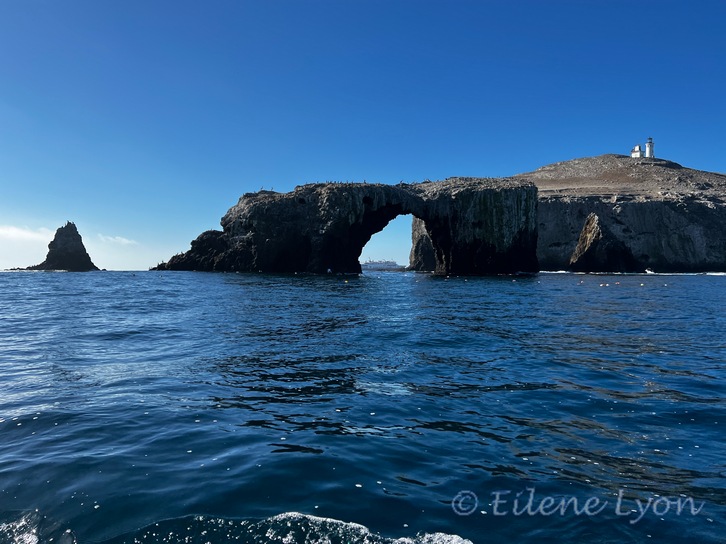
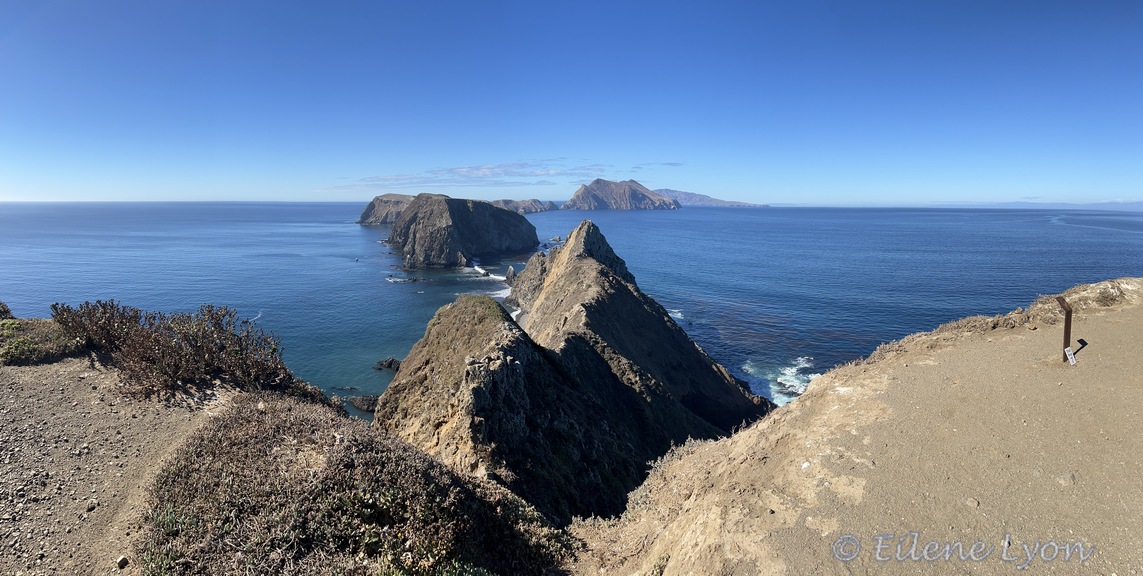
Landing on East Anacapa was adventurous. The zodiacs transporting us from the National Geographic Venture had to navigate into a narrow, sloshing cove, continually pushing the bow into a ladder to unload passengers, as the bow rose and dipped with the waves.
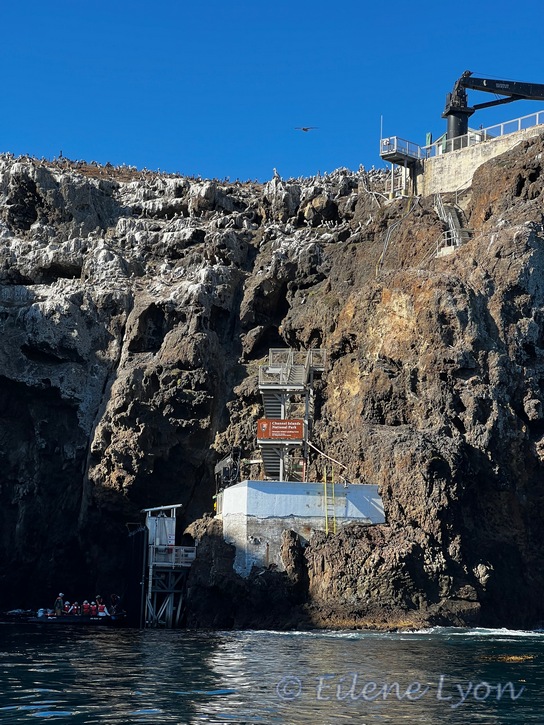
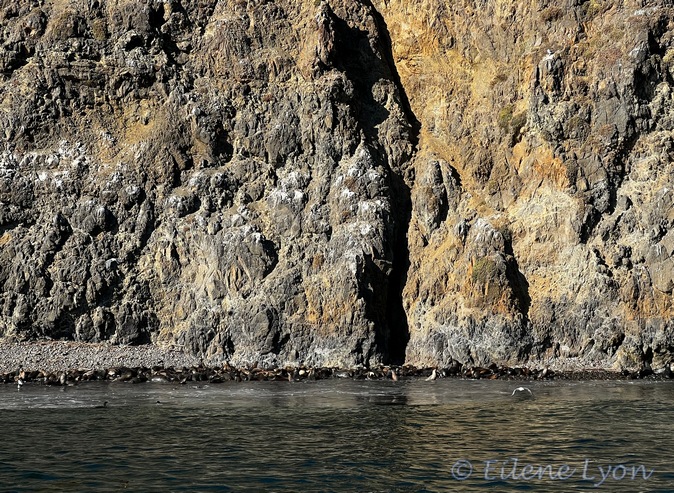
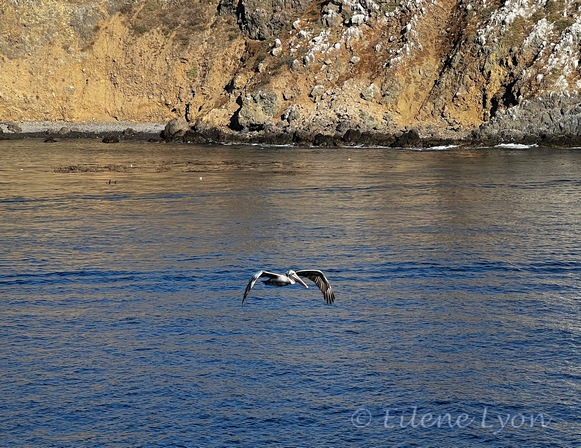
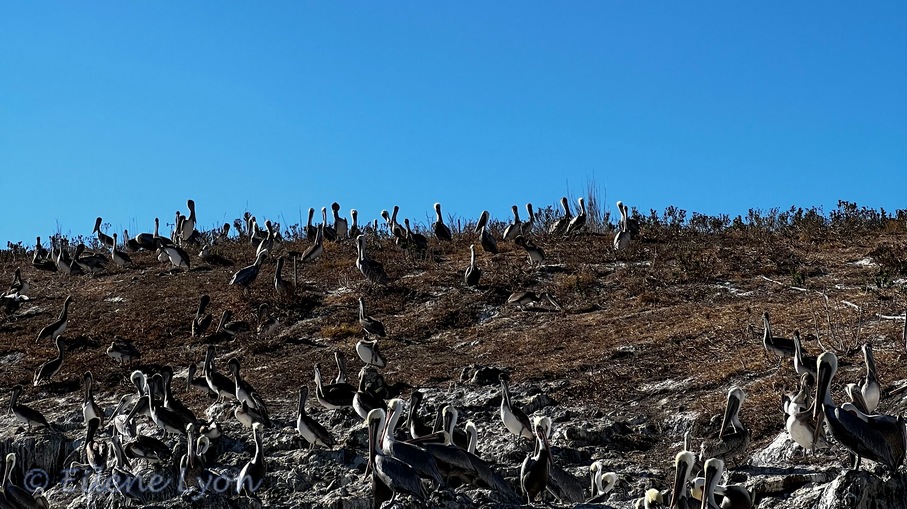
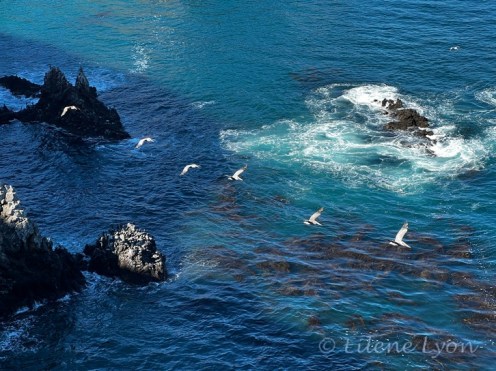
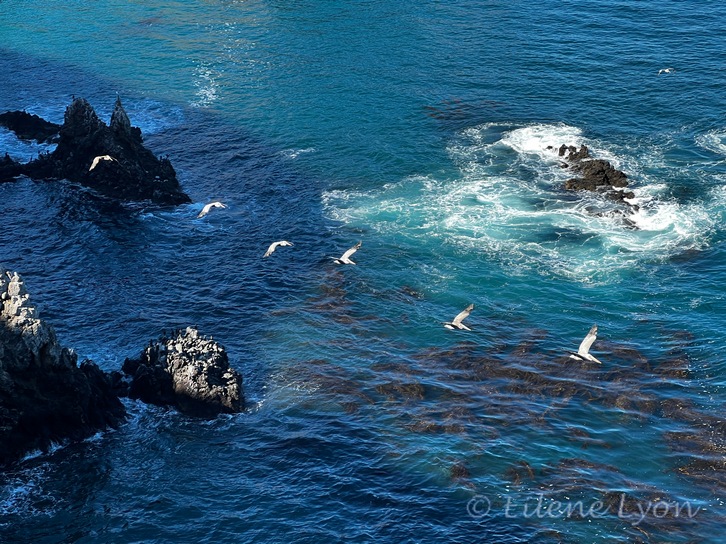
After ascending the ladder, we had to climb about 130 steps to reach the top of the cliffs. The odor of bird guano could be a bit overpowering if you were downwind. Brown pelicans, western gulls, and cormorants seemed perched on every cliff-top and every cranny from there down to the water. On the southern shoreline, California sea lions congregate in large numbers.
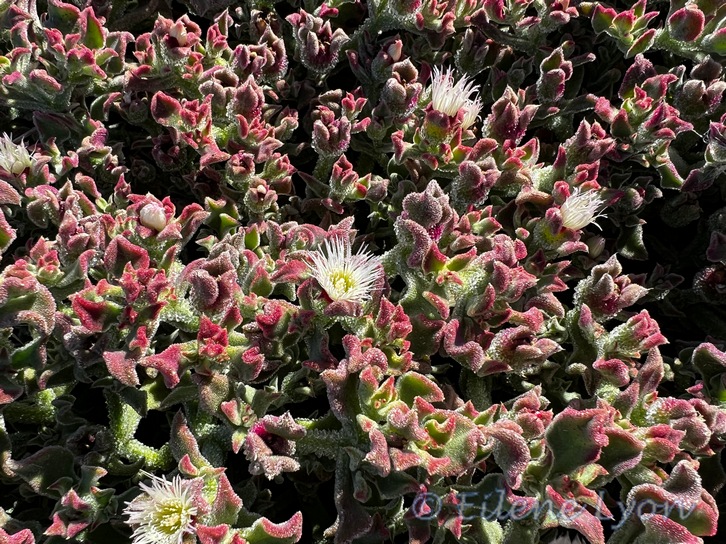
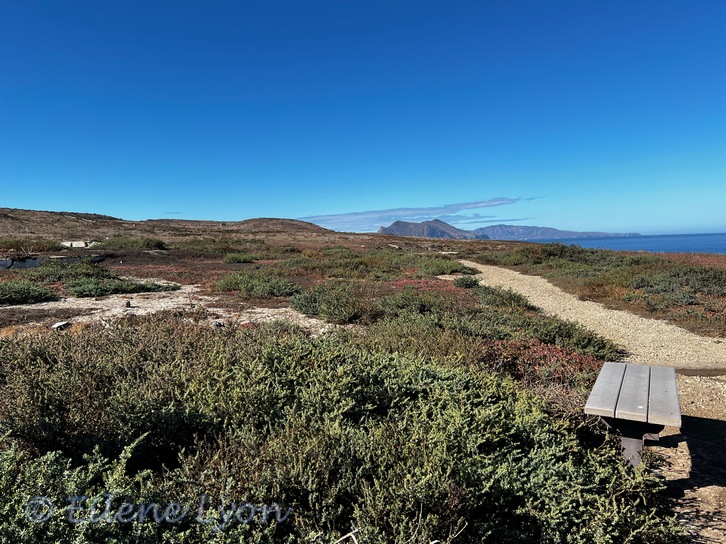
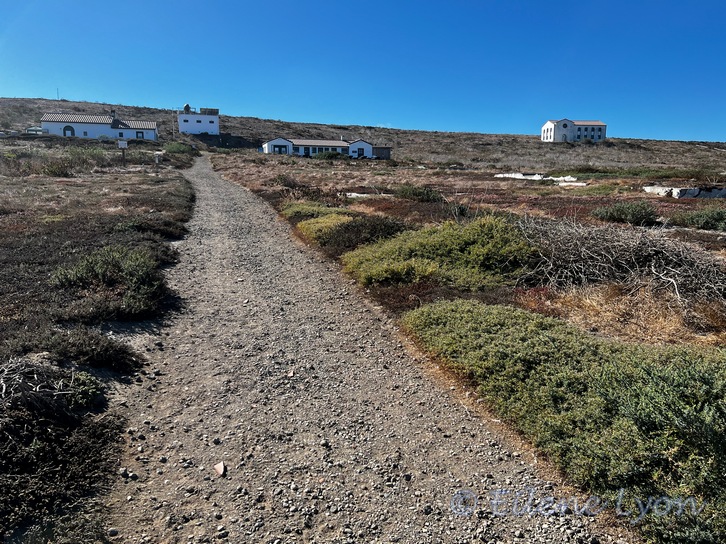
The islands are considered “wilderness,” though East Anacapa has a lighthouse and several other buildings. A trail circumnavigates the upper portion of the island, and there is a campground as well. November is a dormant period for much of the vegetation, though the native ice plant was blooming. There is also non-native ice plant that the park is working to eradicate.
One of the biggest conservation problems on Anacapa involved the non-native black rat (Rattus rattus). Rats have populated 90% of the worlds islands and are believed to have caused 50-60% of all bird and reptile extinctions since 1600.
They may have first come ashore on Anacapa in 1853 with the wreck of the steamship Winfield Scott (no human lives were lost in this gold-rush era event). Or they might have arrived when the lighthouse was built, or when sheep ranching was active on the island. The rats impacted rare bird species, such as the Scripps’s murrulet (Synthliboramphus scrippsi), by eating eggs. They also preyed on the native side-blotched lizards and Anacapa deer mice (Peromyscus maniculatus anacapae).
In the 1980s and 1990s, studies began to evaluate and plan for rat eradication. Due to the steep cliffs, aerial spreading of rat poison would be required. This method had been used in New Zealand, but never in the United States. Before implementing the baiting, plans and procedures had to be established to protect the native deer mouse population and birds, including songbirds, seabirds, and raptors. (Details of the procedures can be found in the source documents and web sites.)
There were animal rights organizations and individuals opposed to the rat-poisoning project. Their lawsuit to stop the eradication did not succeed. East Anacapa was baited in December 2001, and the other two islands were done in November 2002. Deer mice had been captured and contained prior to both events and were reintroduced (nowhere did I find an estimate of how many mice and rats died during the poisoning phase).
Most raptors were relocated to the mainland, but peregrine falcons were held and released back on the islands after the threat of incidental poisoning had passed. One hundred songbirds, particularly rufous-crowned sparrows (Aimophila ruficaps obscura) were found in post-poisoning surveys, though this is not the total incidental kill; some birds were likely scavenged or simply not found. Gulls were probably affected more than other seabirds. After the project, a number of dead gulls washed up on the Santa Barbara shore.
As for the benefits to native populations: side-blotched lizard populations increased, deer mouse populations soon achieved a density similar to pre-project surveys, and murrelet nest success increased dramatically. Overall, nesting bird populations increased and species began arriving that had not previously been observed on the islands.
But did the eradication project get rid of all the rats? Theoretically, one mating pair of rats could produce a population of 5,000 in just one year. Yikes! Ten years after the eradication, researchers found no evidence that rats still inhabited the island.
A big question mark popped up while we hiked around, though. On the path to the lighthouse, I spied two dead rodents. One was a deer mouse. The other was not.
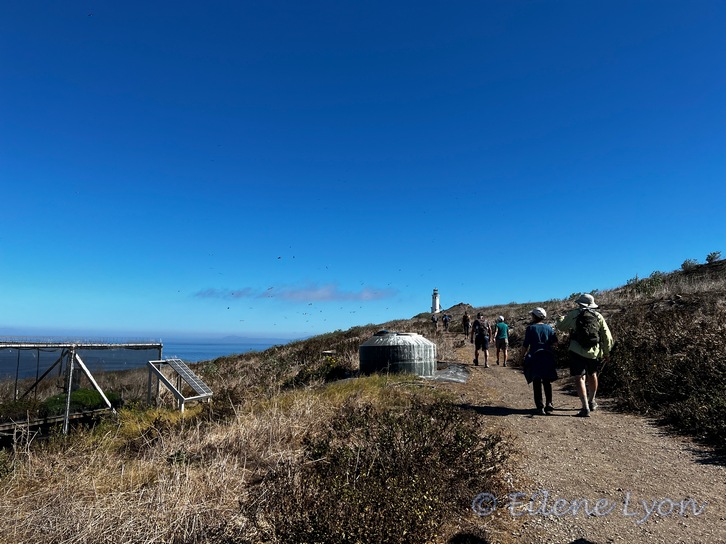
Mentioning it later to some of the ship’s crew, they asked if I had taken a photograph. The significance of the find had escaped me at the moment, and I had not. (I did not learn about the rat eradication project until that evening.) Fortunately, one of the photography instructors leading a group around the island also spotted the dead rodents and did get photos.
Stay tuned!
 Sources:
Howald, Gregg R. et al. “Eradication of Black Rats from Anacapa Island: Biological and Social Considerations.” 2005 https://sbbotanicgarden.org/wp-content/uploads/2022/09/Howald-et-al-2005-black-rat-eradication-Anacapa.pdf
https://www.nps.gov/chis/learn/nature/restoring-anacapa-island-sea-bird-habitat.htm
https://milliontrees.me/2022/03/01/when-the-killings-done-maybe-never/


Beautiful place to explore, and I had no idea about the rats.
LikeLiked by 1 person
Those stats about how widespread they are and the extinctions they’ve caused were a surprise to me, too.
LikeLiked by 1 person
This is very interesting. Looks like a Birders paradise…and I’m sure the rats thought so.
LikeLiked by 1 person
Yeah, free omelets for breakfast every morning. Yum.
LikeLiked by 1 person
😆
LikeLiked by 1 person
Fascinating!
LikeLiked by 1 person
Thanks!
LikeLiked by 1 person
What a beautiful place! And is there any benefit that rats provide anywhere? They are disgusting, and like ticks and cockroaches, they seem impossible to eradicate. I hope this project succeeds.
LikeLiked by 1 person
I suppose in some instances they provide certain plants with seed dispersal, and they are prey for owls. But I have to agree they are unpleasant in most cases. We have troubles with them at our home (pack rats).
LikeLiked by 1 person
Just wonderful!!
LikeLiked by 1 person
A cool place to visit, indeed!
LikeLiked by 1 person
What an interesting island. I’m glad to hear the wildlife populations are rebounding.
LikeLiked by 1 person
It wasn’t breeding season (I think), but lots of wildlife, for sure.
LikeLiked by 1 person
Fascinating…not sure I could have made it up that cliff with the smell of the guano!
I do feel bad for the rats – not their fault – they were just doing their thing, however, I also understand the conservation issues…
LikeLiked by 1 person
It isn’t pleasant to die that way, for sure. I doubt many small mammals have peaceful passings—getting eaten by a burrowing owl, for example.
LikeLike
Gorgeous photos, Eilene. And wow, that rat info was surprising. It must have been a very well-thought out decision on how to get rid of them. The things we learn…
LikeLiked by 1 person
Even with my environmental biology background, I certainly learned a few things from this project.
LikeLiked by 1 person
I bet you did! (And you shared with us so…)
LikeLiked by 1 person
I do consider it my job to enlighten everyone.😉
LikeLiked by 1 person
You do a bang up job! 😁
LikeLiked by 1 person
😊
LikeLiked by 1 person
I’ve always been fascinated with the islands off of Santa Barbara and Ventura — especially after reading “Island of the Blue Dolphins” as a child. I didn’t realize there were tours! Thanks for sharing.
LikeLiked by 1 person
I loved that book, too!!! We did not go to that particular island, which is further south (San Nicholas, I think it’s called). I expect it is similar to Anacapa, but don’t really know. Perhaps it has trees, more like Catalina.
LikeLiked by 1 person
I’ll have to ask our Santa Barbara friends, who sail, if they’ve been out there.
LikeLiked by 1 person
They’d have to take a zodiac or something to go on the island, but sailing around it is quite scenic, too. So many birds flying around, particularly the pelicans.
LikeLiked by 1 person
I’d love to sail around it. Something to look forward to next summer!
LikeLiked by 1 person
Just watch out for bird droppings! We saw lots of sea lions and dolphins, too.
LikeLiked by 1 person
Yes, we will! There was a pure white rock next to the beach in Laguna that smelled unbelievably thanks to the pelicans.
LikeLiked by 1 person
You have to wonder if they have a sense of smell! I can’t imagine even wanting to stand in it, if I was a pelican.
LikeLike
I wish I would have toured more of those islands when I lived in California! I was always just so busy!
LikeLiked by 1 person
It sound like you must have seen some of them, then. The only other ones we went on were Santa Rosa and Catalina. Other people I know who lived in California a long time say they never went out. It just happens that way. We like to travel further from home.
LikeLiked by 1 person
Your visit sounds like quite an adventure. I had no idea that rats could do so much damage to other species.
LikeLiked by 1 person
It surprised me, too. Of course, we had a lot to do with spreading rats around the globe.
LikeLiked by 1 person
Indeed we did.
LikeLiked by 1 person
Wow, how interesting! I’ve lived in SoCal my whole life and have never been there. Perhaps I need to fix that oversight. Thank you for all the info about the rat eradication too. That sounds like a huge undertaking that, hopefully, was successful.
LikeLiked by 1 person
I do hope the rat carcass I saw was somehow carried from elsewhere by a raptor. It would be a shame if all that work and expense was undone.
LikeLike
That was quite an adventure, and you captured some great photos. I will have to observe from afar because I don’t do snakes or rats. 🙂
LikeLiked by 1 person
It was a great experience. Not likely you’d actually see either of those critters, but I do understand!
LikeLiked by 1 person
God Eileen, you’re so f–king smart. I’m genuflecting as I read.
Now more than ever I’m flattered that you sometimes read me. Susannah
LikeLiked by 1 person
Oh now, don’t make me blush.☺️ I’m just the reporter here. Nice to have you visit!
LikeLiked by 1 person
No, you are. I am very, very impressed. Truly, so blush all you want.
LikeLiked by 1 person
Well, you are very kind, Susannah!
LikeLiked by 1 person
🙂
LikeLiked by 1 person
What an interesting visit, and eye-opening about the rats and how fast they breed! I didn’t know of this place (when I saw Channel Islands in the preview pane I thought you’d been over here! Mind you, I haven’t been to “our” Channel Islands either).
LikeLiked by 2 people
I had no idea about any of that stuff when I went on the trip. It was an educational experience! I wished we’d been able to spend more time on the islands than we did.
LikeLiked by 1 person
The province I live in, Alberta, has been rat free forever, thanks to an active rat removal program that started when rats first arrived in 1950.
LikeLiked by 1 person
That’s impressive! I wish my efforts here at home were so successful.
LikeLike
I know! Now and then we get mice in the house and it doesn’t matter how many holes we have plugged, they still get in.
LikeLiked by 1 person
Same here. Unfortunately some of the mice wind up trapped in the walls and I have to listen to their desperate attempts to escape.
LikeLike
fascinating. Have you dived around Anacapa? Absolutely gorgeous. Not too many rodents under the sea either 😉
LikeLiked by 1 person
No, I haven’t. I prefer snorkeling, but those cold waters are not my cup of tea! I’ll bet it is beautiful as you say. We did visit the aquarium in Long Beach, though.
LikeLike
That was very interesting Eilene, from the moment of your unusual arrival and observance of guano to the stats on the rat population. I’m amazed one mating pair of rats could produce 5,000 rats in just one year! I hope your sighting of the dead rodents does not signal a return of rats again.
LikeLiked by 2 people
Thank you, Linda. That 5k number is not a real-world scenario, fortunately! It assumes no mortality among the offspring, for one thing. But a single breeding pair would be a disaster for the island.
LikeLiked by 1 person
I see … well they breed pretty quickly and to have an island overrun by rats would certainly be a disaster.
LikeLiked by 1 person
Like that movie “Willard”! Creepy.
LikeLiked by 1 person
Beautiful place to visit, but also rather disturbing about the rats, lack of said… but maybe not? Fascinating.
LikeLiked by 1 person
I hope the explanation doesn’t involve a new rat population on the island.
LikeLiked by 1 person
Wow, what a hidden gem. Looks so serene.
LikeLiked by 1 person
It is a peaceful place. Even the birds, many as there were, didn’t make a lot of noise. Probably different in breeding season, though!
LikeLike
Oh my. Poison is so disturbing because of the food chain. Was that a good trip or not? I couldn’t tell, and I am always looking for bucket list places.
LikeLiked by 1 person
It was a good trip, but not as much island time as I had hoped, due to wind. We even returned to port early and it was a short cruise to begin with!
LikeLiked by 1 person
I wonder if it was a time of year thing.
LikeLiked by 1 person
Perhaps
LikeLiked by 1 person
Anacapa Island looks beautiful
LikeLiked by 1 person
‘Tis indeed!
LikeLiked by 1 person
This was really interesting to read. Very beautiful pictures with such interesting ecological history 😊
LikeLiked by 1 person
Thanks for stopping by to read and comment!
LikeLiked by 1 person
Thanks for this wonderful adventure to Anacapa Island, Eilene.
LikeLiked by 1 person
Glad you enjoyed the scenes. I expect you’ve been to the Channel Islands?
LikeLike
No, I have not been to the Channel Islands. I’ve been to Catalina Isl., but not the Channels, they sound lovely.
LikeLiked by 1 person
I wish we could have spent more time!
LikeLiked by 1 person
Beautiful!
LikeLiked by 1 person
Thank you!
LikeLike