
By Eilene Lyon
Note: This is NOT about U.S. politics.
This is also not a book review, though inspired by my recent reading of State of Fear by Michael Crichton. I’m not sure how this wound up on my bookshelf; possibly The Putterer picked it up at an airport years ago. While working through my bulging shelves filled with unread works, the title and subject encouraged me to tackle this 700-page tome. It was published in 2004, four years before Crichton’s death at 66 in 2008.
It’s actually a brisk read, though not a particularly well-written story. The characters are paper-thin, particularly the women and the protagonist, Peter Evans. Evans is an attorney, but he’s painted as rather clueless much of the time.
I suspect that Crichton wrote himself into the book as the man-of-action, know-it-all, Dr. Richard John Kenner. Kenner, in particular, is rather preachy, sharing graphs here and there—Crichton’s attempt to sway the reader in a ham-handed manner. If you like thrillers, though, you’ll find enough action to keep you reading, despite the tedious lectures.
I do recommend clicking the link above to Crichton’s Wikipedia article. He was a fascinating man (but not, apparently, someone to be married to). He was a best-selling author of thrillers, most famous probably being Jurassic Park. He had a medical degree, but his love from an early age was writing. There’s no doubt that he was highly intelligent, driven, and talented in his chosen field.
Which is why I found this book rather disturbing.
State of Fear is a novel, but unlike most works of fiction, Crichton peppered it with (cherry-picked) footnotes to real scientific reports. (Some authors of cited works say he distorted them.) In addition, he added an extensive bibliography, author’s message, and two appendices. At the end of his author’s message he states, “Everybody has an agenda. Except me.” Ha ha.
Crichton made no secret of his agenda in this book. He was a climate change denier. Specifically, he denied that humans were causing climate change, and that any global warming was simply the normal course of the planet’s long history of warmer and cooler periods. I do wonder: if he were still living, would the changes of the past sixteen years have altered his opinion?
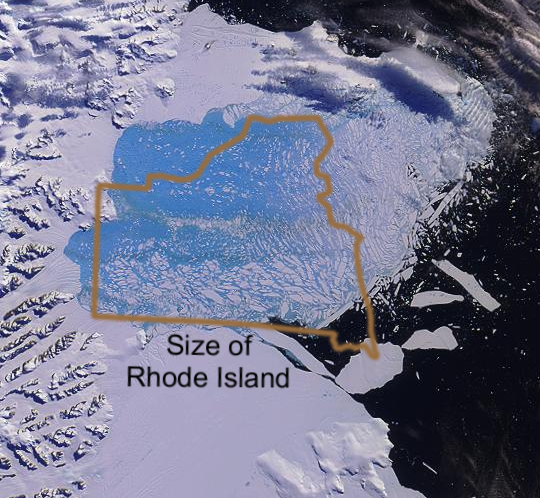
I am no climate scientist, nor will I claim to have read all the literature addressing climate change. My tendency is to take the long view—the world is not ending, and mass extinction will lead to a resurgence of life in some far-distant future.
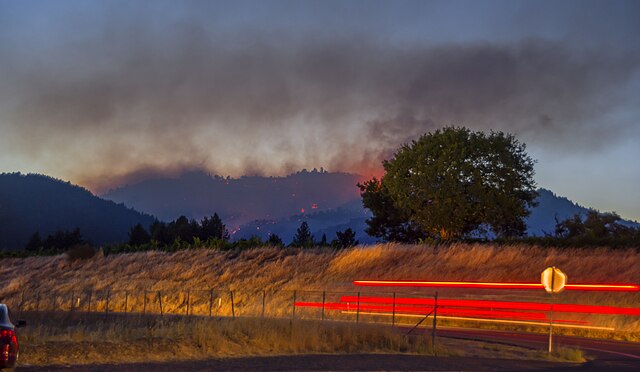
But that does not mean I’m blind to the compiled evidence of biodiversity loss, water issues, pollution, growing storm intensity, strange new weather patterns. These have real impacts on all life on the planet, and we should be concerned.
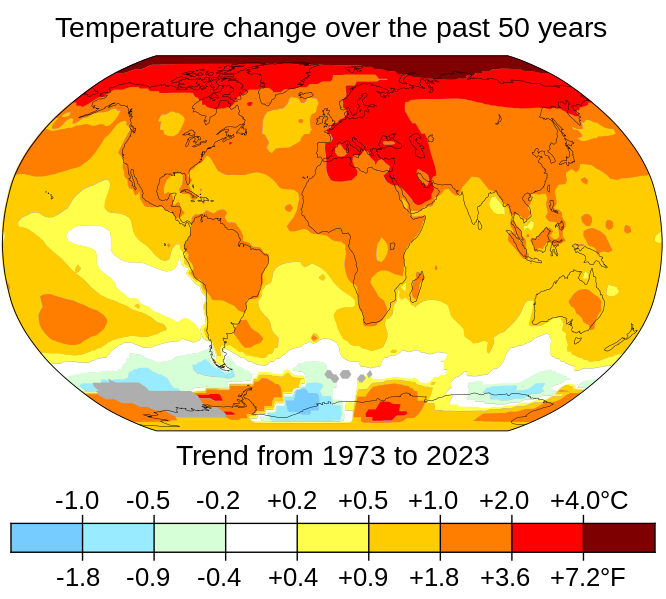
In addition to Crichton’s attempt to dismantle the idea of anthropogenic climate change, he theorized that there is a vast conspiracy to make everyone believe in it—a global collusion between governments, scientists, the Intergovernmental Panel on Climate Change (IPCC) and, especially, non-profits dedicated to the environment. I will clarify that Crichton was not anti-conservation.
The issue for me is that this is a work of fiction, but rather than focus on character and plot, Crichton sermonized. He added all this research material to bolster his theory, rather than letting the story play out and leaving the analysis to his audience.
In a recent “Electric Speed” newsletter from publishing guru Jane Friedman, she takes similar issue with the director of the recent film, “The Brutalist”:
“The first half of The Brutalist is indeed remarkable. But after the intermission…the storytelling takes a left turn. Corbet wants you to walk away with a specific message, even moral lesson. He has a point to prove and the movie ends by stating that point directly to the audience.
Interestingly, recent critiques of contemporary fiction have been similar: rather than allowing the reader to come to their own conclusions, the meaning or message is spelled out by the author. Here’s how I want you to interpret the characters and events.”
What is your take on the idea of blatant moralizing, being told what to think, in a work of fiction?
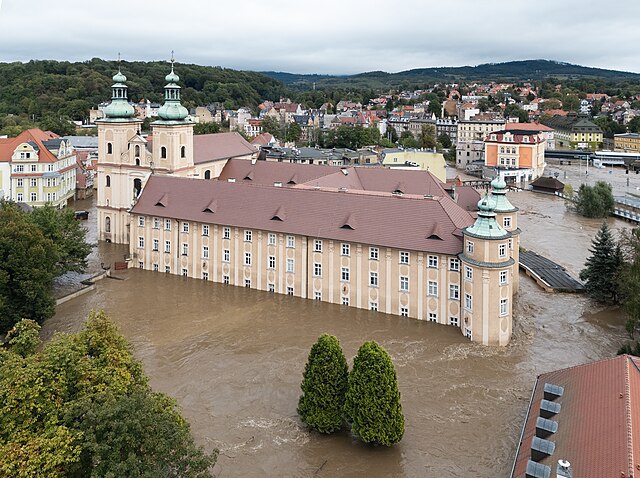
Feature image: The Rapidian dam failure in Minnesota in June 2024. (Wikimedia Commons)
 Myricopia
Lots of info regarding Crichton I didn’t know Eilene. I am familiar with many of his books and the TV series ER was one of my favorite shows… Is there a new genre that we aren’t aware of- factualized fiction? Or do specific people just like to hear and read themselves think and sermonize out loud and find this type of book a way to do that? It would seem that if you have formated your own theories and have the ability to write extensively then why not keep the two genres separate? More books to sell that way at least. I do prefer moralizing for myself thank you. It ticks me off when others do it for me 😉
LikeLike
I’m not sure why he felt the need to produce a book like this. Why not just produce a nonfiction work? Unfortunately, there are people who will read something like this and swallow it whole. In fact, some say this book spurred the climate denial movement, which has not been a good thing.
LikeLiked by 1 person
What a well-researched and thought-provoking post, Eilene. I would like to think that if Crichton had lived longer he would have come to accept that our climate change is indeed man-made. And, no, I do not read fiction to be lectured to on how I should think! Thanks for a “thinking” post!
LikeLiked by 1 person
He was a smart guy. I do think he might have realized his error and changed course. But the damage was done—conspiracy theorists latched onto this as if it were true, not fiction.
LikeLike
I’m with Deb. Keep the genres separate and no, do not tell me how to think and how to interpret what I read. Strange, as I love when I write something and a reader sees something totally different than what I imagined. It’s what makes reading and writing exciting, I say.
As for climate change: I do believe that change would have come but that man has sped it up a bazillion times faster than necessary with all the garbage we have subjected our poor planet to.
LikeLiked by 1 person
That’s a great point, Dale. There should be a dialogue between writer and reader, especially in fiction. Just as a poem says many different things.
LikeLiked by 1 person
Thank you. I just love that part of the whole thing! 🙂 And yes, a poem can say so many things.
LikeLiked by 1 person
Yeah, I enjoy finding personal meaning in the things I read.
LikeLiked by 1 person
Me too!
LikeLiked by 1 person
😊
LikeLiked by 1 person
Hillary Clinton co-wrote a mystery thriller with Canadian author Louise Penny – ‘State of Terror’. It had a Hillary political overtone. I like Louise Penny’s novels, but she does not hesitate to express opinions that align with the current popular moral values or political stances. There are many other examples of political fiction, ethical moral fiction and social justice fiction.
Most of what is written about Climate Change is fiction too. Policy should be driven by the people who know how science works and understand the difference between weather and climate. It should not be driven by politicians, environmental pressure groups and a fearful public.
LikeLiked by 1 person
I’m sure that there are many political viewpoints expressed in works of fiction. In this case, though, Crichton went over the line with all his footnotes, bibliography, author’s statement and appendices. He clearly wanted the veneer of nonfiction.
The IPCC is a scientific body that relies on the science of climate change. You can go ahead and deny it, Margy. You live in places that are probably not going to suffer flooding, but excessive heat and drought take a toll, too. I am a scientist, too, though my area is environmental biology. There is no question that human impacts to habitat and climate are decimating species at an accelerated rate.
All this may not bother you, but future generations will suffer for it.
LikeLiked by 1 person
I lived in a summer community of 300 homes that were destroyed in the Bow River Flood (Alberta) of 2013. Alberta, like many other places, has been in a drought condition. I also own a home in Arizona (heat and drought). Numerous studies show that today’s droughts still don’t match the severity of the 1920’s and 1930’s. Paleo studies show even more prolonged droughts in the 18th and 19th Centuries.
So, yes, I do live in places that have been flooded and I have experienced drought. If by being highly suspicious of what mass and social media says about climate change; if by being highly suspicious about how governments use my tax dollars in the name of climate change; if by being highly upset by how those bodies have made my grand children fearful for the future of mankind, then yes, by all means, call me a denier.
LikeLike
That’s fine, Margy. I won’t agree with you, but you’re entitled to your opinion. I do think you missed the point of this blog post, which was not to debate climate change. It’s about fiction that is inappropriately presented in a pseudo nonfiction wrapper.
LikeLiked by 1 person
My first comment was about fiction and my belief about the aspects of climate change alarmism that I think of as fiction because they are debunked. I did not expect to be called a climate change denier.
LikeLike
You seem to have made a claim that the science is fiction. Who are the debunkers?
LikeLike
Are you saying you don’t deny climate change or that you deny that humans are a cause?
LikeLike
I do not know why it matters to you what I believe. I am sorry I even left a comment because it appears my views upset you. Please delete my initial comment – that will remove the conversation and you can get back to enjoying the comments of folks who agree with you.
LikeLike
I’m only trying to understand, Margy. But if you don’t wish to explain, that is your prerogative.
LikeLike
What is your take on the idea of blatant moralizing, being told what to think, in a work of fiction?
I’m not keen on moralizing in fiction because to me it means two things. First the author didn’t feel confident enough with his story-telling skills to write something solid so he had to further explain himself.
And second, it is insulting to the readers who are presumably reading for enjoyment to be lectured, as if they’re too dimwitted to make up their own minds.
LikeLiked by 3 people
Very well put, Ally. As I pointed out, Crichton was more concerned with pressing his agenda than creating a good story. A shame.
LikeLiked by 1 person
I agree with you – it is more than unsatisfying when a book purports to be more than what it sets out to achieve. Under-developped characters are a pet peeve of mine.
LikeLiked by 1 person
Crichton probably could have done a much better job at that, but I have not read his other books, so I am not completely certain about that!
LikeLiked by 1 person
I read one that was very technical. Not my favourite genre.
LikeLiked by 1 person
I’m not really onboard with his style, either.
LikeLiked by 1 person
An interesting topic to be sure. In historical fiction, authors will often offer reinterpretations of what have become known as “historical facts”, such as Sharon Kay Penman’s brilliant The Sunne in Splendour, about Richard III. But she doesn’t sermonize or include footnotes, only an author’s note at the end indicating why she told the story as she did. The reader is left to decide for themselves whether they agree or not. Other historical fiction authors have done the same with varying levels of success. Philippa Gregory did NOT convince me Anne Boleyn slept with her own brother in order to procure an heir for Henry VIII.
I’ve not read this Crichton book, but from what you’ve described, he goes beyond what I’ve described above and clearly set out an agenda, knowing that including scientific footnotes, a full bibliography and two appendices that many of his readers will accept what he says as “the truth”.
There is, of course, creative non-fiction, but I don’t think State of Fear falls into that category. I certainly hope Crichton would have reconsidered his position had he lived past 2008.
LikeLiked by 1 person
The examples you give demonstrate the appropriate level of explication in fiction, I think. Leave it for the reader to decide, or just be entertained. Crichton really wanted this to be treated as nonfiction, even though it was clearly an invention of his own mind.
LikeLike
clearly… If he wanted it to have been treated as non-fiction, he should have published it as such, but I imagine he knew if he did, the reviews would have been terrible as scientists would have poked holes in all his theories and raked him over the coals for his obvious agenda and attempt to convince people of something that science itself agrees on.
I’ve only read one of his books, Timeline, and that was obviously fiction…now I’m not inspired to try any of his others.
Footnotes can be used successfully in fiction, but they must be used as supportive material, not an attempt to, as you say, create a veneer of credibility. In her novel, The many lives and secret sorrows of Josephine B, Sandra Gulland included copious footnotes, citing the historical events portrayed – she wasn’t trying to convince her readers of anything other than to indicated she’d done her research about Josephine Bonaparte, born Marie Josèphe Rose Tascher de La Pagerie.
By doing what had did, Crichton might also have now made readers suspicious of all others who cite material in their novels.
LikeLiked by 1 person
That purpose for footnotes is fine and laudable. But yes, Crichton’s use could be undermining that. I am not likely to read any of his other books, even if they are much better than this one.
LikeLike
Interesting about this book – and a very interesting question you pose at the end. As a historical fiction writer myself, I like to try and make a fine line of it. Yes, my feelings on certain matters tend to leak into the pages, but I try to keep it on the subtle side. “Try” being the key word haha! The last thing I’d want to do is tell a reader what to think, but I do like to give them something to think about. If that makes sense.
LikeLiked by 1 person
That absolutely makes sense, M.B. We all have our opinions and they will naturally appear in our writing, fiction or not. Having a viewpoint is not the problem. Stepping into the guise of nonfiction in a work that clearly IS fiction is deceptive and, to me, wrong.
LikeLiked by 1 person
Preachifying and speechifying in a novel is hurl-the-book-across-the-room-time for me. If you want to deny climate change, write nonfiction. That’s what nonfiction is for. One of the hallmarks of an accomplished and credible writer is to choose the right medium for the message. (Don’t get me started.) Oh, and another thing, dear author–don’t tell me how to interpret the characters and the events! That’s my role as a reader.
LikeLiked by 1 person
Ooo. Pushed Liz’s button on that one! Yes, the right medium for the message. This one was an especially bad fit.
LikeLiked by 1 person
Oops . . . 😉
LikeLiked by 1 person
😁
LikeLiked by 1 person
Well, I think you might have written a review where I’m not adding it to my be read pile. I like realistic fiction and historical fiction. I enjoy a story that’s grounded in truth/facts, but still entertains. I’ve never been one to be preached at and even that tone in non-fiction puts me off. I want the facts and to make up my own mind, not be told what to think.
LikeLiked by 2 people
The certainly wasn’t intended as a reading recommendation.😂 I’m glad I read it, though, because I do think it contributed to conspiracy theorists’ playbook.
LikeLiked by 2 people
It doesn’t take much to contribute to their playbook!
LikeLiked by 1 person
Probably not. Sigh. It’s the chemtrails fault.😉
LikeLiked by 1 person
I tend to avoid moralizing books. In my own book, “Plover Landing,” I take on the issue of climate change, but I don’t moralize about it. I opted to give a glimpse of a magical solution, instead. But I do think it’s important to bring real issues into fiction because it makes them more “real” to people, in a way. If that makes sense!
LikeLiked by 1 person
I think it’s great for fictional works to take on difficult or even controversial subjects. And magical solutions can be fun! My objections to Crichton is the lengthy lectures, poor character development, and especially his pseudo nonfiction additions. It all undermines his credibility in my mind.
LikeLiked by 1 person
Eilene, I don’t believe I have ever read anything by Michael Crichton and am probably one of a handful of people who have never seen the movie “Jurassic Park”. Well, it’s interesting that such a learned man was a conspiracy theorist as to climate change even back then – he would fit in with so many that are of that mindset these days. I am no scientist either, but you don’t have to study charts or read scientific journals to know, if you are old enough and living in the same region, that this is not the weather you grew up with. The erratic weather all around the globe certainly attests to climate change as well.
I can sure understand your remark about Crichton’s personal life as to marriage. None of those marriages lasted for very long. Perhaps, sequestering yourself to write 20 hours of the day to finish a novel in less than two months’ time might have contributed to the dissolution of one marriage after the other.
LikeLiked by 1 person
Linda, you are one of a handful, it seems!😉 How about “The Andromeda Strain”? Seen that one? Yes, I think he was very driven when in full swing on one of his novels. Worse than a boy on his video game! That would kill a relationship, for sure.
LikeLiked by 1 person
Eilene, I HAVE heard of “The Andromeda Strain” but not read the book, nor seen the movie. Yes, I guess to sequester yourself like that would be just like a boy with his video games. If only Crichton’s ex-wives would have conferred, or even been more forthcoming with each new wife, he could have saved himself a lot of alimony payments … no wonder he had to work so hard! 🙂
LikeLiked by 1 person
I expect with his movie deals and best-selling books he managed to live as comfortably as his exes.😁
LikeLike
Yes, I’m sure he wasn’t hurting either … so he could afford to be the meetin’ and marryin’ type. 🙂
LikeLiked by 1 person
Why not just have a fling?
LikeLiked by 1 person
Yes, maybe he would have figured that out after “the third time was not the charm” (as the saying goes).
LikeLiked by 1 person
P.S. – I would resent being told what to think. I prefer to make my own judgment when reading a book.
LikeLiked by 1 person
Once again, I wrote a whole comment and got a message that it could not be published. Too long for me to rewrite! Sorry!
LikeLike
Sorry to hear that, Amy!
LikeLike
I wasn’t familiar with this book but it’s unfortunate how climate change is such a polarizing topic for so many. This idea that numerous agencies are conspiring to assemble this narrative conveniently ignores the fact that getting two agencies to cooperate is hard work!
LikeLiked by 1 person
Not just agencies, but most global governments and all those NGOs, too! We need to find the mastermind who brought them all together and make her emperor of the world.
LikeLiked by 1 person
True story.
Hahaha!
LikeLiked by 1 person
To the book’s credit, it has triggered discussion, albeit with inaccuracies. I also prefer making up my own mind, rather than a piece that tells the reader what to think. This is akin to propaganda not information.
I note that Amusives certainly got riled up in an earlier comment and has also left provocative comment in the past on my blog. I suppose it is confirmation bias or cognitive dissonance on her part?
LikeLiked by 1 person
It certainly did give me something to think about, which is why I shared it. As a writer I need to be careful how I present ideas, too.
Amusives does get riled, but I am okay with her remarks as long as they’re civil. I think she wanders off the point, so I attempt to redirect. Sometimes successfully, other times not.
LikeLiked by 1 person
I had forgotten about Michael Crichton. This is a thought provoking and well written essay/review, Eilene. Personally I like a subtle message and I actively dislike preachy. I have been reading Richard Power recently and I have a yet to be articulated uneasiness about his works. You have inspired me to get off my ass and write something!
JIM
LikeLiked by 2 people
Thank you, Jim. I probably am not Crichton’s target audience. I enjoyed The Overstory, but haven’t read any other Power works. I don’t believe he came across as preachy as State of Fear. But it’s been a while.
LikeLiked by 1 person