By Eilene Lyon
My 2nd great-grandaunt, Ann Jenkins, had a short but adventurous life for a mid-19th century woman. She was born July 5, 1831 in southwestern Ohio, oldest daughter of Henry Zane Jenkins and Abigail G. Bedford. When she was six years old, her family relocated to a newly platted Quaker town in a meadow surrounded by swampland in eastern Indiana, known then as Camden.
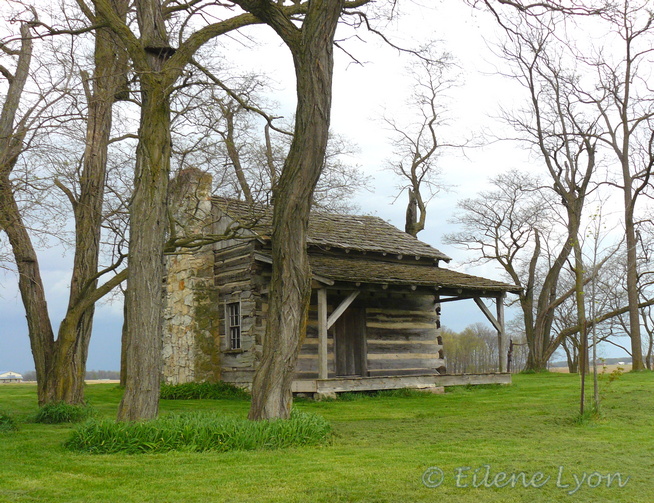
Her parents built and ran a small store at first, but later took up farming in rural Knox Township, Jay County. Because teachers were scarce and cost money her parents could ill afford, Ann’s Quaker mother provided much of her schooling.
Due west of the Jenkins farm lay another small rural community, Trenton, partially founded by the James and Elizabeth (Anderson) Ransom family. Ann and two of her siblings would marry Ransom offspring. Ann would be the first. At age 18, she wed William C. Ransom on her mother’s 49th birthday, February 14, 1850.
The following year, when Ann was heavy with child, her father, Henry, headed to California to find gold, along with nine other men. Her husband planned to follow soon after, but when their daughter Cordelia came along, he agreed to stay home and be a family man…for a while.
Soon the pull of the west coast had yanked William, his brother Robert, and a cohort of young men from Jay and Blackford Counties out to sea on their way to find instant wealth. They left in February 1852. Ann and Cordelia moved back in with her mother and grandmother in Knox Township. The two older women doted on the baby.
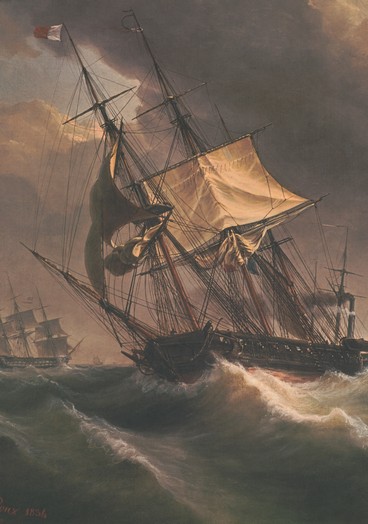
After six months had passed and no news had reached her from California about William’s arrival, she began to fear he’d been in a shipwreck and perished. Though the trip had been a journey to hell and back, he did eventually arrive in San Francisco to resume correspondence with his wife.
William was soon begging Ann to come be with him, and leave the baby in Indiana. This latter request she would not do. But the impulse to go to William was strong. He promised her she could make good money there. Women’s homemaking skills were in high demand and short supply.
She was used to being poor, but needing to support herself and Cordelia, Ann agreed to teach school near her in-laws in Trenton. Her younger brother, Bedford, would take her there by mule on Sunday evening, and bring her home for the weekend. Cordelia stayed with grandma and great-grandma Jenkins.
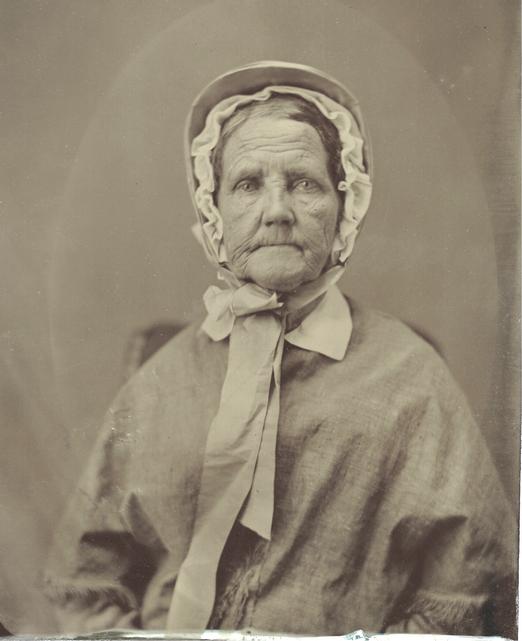
Throughout the year 1853, William, missing his wife, dithered between coming home and persuading Ann to come to him. Finally, in late fall, she capitulated. Her father, gone more than two years, had scarcely been home a month. He was no doubt grateful for the opportunity to see Ann again, and meet his granddaughter. Now he had to bid them “Goodbye.”
Ann’s older brother, William Zane “Billy” Jenkins, had lost his wife, Jane Ransom, that summer. Ann and Jane had been quite close, marrying the same year, and giving birth to daughters within months of each other. Little Lizzie and Cordelia were best of buddies, nearing age three.
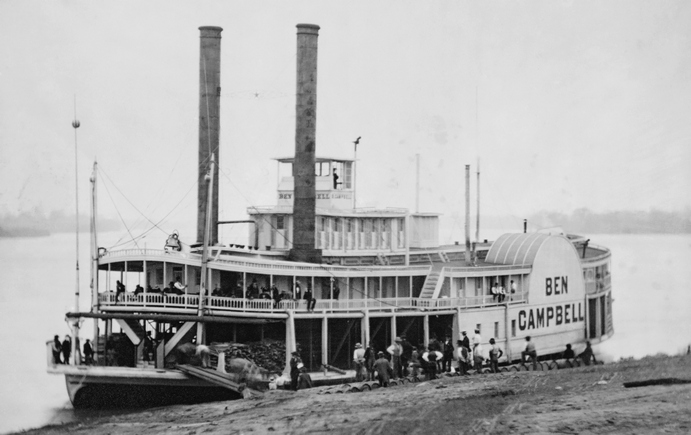
Ann and Cordelia, escorted by Billy (minus Lizzie), soon followed the route the two earlier groups had traveled. They took a steamboat to New Orleans, then a steamship to Panama. The trio went by train at least part of the distance across the isthmus. Then pack mules carried them the final 26 miles through the jungle to Panama City on the Pacific coast.
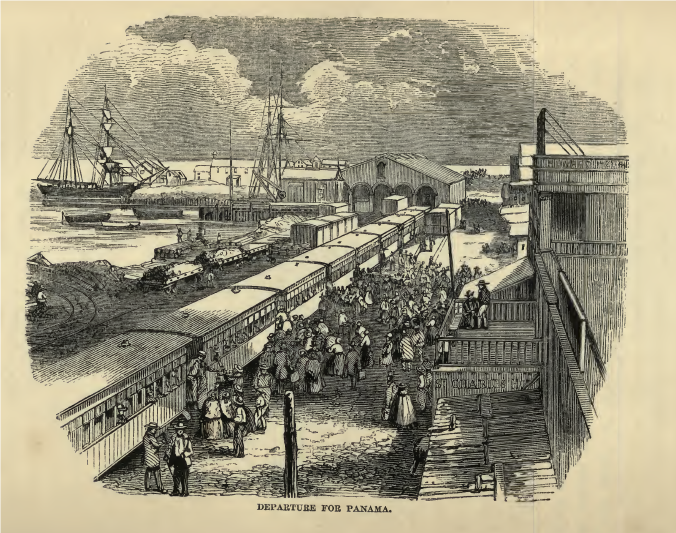
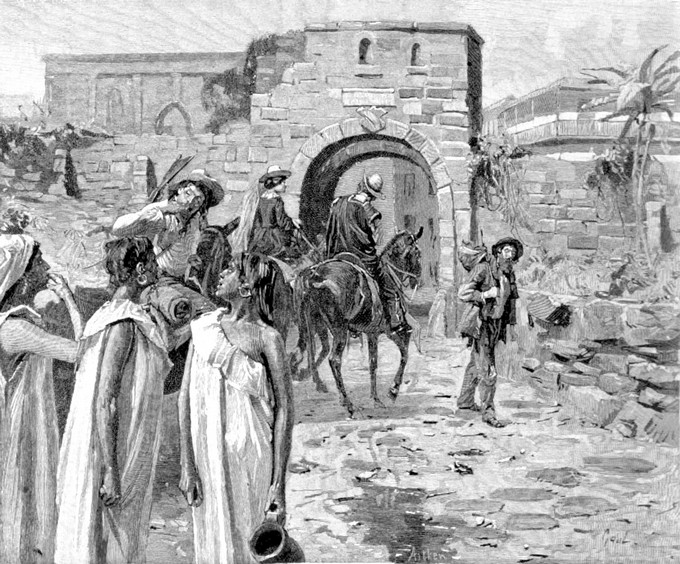
Another steamship journey of about three weeks deposited them on the teeming wharf at San Francisco, probably the fastest growing city on the planet at the time. Every aspect of the trip had been a kaleidoscopic whirl of new scenery, people of varying colors and costumes, unfamiliar food-sights-sounds-smells. Shipboard life had been a mix of momentary fascinations and interminable boredom. Cordelia may have had the good fortune to find playmates aboard, or not.
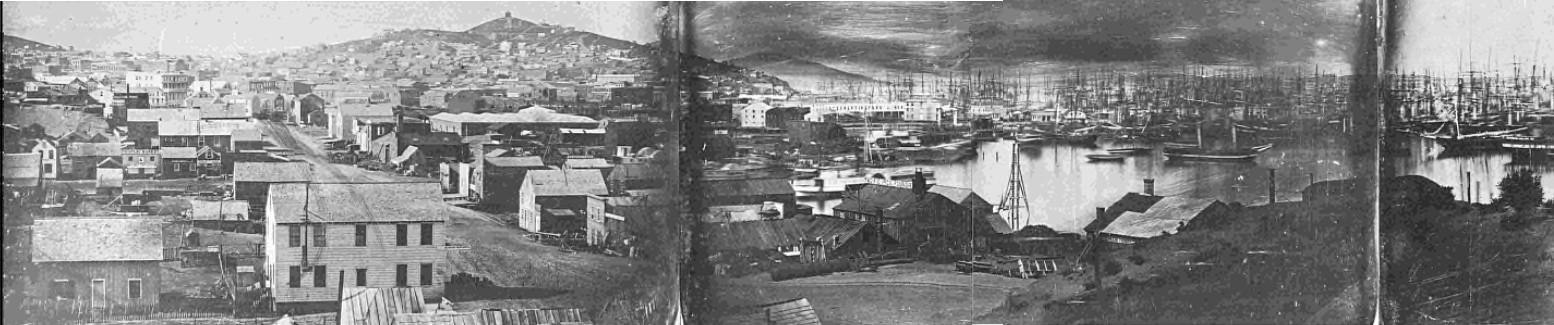
Soon Ann, Billy, and Cordelia had joined William and Robert Ransom in the south-bay community of Santa Clara, where the two men worked on the ranch owned by Commodore Robert F. Stockton, a Mexican War naval commander. Stockton had returned east overland after purchasing the ranch, putting James F. Kennedy in charge.
The brothers began working for Kennedy on their arrival, and made a good living by farming, rather than mining. They convinced Billy Jenkins he could easily earn two thousand dollars growing wheat alongside them. Unfortunately, 1854 proved a disastrous year for wheat growers in the San Jose Valley. But for Ann, 1854 held a bright spot: the birth of a second daughter, Marietta Alice Ransom, on September 18. Cordelia, who missed her buddy Lizzie, would have a little sister to play with.
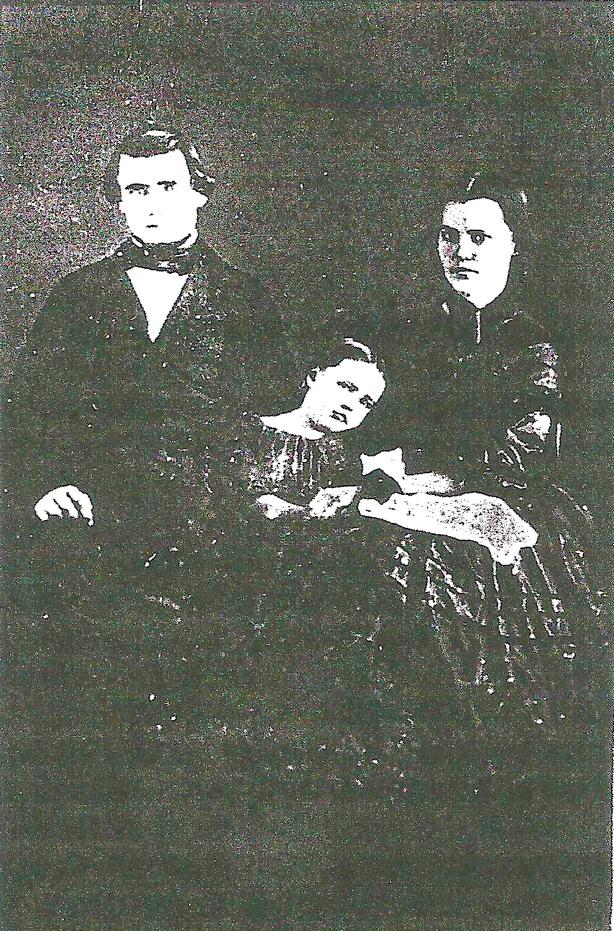
With their farming careers going bust, William Ransom and Billy decided the time had come to finally head to the Sierra foothills where many a miner had found their fortunes to be equally precarious. Robert went home to marry Ann’s sister, Emma Jenkins, and bring her to California. Ann and her two girls were about to leave all reasonable semblance of civil life behind.
To Be Continued…
Feature image: Riverboat Ben Campbell. Ann, Cordelia and Billy would have traveled in a boat like this down the Ohio and Mississippi Rivers to New Orleans.
 Myricopia
I love how your stories bring the adventurous American spirit to life. I cannot imagine Ann’s life or the courage and love it took for her to leave her family behind and take that crazy journey across the country. I look forward to the next chapter!
LikeLiked by 2 people
Thanks so much, Amy! This branch of my family tree is so rich with tales. I’ve often considered a novel featuring William Ransom or Cordelia.
LikeLiked by 1 person
That sounds like a great idea!
LikeLiked by 1 person
Now if I could only figure out how to write fiction…
LikeLiked by 2 people
Eilene, the older I get the harder it is to imagine what our ancestors went through. That steamboat and steamship journey!!!
LikeLiked by 2 people
Ann had it easy compared to what William and Robert went through!
LikeLiked by 1 person
Still.
LikeLiked by 1 person
Reading about the trials of travel in the 1800’s makes me think what a whiner I am to complain about my five hour drive to catch an eight hour flight.
LikeLiked by 2 people
All times have/had their challenges, including ours. It’s a matter of perspective, of course. Though covering long distances has been made much easier, it doesn’t alleviate all frustrations about travel. I feel for all those whose flights are being canceled right now.
LikeLiked by 1 person
Yes, I suppose it is all a matter of perspective. Difficult times to be travelling in the States for sure,
LikeLiked by 1 person
I’m glad I was able to make a trip in October and have no plans to fly anytime soon!
LikeLiked by 1 person
Interesting tale! It seems like they took a roundabout way to get to CA, but I suppose water was easier than going by land then. Or maybe cheaper than railroads? Were there even railroads then?
LikeLiked by 1 person
No, you couldn’t go by railroad! Not until 1869. Water was faster and often much less expensive than crossing over land by wagon.
LikeLiked by 1 person
No wonder they eventually built the Panama Canal!
LikeLiked by 1 person
It definitely has made sense until now when Panama is running short on water to fill the locks.
LikeLiked by 1 person
Ooh, a cliffhanger!
LikeLiked by 1 person
I expect this will run to three parts. Some of it will be familiar to anyone who has read Fortune’s Frenzy.
LikeLiked by 1 person
As a native California, I found this especially interesting. Your story took me to Google to see if Stockton, CA was named after Commodore Robert F. Stockton. It was!
I look forward to Part 2… and your novel about William Ransom or Cordelia.
LikeLiked by 1 person
Some of this material is covered in more depth in my book Fortune’s Frenzy. The guy who founded Stockton, Charles M. Weber, wanted to name it Castoria (for the beaver, and a play on Astoria), but named it for Comm. Stockton because of promises the commodore made to him during the war. Stockton never made good on the promises and Weber regretted not sticking with his first choice.
LikeLike
How interesting. I like the name Castoria better. Sad that the city is named after a cheater.
LikeLiked by 1 person
I agree!
LikeLike
The rigors of travel back then – poor William and Robert, but it sounds like the long and involved journey two years later, may have been boring, but safer. I’ll look forward to the next part of their adventures!
LikeLiked by 1 person
I think the trip via Panama had settled into a steady rhythm by the time Ann went across. It was a madhouse still when William and Robert did it.
LikeLiked by 1 person
They were lucky, two women … at least they had a male escorting them along the way.
LikeLiked by 1 person
Pretty bold, taking a 3-year old girl on such a dangerous trip.
LikeLiked by 1 person
Yes, that’s for sure. Maybe a 3-year-old girl in those days was more mature than a 3-year-old girl today. Even the simple things we take for granted today versus then ….
LikeLiked by 1 person
Somehow I expect age 3 was pretty much the same as now or even less mature.
LikeLiked by 1 person
Really?! I have to be honest that I’ve never been around children as I had no siblings, only met my cousins once and my parents didn’t allow me to babysit. I was going by the actions/antics I see in stores or at the Park sometimes. Maybe I’m too harsh as to children. I was raised very strictly – no outbursts, or talking back, pouting, etc. from this kid – ever.
LikeLiked by 1 person
You do have a point, children aren’t as disciplined today. And if you equate behaving as your parents wish with being mature, you are right. I see kids grappling with difficult problems at young ages. Things I don’t think our ancestors could even conceive of.
LikeLiked by 1 person
I was mature for my age, not only because my parents were strict, but also they were 30 years old when I was born. I agree with you Eilene, kids do have to deal with a lot more things today, especially angst-wise, than our ancestors did. It is bad in Michigan for schools shutting down for the day due to what 99.9% of the time turns out to be prank calls about potential school shootings/bombings. It’s terrible. And we’ve had two school shootings where kids were killed and other kids severely injured. What is in a kid’s mind when they enter the school on a daily basis?
LikeLiked by 1 person
Hopefully not all of that!
LikeLiked by 1 person
Great story, and it only accentuates what we already know – our ancestors were strong people.
LikeLiked by 1 person
And their ancestors had to be tough to venture to North America. We have journeying in our blood, you could say. Few of my forebears spent their lives in one place.
LikeLiked by 1 person
I remember these folks from Fortune’s Frenzy!
LikeLiked by 1 person
Yes, some of this adventure will be familiar to those who’ve read it. But I will be adding other details, especially from the two letters Ann wrote that have survived (only as transcripts, unfortunately).
LikeLiked by 1 person
Oh, good!
LikeLiked by 1 person
😊
LikeLiked by 1 person
Ann really did live a life, tell you what. And not for nothing but the next time someone complains about what a pain in the ass relocating is, Imma remind them as to all the challenges our ancestors faced!
LikeLiked by 1 person
I doubt she took much with her—well, she didn’t have much! More to come…
LikeLiked by 1 person
But the traveling . . . my goodness.
LikeLiked by 1 person
Oh quite an amazing experience, I’m sure!
LikeLiked by 1 person
And an odyssey!
LikeLiked by 1 person
Yep!
LikeLiked by 1 person
🙂
LikeLiked by 1 person
I enjoyed this from reading “Fortune’s Frenzy.” It’s nice to read more details while knowing the story.
LikeLiked by 1 person
This focus on Ann will bring in new material, too.
LikeLiked by 1 person
There are already details that I didn’t remember or maybe were new.
LikeLiked by 1 person
Certainly a few, yes.
LikeLiked by 1 person
That journey sounds awful to me! Interested to read what happens next 😊
LikeLiked by 1 person
I’m sure there was much to dislike about it. But at least Ann and Cordelia would have had a cabin. All the men in my book went as deck passengers on riverboats and steerage on ships. Much worse!
LikeLike
I’m always so pleased at how your stories breathe life into people who would otherwise be forgotten. Imagine being asked to leave your child behind!
LikeLiked by 1 person
It really was not an option for Ann.
LikeLiked by 1 person
I’m in suspense…..
LikeLiked by 2 people
Hopefully next Saturday…
LikeLiked by 1 person